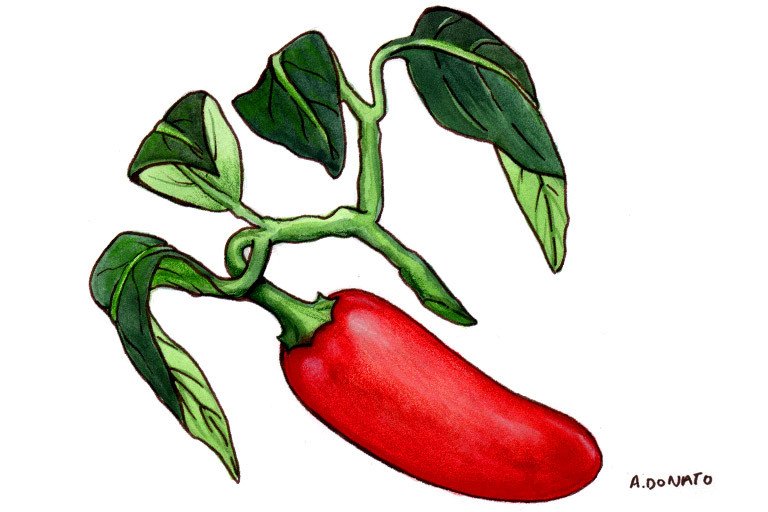
Common Names
- Capsicum
- Red peppers
- African chilies
- Tabasco peppers
- Mexican chilies
- Louisiana long pepper
- Pimiento
For Patients & Caregivers
Tell your healthcare providers about any dietary supplements you’re taking, such as herbs, vitamins, minerals, and natural or home remedies. This will help them manage your care and keep you safe.
Cayenne is a kind of hot pepper that has capsaicin and other nutrients. It is used as a spice in many cultures around the world. Cayenne pepper is also used in traditional medicine to improve digestion (the way your body breaks down food) and blood circulation.
Cayenne supplements come as capsules, powders, and liquid extracts.
Cayenne is used to:
- Improve digestion
- Improve blood circulation
- Manage type-2 diabetes
- Help you lose weight
Cayenne also has other uses that haven’t been studied by doctors to see if they work.
It’s generally safe to add cayenne peppers to vegetable or meat dishes. You can also add ground cayenne pepper to soups, curries, or stews. Talk with your healthcare providers before taking cayenne supplements. Herbal supplements are stronger than the herbs you would use in cooking.
They can also interact with some medications and affect how they work. For more information, read the “What else do I need to know?” section below.
Side effects of using cayenne may include:
- Sweating
- Eye or nose irritation
- Stomach irritation
- Stomach pain
- Talk to your healthcare provider before using cayenne if you have high blood pressure or heart conditions. It may make these conditions worse.
- In breastfeeding women, using cayenne may turn the baby’s skin red.
For Healthcare Professionals
Derived from the fruit of Capsicum, cayenne is among the most widely consumed culinary spice. Traditionally, it is used as a gargle for laryngitis and orally as a gastrointestinal stimulant. Oral formulations are marketed largely for digestive and circulatory problems, poor appetite, and weight loss. The active component, capsaicin, is also marketed for topical use to relieve various types of pain and for certain skin conditions (See Capsaicin topical formulations).
Capsaicin may increase insulin and decrease blood glucose levels (1). Nonpungent capsaicin analogues can produce a stimulatory effect in humans, but their potential role in energy expenditure and weight management problems needs further clarification (2) (3) (4). In addition, the thermogenic and appetitive effects of capsaicin have been determined to be small (5). Oral capsaicin administered to participants in one study enhanced salty taste sensations, thereby lowering daily salt intake and subsequent blood pressure (29) but a systematic review found no impact on blood pressure or heart rate (30). A preliminary study of enteric-coated oral capsaicin suggests it may decrease visceral hyperalgesia and improve bloating in patients with irritable bowel syndrome (6), but supplementation with capsicum for burning mouth syndrome was associated with significant GI side effects (7).
Another study of oral capsaicin suggests it can alleviate oral mucositis pain from cancer therapy, but this relief was temporary and not complete (8). There is continued controversy over whether active constituents of capsicum act as a carcinogen, co-carcinogen, or anti-carcinogen (9) (10) (11) (12) , and effects may be concentration-dependent (9). In vitro studies have shown cytotoxic effects against breast (13), bladder (14), prostate (15), and oral cancer cell lines (16), and multidrug-resistant lymphoma (17). However, a human case-control study suggests an increased risk for gastric cancer with dietary capsaicin (18). Therefore, more studies are needed to clarify the roles of capsaicin in relationship to cancer.
Fruits of capsicum pepper
- Digestion
- Circulation
- Diabetes
- Weight control
Capsaicin is the compound responsible for the irritant effects of capsicum (10). Perceived heat from capsaicin when ingesting cayenne is caused by activation of transient receptor potential vanilloid subfamily member 1 (TRPV1), located in neurons on the tongue (4). Capsinoids lack this sensory quality because they are hydrolyzed as they cross the oral mucosa (4). Potential thermogenic effects also involve TRPV1-receptor activation on vagal afferents in the gut (4). Capsaicin may induce energy expenditure by enhancing core body and skin temperature and influencing substrate oxidation, but these effects can vary with body composition (3) (5). In response to high-salt stimuli, oral capsaicin administration enhanced insula and orbitofrontal cortex (OFC) metabolic activity in participants, reversing salt intensity-dependent differences in the metabolism of the insula and OFC (29).
Vasodilator effects are attributed to the release of calcitonin gene-related peptide (CGRP). Depletion in CGRP leads to a subsequent increase in blood pressure (21). Interactions between capsaicin and cyclosporin suggest modulation of P-gp and CYP3A gene expression and increased cyclosporin bioavailability via CYP3A inhibition (22). Lignan glycosides isolated from capsicum pepper appear to have strong scavenging activity against free radicals (20).
In vitro and animal studies suggest capsaicin causes cell-cycle arrest and apoptosis in both ER+ and ER− breast cancer cells by modulating the EGFR/HER-2 pathway (13). Orally administered capsaicin slowed prostate cancer cell growth by downregulating androgen receptor expression and inhibiting PSA transcription (15). In bladder cancer, capsaicin mediates cell death through ROS production and mitochondrial depolarization (14). Conversely in certain concentrations, capsaicin may promote colorectal metastasis by triggering ROS production and modulating Akt/mTOR and STAT-3 pathways (9).
Cayenne should be avoided in women who are pregnant or breastfeeding, as there have been cases of dermatitis in nursing infants (23).
Common (oral): GI irritation, referred gastric pain (7).
Case reports
Hypertension: Reported in two men following ingestion of large amounts of chili peppers (21) (24).
Gastric cell exfoliation, bleeding: Ingestion of dietary capsicum in healthy volunteers caused gastric cell exfoliation and bleeding (25).
Erythematous dermatitis: In two infants shortly after breastfeeding from mothers who had ingested food flavored with red pepper (23).
Reversible Cerebral Vasoconstriction Syndrome: In a 24-year-old woman after exposure to pepper spray on her face, characterized by recurrent thunderclap headaches (31).
- Immunosuppressants (cyclosporin): Concurrent capsaicin should be avoided in transplant patients to minimize risk of kidney or liver toxicities as well as neurotoxicity. In animal models, chronic high-dose capsaicin use increased cyclosporin bioavailability (22).
- Antihypertensives: Capsaicin may affect their actions (21) or increase incidence of cough associated with ACE inhibitors (26).
- Antiplatelet drugs: Animal models indicate capsaicin has antiplatelet effects (27). Clinical relevance has yet to be determined.
- CYP450 3A substrates: Animal models indicate capsaicin may alter drug absorption and metabolism (22). Clinical relevance has yet to be determined.
- P-gp substrates: Animal models indicate capsaicin may alter drug absorption and metabolism (22).Clinical relevance has yet to be determined.
- Theophylline: Animal models indicate that concurrent capsaicin administration may increase absorption (28). Clinical relevance has yet to be determined.
- Oral coadministration of other drugs: Capsaicin causes mucosal vasodilation, and may thereby alter the uptake of other drugs (22).