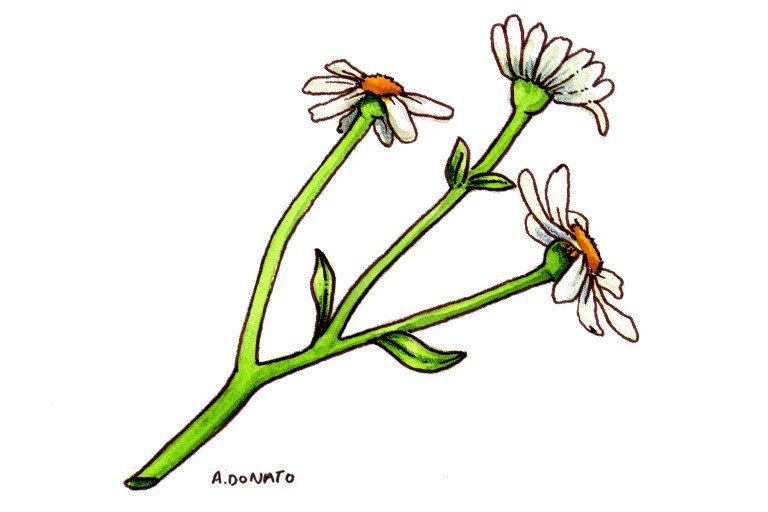
Common Names
- Mum
- Ju hua
- Chu hua
- Gujulcho
- Kikuka
For Patients & Caregivers
Tell your healthcare providers about any dietary supplements you’re taking, such as herbs, vitamins, minerals, and natural or home remedies. This will help them manage your care and keep you safe.
Chrysanthemum has not been shown to treat or prevent cancer.
Chrysanthemum is a flowering plant from the sunflower family. It has been used in traditional medicine for centuries, but little research has been conducted. Lab studies suggest it may be useful to develop as a therapy for bone diseases and diabetes. Some studies indicate that chrysanthemum extracts can kill cancer cells in the lab, but it is not known whether this effect occurs in the human body.
Patients receiving drugs to suppress the immune system should avoid this botanical as it may increase the adverse effects associated with these drugs.
- To treat angina
Chrysanthemum is used to treat angina in traditional Chinese medicine, but research has not been conducted. - To prevent and treat common cold
Although chrysanthemum is used to treat the common cold in traditional Chinese medicine, it has not been studied in humans. - To reduce fever
Chrysanthemum is used as a fever reducer in traditional Chinese medicine but human data are lacking. - To reduce high blood pressure
Although chrysanthemum is used to treat high blood pressure in traditional Chinese medicine, clinical studies have not been conducted. - To reduce inflammation
Laboratory studies suggest a variety of properties in chrysanthemum, including anti-inflammatory effects, but human studies are lacking.
- Redness, swelling, and itching of the skin
- Allergic reaction
- Increased sensitivity to sunlight and chance of getting a sunburn
Case Reports
Skin rash: With occupational exposures to chrysanthemum.
Toxic blood levels of immunosuppressive medications: In a kidney transplant recipient, that occurred after consumption of a "24-flavours" tea. It was determined that one of the key compounds in the tea, chrysanthemum, inhibits the enzyme that metabolizes these drugs.
Do Not Take if:
- You are taking drugs to suppress the immune system: A kidney transplant recipient who drank a tea that contained chrysanthemum was found to have toxic blood levels of these drugs, and lab analysis confirmed chrysanthemum was likely a contributing factor.
- You are taking Cytochrome P450 3A4 or P-glycoprotein substrate drugs: Chrysanthemum may alter their effects.
- You are allergic to ragweed.
For Healthcare Professionals
Chrysanthemum is a perennial flowering plant from the Asteraceae family that is native to Asia and northeastern Europe. The flower and aerial parts of many species are used in traditional medicine to treat hypertension, angina, fever, and various inflammatory diseases.
Preclinical studies have shown cytotoxic (4) (10) (12) , antioxidant (18) (19) (20), antibacterial (6) (21) (22), anti-inflammatory (13) (23), immunomodulatory (14) , antiosteoporotic (24) (25) (26), and neuroprotective (9) (11) properties. Various species also have antidiabetic (27) (28) (29) (30) (31) (32), antihyperlipidemic (33), and anti-atherosclerotic (34) effects.
Small studies using chrysanthemum extracts found neuroprotective effects in ischemic stroke patients (47), reductions in serum uric acid in patients with hyperuricemia (48), and improvement in knee function in those with osteoarthritis (49).
Chrysanthemum was also found to reverse multidrug resistance in human breast cancer cells (15), showed anti-angiogenic (35) and antiproliferative effects (20) (36) (37), and reduced cachexia in a murine model (38).
- Angina
- Common cold
- Fever
- Hypertension
- Inflammation
Antioxidant effects have been attributed to various constituents, including phenolic compounds and chlorogenic acids (18) (38) (39). Anti-inflammatory mechanisms include inhibition of nitric oxide production and tumor necrosis factor-alpha secretion (40). In vitro, anti-osteoporotic activity of phenolic and flavonoid compounds from C. indicum flowers was linked to tartrate-resistant acid phosphatase (TRAP) activity (26). Another C. indicum extract inhibited formation of TRAP-positive mature osteoclasts, disrupted bone resorption, and enhanced primary osteoblast differentiation via upregulation of alkaline phosphatase expression and extracellular calcium concentrations (25). A C. zawadskii ethanol extract inhbited osteoclastogenesis through suppression of ERK activation and other mechanisms to negatively regulate osteoclast differentiation. In diabetes-associated bone disease, C. zawadskii attenuation of dRib-induced cell damage in MC3T3-E1 osteoblastic cells was attributed to antioxidant activity and effects on differentiation related to bone recovery (30).
In animal models, handelin from C. boreale produced anti-inflammatory effects that were linked to downregulation of NF-kappaB signaling and pro-inflammatory cytokine production (23). A polyphenol-rich C. morifolium extract inhibited hyperlipidemic fatty liver in mice through the peroxisome proliferator-activated receptor (PPAR)-alpha-mediated pathway (33). Chrysanthemum significantly decreased serum IgE, IgG1, IL-4, and IFN-γ levels and reduced mRNA levels of IFN-γ, IL-4, and IL-13 in dorsal skin lesions (16) .
Chrysanthemum reversed multidrug resistance in human breast cancer cells via inhibition of P-glycoprotein activity (15) . It induced apoptosis in various tumor cells via inhibition of JAK1/2 and STAT3 signaling pathways (12) . Antiproliferative effects in lung cancer cells were attributed to suppression of the Akt-dependent signaling pathway by the constituent linarin (37). In animal models, C. morifolium demonstrated anti-cachectic effects by acting as a PPAR-gamma ligand that attenuated skeletal muscle changes in tumor-bearing mice (38).
Contact dermatitis, hypersensitivity reaction, and photosensitivity (2) (3)
Protein contact dermatitis: In a horticultural worker following occupational exposure (45)
Chronic actinic dermatitis accompanied by ultraviolet A photosensitivity: In a chrysanthemum farmer (46)
Airborne dermatitis: With occupational exposures to chrysanthemum (43) (44).
Toxic blood levels of immunosuppressive agents: In a kidney transplant recipient, that occurred after consumption of a “24-flavours” tea. Subsequent analysis determined that among the constituents in the tea, the strongest inhibitor of CYP3A4, the enzyme by which these drugs are metabolized, was chrysanthemum (41) (42). Other constituents that also had an inhibitory effect included dandelion, liquorice and bishop’s weed.
Cytochrome P450 (CYP) 3A4 substrates: Chrysanthemum extracts are known to induce (17) and inhibit CYP3A4 activities (41) (42) resulting in changes in blood levels of substrate drugs. Clinical relevance is unknown.
P-Glycoprotein (P-gp) substrates: Chrysanthemum inhibited P-gp, resulting in increased intracellular concentrations of substrate drugs (15). Clinical relevance is unknown.