History & Overview Annual Report Center News Community Affairs Code of Conduct
Make a Gift Cycle for Survival Fred's Team Yankees Universe Fund Thomas Blake Sr. Memorial Research Fund Donating Blood & Platelets Volunteering Thrift Shop Park Avenue Potluck CELEBRATIONS
Press Releases In the News Information for Journalists News@MSKCC
Manhattan New Jersey Long Island Westchester
Working at Memorial Sloan-Kettering Work Sites College Recruitment About Nursing Job Fairs & Career Days IS Careers Job Search & Apply Online
Making an Appointment
Search About Herbs:

Coriolus Versicolor

How It Works

Bottom Line: Coriolus versicolor extracts have been studied in cancer patients with some positive results. However, more studies are needed to verify such effects.

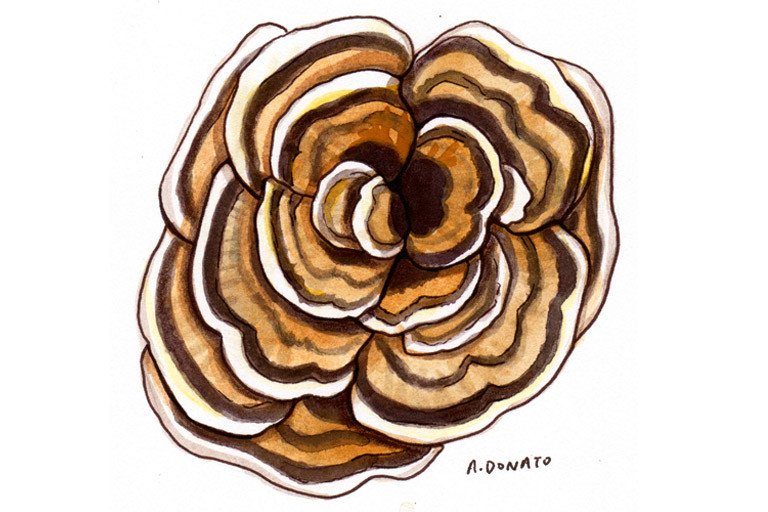
Coriolus versicolor is a mushroom that was used in traditional Chinese medicine as a tonic. PSK and PSP, polysaccharide compounds isolated from Coriolus, were shown to improve immune function in patients with certain cancers when used in conjuction with chemotherapy.

Purported Uses

  • To prevent and treat cancer
    When used in combination with certain chemotherapy regimens, PSK has been shown to benefit patients who have undergone surgical removal of stomach and colorectal cancers. Clinical trials in patients with breast cancer, leukemias, and liver cancer do not show beneficial results.
  • To reduce the side effects of chemotherapy
    Animal studies suggest that PSK can prevent chemotherapy-induced immune suppression, but no clinical trials have been performed to confirm this effect in humans. 
  • To stimulate the immune system
    Studies in animals and human volunteers suggest that PSK might stimulate the immune system. Whether this stimulation results in improved fighting of disease has not been determined.
  • To treat infections
    Coriolus' effects against infections have not been studied in the laboratory or in clinical trials.
  • To reduce the side effects of radiation therapy
    Studies in mice and rats suggest that PSK can prevent radiation therapy-induced immune suppression, but this is yet to be proven in clinical trials.

  • Research Evidence

    Gastric Cancer:
    Two randomized, controlled clinical trials have examined the effectiveness of PSK in patients who underwent curative surgery (full removal of the tumor) for gastric cancer.

    In the first study, the patients received 3 grams of PSK alone, normal chemotherapy alone, or chemotherapy and PSK together for one year, starting two weeks after surgery. After five years, the group that took chemotherapy and PSK had the highest survival rates.

    In the second study, half of the patients alternated four weeks receiving fluorouracil, four weeks taking 3 grams of PSK daily, while the other half alternated four weeks of fluorouracil with four weeks of no treatment. Ten courses were given altogether. After five years, the PSK plus chemotherapy group had higher survival rates. However, only patients with a preserved immune response were allowed to take part in this study, so the results might not apply to immune-suppressed patients.

    Colon Cancer:
    In randomized controlled study, patients received chemotherapy (5-FU) with or without 3 grams of PSK daily, starting after surgery. Chemotherapy was given for six months, while PSK was continued for three years. Those patients who had taken PSK had a higher average survival rate than those who had received chemotherapy alone. 

    Breast Cancer:
    PSK was combined with chemotherapy to measure its effects in patients undergoing surgical removal of operable breast cancer. The patients randomly received combination chemotherapy (5-fluorouracil, cyclophosphamide, mitomycin C, and predonisolone) with or without 3 grams of PSK daily. Each treatment cycle lasted 28 days and was carried out at 6-month intervals for 5 years. Those patients who took PSK along with chemotherapy had a slightly longer average survival time, but the difference was not statistically significant. More clinical trials are needed, and should test PSK in combination with other chemotherapy regimens.


    Warnings

    This product is regulated by the F.D.A. as a dietary supplement. Unlike approved drugs, supplements are not required to be manufactured under specific standardized conditions. This product may not contain the labeled amount or may be contaminated. In addition, it may not have been tested for safety or effectiveness.

    Side Effects

  • Passage of dark colored stools
  • Darkening of fingernails
  • Low-grade toxicities have been reported when used in conjunction with chemotherapy agents. However, such effects may be caused by the chemo agents themselves.

  • Special Point

    PSK is approved for clinical use in Japan. Purified PSK, PSP extracts or raw Coriolus extract alone or in combination with other herbs were used in clinical studies. However, the clinical effects of these products have not been compared.

    Scientific Name

    Coriolus versicolor, Trametes versicolor, Polyporus versicolor, Polystictus versicolor

    Common Name

    PSK, PSP, VPS, Trametes versicolor, Turkey Tai, Yun Zhi, Kawaratake, Krestin

    Brand Name

    Krestin

    Clinical Summary

    Coriolus versicolor is a mushroom of the Basidiomycetes class. It was used initially in Traditional Chinese medicine as a tonic, but recent studies suggest that it has immunostimulant and anti-tumor properties. Polysaccharide-K (PSK), a proprietary product derived from Coriolus, was developed for cancer treatment in Japan. When used as an adjuvant, PSK appears to improve survival rates in patients with gastric (1) (2) and colorectal (3) (4) (5) cancers. Other Coriolus extracts, such as polysaccharide-peptide (PSP) and VPS, are available as dietary supplements. When used in conjunction with chemotherapy, PSP may benefit patients with advanced non-small cell lung cancer (7). Other clinical studies using Coriolus extract alone or in combination with other botanicals also suggest positive immunomodulatory effects (8) (9). However, studies on breast cancer (10), hepatocellular carcinoma (11), and leukemia (12) produced mixed results. A hot water extract of Coriolus, VPS, was found to enhance development of large intestinal tumors in mice (21). Coriolus extracts are generally well tolerated but minor adverse effects have been reported.

    Many over-the-counter Coriolus products are not standardized, making it difficult to compare potency between brands. It is also unclear if PSK, PSP and other Coriolus extracts have comparable effects.

    Purported uses

  • Cancer prevention
  • Cancer treatment
  • Chemotherapy side effects
  • Hepatitis
  • Herpes
  • Immunostimulation
  • Infections
  • Radiation therapy side effects
  • Strength and stamina

  • Constituents

    Proteoglycans: Polysaccharide-K (PSK), a beta-1,4-glucan (isolated from the CM-101 strain), polysaccharide-P (PSP), isolated from the COV-1 strain

    Mechanism of Action

    Coriolus versicolor is thought to be a biological response modifier. The proteoglycan constituents are thought to be responsible for its immunostimulant and anticancer activities. Many different mechanisms of action have been proposed. PSK induces cytokine expression in human peripheral blood mononuclear cells in vitro. TNF-alpha and IL-8 gene expression are significantly induced after PSK administration in healthy volunteers and gastric cancer patients, although individual response varies (13).

    Several animal studies report of synergism between PSK and biologic therapies, including a concanavalin A-bound L1210 vaccine and the IgG2a monoclonal antibody against human colon cancer cells (14). PSP induces cytokine production and T-cell proliferation and prevents immune suppression due to cyclophosphamide in animal models. Peritoneal macrophages isolated from mice that were fed PSP show increased production of reactive nitrogen intermediates, superoxide anions, and tumor necrosis factor (15). PSP selectively induced apoptosis of human promyelocytic leukemia HL-60 cells (16). In vitro, PSP inhibits the interaction between HIV-1 gp120 and CD4 receptor, HIV-1 transcriptase activity, and glycohydrolase enzyme activity associated with viral glycosylation (17).

    PSP also shows analgesic activity in mouse models (18). Non-small cell lung cancer patients have increased leukocyte and neutrophil counts, and increased serum IgG and IgM after consumption of PSP (7). Healthy volunteers as well as breast cancer patients who used a formula containing Coriolus and Salvia were found to have elevated counts of T-helper lymphocytes (CD4+), high ratio of CD4+/CD8+), and elevated absolute counts of B-lymphocytes (8) (9).

    Pharmacokinetics

    Absorption
    Animal studies with radiolabeled PSK show that it is partially decomposed to small molecular products in the digestive tract. The full molecular spectrum of labeled PSK is absorbed within 24 hours following oral administration in mice. Peak plasma levels of low molecular weight substances occur at 0.5-1 h in rats and 1-2 h in rabbits, while molecules the size of PSK appear in serum after 4, 10, and 24 h.
    Distribution
    Radiolabeled PSK or its metabolites are detected in the digestive tract, bone marrow, salivary glands, thymus, adrenal gland, brain, liver, spleen, pancreas, and tumor tissue in sarcoma-bearing mice. Activity remains high longest in the liver and bone marrow.
    Excretion
    Approximately 70% of radiolabeled PSK is excreted in expired air, 20% in feces, 10% in urine, and 0.8% in bile. Approximately 86% is excreted within 24 h.
    (4)

    Adverse Reactions

    Adverse reactions from Coriolus are rare. However, passage of dark colored stools (not originating from occult blood) (19), darkening of fingernails (20), and low-grade hematological and gastrointestinal toxicities have been reported when used in conjunction with chemotherapy agents (3). However, such effects may be caused by the chemo agents themselves.

    Herb-Drug Interactions

    None known

    Lab Interactions

    None known

    Literature Summary and Critique

    Wong CK, et al. Immunomodulatory effects of Yun Zhi and Danshen capsules in health subjects—a randomized, double-blind, placebo-controlled, crossover study. Int Immunopharmacology 2004;4:201-211.
    One hundred healthy subjects were given a combination of Yun Zhi (Coriolus versicolor, 50 mg/kg body weight) and Danshen (Salvia miltiorrhiza, 20mg/kg body weight) capsules or placebo for four months. After a 2-month washout period, subjects who received Coriolus and Salvia capsules were given placebo while those on placebo received Coriolus and Salvia capsules for another four months. Researchers used flow cytometry and cDNA expression arrays to assess immune functions and gene expression. Results indicated that oral consumption of Coriolus-Salvia capsules significantly increased the peripheral blood mononuclear cell (PBMC) gene expression of interleukin (IL-2) receptor, increased the percentage and absolute counts of T helper cell and ratio of Thelper/Tsuppressor cells, and also the production of interferon-gamma from PBMC. Since T helper cells participate in both cell mediated and humoral immunities, Coriolus-Salvia combination may be used to enhance immune function. Studies are being conducted in cancer patients to determine the immunomodulating potential of these agents.

    Nakazato H, et al. Efficacy of immunochemotherapy as adjuvant treatment after curative resection of gastric cancer. Lancet 1994;343:1122-6.

    A randomized, controlled, multicenter evaluation of chemotherapy with or without PSK in 262 patients after curative gastrectomy. Chemotherapy consisted of intravenous mitomycin C on postoperative days 1 and 7 plus 150 mg/d oral fluorouracil. The PSK group received 3 g/d oral PSK for 4 weeks alternating with 4 weeks fluorouracil, while control patients received only fluorouracil alternated with 4 weeks without treatment. Ten courses were given to both groups. PSK patients experienced a greater 5-year disease-free rate (70.7% vs. 59.4%) and 5-year survival rate (73% vs 60%) than the control group. Because eligibility criteria included a positive PPD, this trial only represents the benefits of PSK in patients with a preserved immune response.


    References

    1. Nakazato H, et al. Efficacy of immunochemotherapy as adjuvant treatment after curative resection of gastric cancer. Study Group of Immunochemotherapy with PSK for Gastric Cancer. Lancet 1994; 343(8906): 1122-6.
    2. Niimoto M, et al. Postoperative adjuvant immunochemotherapy with mitomycin C, futraful and PSK for gastric cancer. An analysis of data on 579 patients followed for five years. Jpn J Surg 1988; 18(6): 681-6.
    3. Ohwada S, et al. Adjuvant immunochemotherapy with oral Tegafur/Uracil plus PSK in patients with stage II or III colorectal cancer: a randomised controlled study. Br J Cancer 2004; 90(5): 1003-10.
    4. Mitomi T, et al. Randomized, controlled study on adjuvant immunochemotherapy with PSK in curatively resected colorectal cancer. The Cooperative Study Group of Surgical Adjuvant Immunochemotherapy for Cancer of Colon and Rectum (Kanagawa). Dis Colon Rectum 1992; 35(2): 123-30.
    5. Torisu M, et al. Significant prolongation of disease-free period gained by oral polysaccharide K (PSK) administration after curative surgical operation of colorectal cancer. Cancer Immunol Immunother 1990; 31(5): 261-8.
    6. Lau CB, et al. Cytotoxic activities of Coriolus versicolor (Yunzhi) extract on human leukemia and lymphoma cells by induction of apoptosis. Life Sci 2004; 75(7): 797-808.
    7. Tsang KW, et al. Coriolus versicolor polysaccharide peptide slows progression of advanced non-small cell lung cancer. Respir Med 2003; 97(6): 618-24.
    8. Wong CK, et al. Immunomodulatory effects of yun zhi and danshen capsules in health subjects--a randomized, double-blind, placebo-controlled, crossover study. Int Immunopharmacol 2004; 4(2): 201-11.
    9. Wong CK, et al. Immunomodulatory activities of Yunzhi and Danshen in post-treatment breast cancer patients. Am J Chin Med 2005; 33(3): 381-95.
    10. Iino Y, et al. Immunochemotherapies versus chemotherapy as adjuvant treatment after curative resection of operable breast cancer. Anticancer Res 1995; 15(6B): 2907-11.
    11. Suto T, et al. Clinical study of biological response modifiers as maintenance therapy for hepatocellular carcinoma. Cancer Chemother Pharmacol 1994; 33: S145-8.
    12. Ohno R, et al. A randomized trial of chemoimmunotherapy of acute nonlymphocytic leukemia in adults using a protein-bound polysaccharide preparation. Cancer Immunol Immunother 1984; 18(3): 149-54.
    13. Kato M, et al. Induction of gene expression for immunomodulating cytokines in peripheral blood mononuclear cells in response to orally administered PSK, an immunomodulating protein-bound polysaccharide. Cancer Immunol Immunother 1995; 40(3): 152-6.
    14. Tsukagoshi S, et al. Krestin (PSK). Cancer Treat Rev 1984; 11(2): 131-55.
    15. Liu WK, et al. Activation of peritoneal macrophages by polysaccharopeptide from the mushroom, Coriolus versicolor. Immunopharmacology 1993; 26(2): 139-46.
    16. Yang X, et al. The cell death process of the anticancer agent polysaccharide-peptide (PSP) in human promyelocytic leukemic HL-60 cells. Oncol Rep 2005; 13(6): 1201-10.
    17. Collins RA, Ng TB. Polysaccharopeptide from Coriolus versicolor has Potential for Use Against Human Immunodeficiency Virus type I Infection. Pharmcology Letters 1997; 60(25): 387-387.
    18. Ng TB, Chan WY. Polysaccharopeptide from the mushroom Coriolus versicolor possesses analgesic activity but does not produce adverse effects on female reproductive or embryonic development in mice. Gen Pharmacol 1997; 29(2): 269-73.
    19. Shiu WCT, et al. A Clinical Study of PSP on Peripheral Blood Counts during Chemotherapy. Phytotherapy Research 1992; (6): 217-218.
    20. Kidd, PM. The use of mushroom glucans and proteoglycans in cancer treatment. Altern Med Rev 2000 5(1): 4-27.
    21. Toth B, Coles M, Lynch J. Effects of VPS extract of Coriolus versicolor on cancer of the large interstine using a serial sacrifice technique. In Vivo 2006;20(3):341-6.

    Last Updated: Mar. 24, 2009
    E-mail your questions and comments to aboutherbs@mskcc.org.
    Bookmark and SharePrintEmail This Page