History & Overview Annual Report President's Pages Center News Community Affairs
Make a Gift Cycle for Survival Fred's Team Rock & Run on the River Yankees Universe Fund Thomas Blake Sr. Memorial Research Fund Donating Blood & Platelets Volunteering Thrift Shop Park Avenue Potluck Cookbook
Press Releases In the News Information for Journalists News@MSKCC
Manhattan New Jersey Long Island Westchester
Working at Memorial Sloan-Kettering Work Sites College Recruitment About Nursing Job Fairs & Career Days Job Search & Apply Online
Making an Appointment
Search About Herbs:

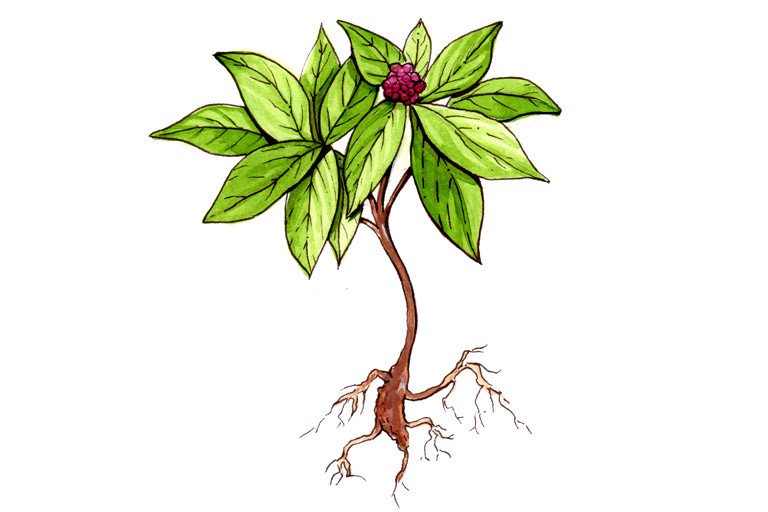
Ginseng (American)

How It Works

Bottom Line: American ginseng is NOT an effective treatment for cancer or any other serious disease. It does not improve athletic performance.

American ginseng has been shown to lower blood sugar levels in humans. Scientists think that the effects of ginseng come from components of the botanical called ginsenosides. Little research has been done on it, either in the laboratory or in people. However, we do have some research on Panax ginseng, which is an Asian form of ginseng. This research indicates that the ginsenosides both stimulate and inhibit the central nervous system in humans and stimulate the immune system in mice. Laboratory studies in mice and population studies in humans suggest that Panax ginseng might have cancer-preventative properties, but this is uncertain. In a recent study, American ginseng has been shown to decrease the anticoagulant effects of warfarin.

Purported Uses

  • To improve athletic performance
    No scientific evidence supports this use.
  • To prevent and treat cancer
    No scientific evidence supports this use.
  • To treat diabetes
    A handful of studies show a blood glucose-lowering effect of American ginseng in humans, but there is not enough evidence to support replacing diabetes medications with American ginseng.
  • To stimulate the immune system
    Some studies show an immunostimulant effect in animals. There is no proof from clinical trials that this effect occurs in humans.
  • For increased strength and stamina
    Although ginseng is often promoted for this use, there is no proof from clinical trials that this effect occurs in humans.

    • Research Evidence

      Diabetes:
      The effects of ginseng have been studied on ten healthy men and 9 people with diabetes. Subjects were given 3 grams of either American ginseng or a placebo before a glucose tolerance test on four separate occasions. All subjects had lower glucose concentrations 40 minutes after taking glucose. No adverse effects were noted. Further studies have been suggested to understand the effects of long-term use of ginseng.

      Warnings

    • This product is regulated by the FDA as a dietary supplement. Unlike approved drugs, supplements are not required to be manufactured under specific standardized conditions. This product may not contain the labeled amount or may be contaminated. In addition, it may not have been tested for safety or effectiveness.

    • Do Not Take If

    • You have high blood pressure (It may cause manic-like symptoms by interacting with other medicines you may be on).
    • You are diabetic (It may interfere with insulin or cause very low blood sugar).
    • You are taking warfarin or other blood thinners (It may interfere with the action of the anticoagulant).
    • You regularly ingest large amounts of caffeine (It may worsen insomnia or nervousness).

    • Side Effects

    • Inability to fall asleep (insomnia)
    • Drowsiness
    • Nervousness
    • Fast heart rate
    • Headache
    • Low blood sugar (hypoglycemia)

    • Special Point

      Do not use ginseng for more than one month.

      Scientific Name

      Panax quinquefolius

      Common Name

      Xi yang shen, Tienchi ginseng, western ginseng, five-fingers

      Clinical Summary

      Derived from the root of the plant. Most American ginseng is cultivated at the northwest region of United States and Canada. Patients take this supplement to improve athletic performance, strength, and stamina, and to treat diabetes and cancer. In Chinese herbal formulas, American ginseng is frequently used to nourish 'Yin' (1). The saponin glycosides, also known as ginsenosides or panaxosides, are thought responsible for American ginseng's effects, but there is limited laboratory or clinical research for this species. Ginsenosides have both stimulatory and inhibitory effects on the CNS (4), alter cardiovascular tone, enhance humoral and cellular-dependent immunity, and may inhibit the growth of cancer in vitro (3). Data from an epimediological study showed that ginseng improved survival and quality of life in breast cancer patients (13). American ginseng may increase the hypoglycemic effect of insulin and sulfonylureas (7). A recent study has shown that ginseng may reduce the efficacy of warfarin (11). Limited data suggest that it may improve glucose control in diabetics (2) (6), but additional research is necessary. Results from a randomized controlled trial indicate that ginseng has a modest effect on reducing the number and severity of colds (12). However, further research must be performed to determine efficacy and optimal dose of American ginseng for all proposed uses.

      Purported uses

    • Cancer prevention
    • Cancer treatment
    • Diabetes
    • Health maintenance
    • Immunostimulation
    • Strength and stamina

    • Constituents

    • Saponin glycosides: Panaquilon, ginsenosides
    • Volatile oils
    • Antioxidants
    • Polysaccharides
    • Fatty acids
    • Vitamins
    • Polyacetylenes
      (1) (5)

    • Mechanism of Action

      Ginsenosides are thought responsible for American ginseng's activity, although the exact mechanism of action is unknown. American ginseng lowers serum glucose and may affect carbohydrate metabolism (2) (6). Related species, such as Panax ginseng, have been the focus of most laboratory and clinical research. Experiments using extracts from these species indicate that ginsenosides stimulate and inhibit the CNS (4). The extracts also stimulate TNF alpha production by alveolar macrophages (10). The Rg1 ginsenoside is associated with improvements in humoral and cell-mediated immune response and increases in T helper cells, T lymphocytes, and NK cells in mice (5). Anticancer activity has been shown in vitro for several ginsenosides (3). Ginseng's antagonistic effect on warfarin is not due to vitamin K (11).

      Pharmacokinetics

      Evaluation of A1, A2, B2, and C ginsenosides in the rabbit suggests one compartment pharmacokinetics for all ginsenosides following intravenous administration. Elimination half-lives range from 20-500 minutes. Ginsenoside A1 is rapidly absorbed after intraperitoneal administration. All ginsenosides are primarily eliminated unchanged in the urine.
      (1)

      Contraindications

      Breast cancer patients should use this product with caution as ginseng may stimulate the growth of breast cancer cells (9).

      Adverse Reactions

      No significant reactions reported

      Herb-Drug Interactions

      Monoamine oxidase inhibitors (MAOIs): American ginseng may cause manic-like symptoms when combined with MAOIs.
      Insulin and sulfonylureas: American ginseng may increase the hypoglycemic effect of insulin and sulfonylureas.
      (7)
      Warfarin: Ginseng has been shown to antagonize warfarin's effects. (11)

      Lab Interactions

      Reductions in PT, PTT, and INR may occur. Reductions in blood glucose may occur.
      (8) (11)

      Literature Summary and Critique

      Vuksan V, et al. American ginseng (Panax quinquefolius L) reduces postprandial glycemia in nondiabetic subjects and subjects with type 2 diabetes mellitus. Arch Intern Med 2000;160:1009-13.
      A small open label evaluation of American ginseng extract on healthy (n=10) and type II diabetic (n=9) subjects. Patients were given 3 grams American ginseng extract or placebo prior to 25 gram glucose tolerance test on four separate occasions. Nondiabetic and diabetic subjects had significantly lower glucose concentrations 40 minutes after glucose administration. No adverse effects were noted during the study. The author suggests that American ginseng extract reduces postprandial glucose concentrations by an unknown mechanism. Additional studies are required to understand the effects of chronic American ginseng administration.

      Yuan CS, et al. Brief Communication: American Ginseng reduces Warfarin's effect in healthy patients. Annals of Internal Medicine 2004;141:23-27.
      Twenty healthy adults took part in a four-week trial of ginseng and its effects on warfarin. All subjects received warfarin during week 1 and 4. Subjects were randomly assigned to receive either 1.0 gram American ginseng or placebo twice daily starting in week 2. Subjects receiving ginseng had significantly decreased International Normalized Ratios (INR) when compared with those receiving placebo. Peak INR and peak plasma warfarin levels were correlated. Researchers conclude that ginseng reduces warfarin's anticoagulant effect and suggest that physicians ask their patients about ginseng use before prescribing warfarin.

      References

      1. Huang KC. The Pharmacology of Chinese Herbs, 2nd ed. New York: CRC Press; 1999.
      2. Vuksan V, et al. American ginseng (Panax quinquefolius L) reduces postprandial glycemia in nondiabetic subjects and subjects with type 2 diabetes mellitus. Arch Intern Med 2000;160:1009-13.
      3. Shin HR, et al. The cancer-preventive potential of Panax ginseng: a review of human and experimental evidence. Cancer Causes Control 2000;11:565-76.
      4. Attele AS, Wu JA, Yuan CS. Ginseng pharmacology: multiple constituents and multiple actions. Biochem Pharmacol 1999;58:1685-93.
      5. Chen SE. American ginseng. III. Pharmacokinetics of ginsenosides in the rabbit. Eur J Drug Metab Pharmacokinet 1980;5:161-8.
      6. Vuksan V, et al. American ginseng (Panax quinquefolius L.) attenuates postprandial glycemia in a time-dependent but not dose-dependent manner in healthy individuals. Am J Clin Nutr 2001;73:753-8.
      7. Brinker F. Herb Contraindications and Drug Interactions, 3rd ed. Sandy (OR): Eclectic Medical Publications; 2001.
      8. Vuksan V, et al. American ginseng improves glycemia in individuals with normal glucose tolerance: effect of dose and time escalation. J Am Coll Nutr 2000;6:738-44.
      9. Amato P, Christophe S, Mellon PL. Estrogenic activity of herbs commonly used as remedies for menopausal symptoms. Menopause 2002;9:145-50.
      10. Assinewe VA, et al. Extractable polysaccharides of Panax quinquefolius L. (North American ginseng) root stmulate TNFalpha production by alveolar macrophages. Phytomedicine 2002;9:398-404.
      11. Yuan CS, et al. Brief Communication: American Ginseng reduces Warfarin's effect in healthy patients. Annals of Internal Medicine 2004;141:23-27.
      12. Predy GN, et al. Efficacy of an extract of North American ginseng containing poly-furanosyl-pyranosyl-saccharides for preventing upper respiratory tract infectons: a randomized controlled trial. CMAJ 2005;173(9):1043-8.
      13. Cui Yong, et al. Association of ginseng use with survival and quality of life among breast cancer patients. Am J Epidemiol 2006; 163(7):645-53.

      Last Updated: Mar. 18, 2009
      E-mail your questions and comments to aboutherbs@mskcc.org.
      Bookmark and SharePrintEmail This Page