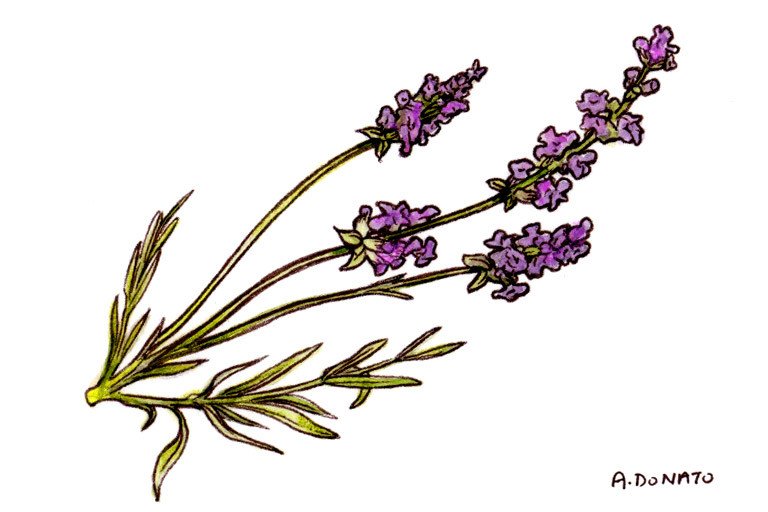
Common Names
- Aspic
- Lavandin
- Spike lavender
For Patients & Caregivers
Tell your healthcare providers about any dietary supplements you’re taking, such as herbs, vitamins, minerals, and natural or home remedies. This will help them manage your care and keep you safe.
Several studies suggest lavender may be helpful for anxiety, depression, and to improve sleep. In studies that use massage along with lavender aromatherapy, massage may be more responsible for some of the benefits.
Lavender has a long history as an herbal remedy in traditional medicine to improve mood and as a sleep aid. Several studies suggest that lavender may reduce anxiety, depression and pain, and improve sleep, but additional studies are needed. In other studies where lavender is used with massage, benefits may be due to the massage, rather than the lavender itself.
Lavender can cause allergic skin reactions and may increase sedative effects. It may also cause enlarged breasts in boys. Because it has weak hormonal activities, long-term oral or topical use of lavender should be avoided in patients with hormone-sensitive cancers.
- Anxiety
Some oral lavender formulations have been shown to relieve anxiety, but additional studies that confirm these effects are needed. - Cancer treatment
Lab experiments have identified some properties in lavender that may be helpful against cancer, but no studies have been conducted in humans. A compound called POH that may have come from lavender or other plants was developed as a nasal spray and showed some benefit in palliative care patients with recurrent gliomas. - Cancer symptom control
Lavender did not reduce anxiety during radiation treatment. Two studies that used lavender aromatherapy along with massage did not find an increased benefit because of the use of lavender. A hospital that allowed the use of aromasticks found that lavender was among the most popular, did not disturb others, and improved breathing and relaxation. Because lavender has weak hormonal effects, long-term oral or topical use should be avoided in patients with hormonal cancers. - Depression
Several studies show that lavender may help with depression, but additional studies that confirm these effects are needed. - Insomnia
Several studies show that lavender can improve sleep. For one study of lavender aromatherapy with massage in cancer patients, the massage itself was thought to be responsible for the benefits. - Migraines
One study showed that inhaling lavender oil may reduce migraine headaches. - Pain
A few studies show that lavender oil is effective in treating chronic pain, but the effects are not long-lasting. In two studies with children, inhaling lavender lowered heart rate and pain medication use. Other types of pain relieved with the use of lavender include patients in labor and those who have suffered burns. - Spasms
One study showed inhaled lavender relieved menstrual cramps and emotional symptoms, but the effects did not last long.
- Oral: Nausea, belching, confusion
- Topical: Allergic skin reactions and sensitivity to sunlight
Although lavender appears to be well tolerated, it may have weak hormonal effects.
Case Reports
Excessive breast development in preteen boys and early breast development in girls were reported with repeated application of lavender and tea tree oils, as well as perfumes with lavender as a main component.
Do Not Take if:
- You are pregnant and nursing: Excessive internal use of lavender should be avoided.
- You are allergic to lavender: Skin rash has been reported.
- You have a hormone-sensitive cancer: In lab studies, lavender showed weak estrogenic and antiandrogenic activities, and it is unclear whether this would lead to any positive or negative effects with long-term oral or topical use.
- You are taking sedatives or hypnotic drugs: Lavender may increase their effects.
- You are taking CNS depressants, anticonvulsants: Lavender may increase narcotic and sedative effects.
For Healthcare Professionals
Derived from the flowering tops of the plant, lavender is used in lotions, perfumes, and in aromatherapy. It also has a long history as an herbal remedy in traditional medicine to improve mood and as a sleep aid.
Preclinical data suggest anxiolytic (30) (31), anticonvulsant (26) (34), neuroprotective (21) (32) (33), cardioprotective (35), antimicrobial (4) (27) (28), anti-inflammatory (22), and antioxidant (29) effects. In dementia models, lavender oil inhalation reversed spatial memory loss (23).
Studies in humans of both oral formulas and lavender aromatherapy have been conducted. Clinical trials suggest benefit with oral lavender preparations against depression (7) (43) and anxiety (12) (13) (16) (18) (41) (42) (67).
Studies of lavender aromatherapy suggest it may help reduce preoperative anxiety (68) (69) as well as postoperative analgesics (45) and various types of pain (46) (70) (71) (72), but it did not lower anxiety during radiotherapy (6). Other studies of inhaled lavender found improvements in sleep quality (36), post-acute-stress memory and physiologic function (73), dysmenorrhea and emotional symptoms (37) (38), premenstrual syndrome (75), menopause flushing (74), migraine frequency (19), agitation and falls in older individuals (20) and dementia symptoms (5) (15) (39).
Various meta-analyses suggest benefit with either oral lavender or aromatherapy for anxiety and menopausal symptoms, but additional high-quality studies are needed to confirm safety and efficacy (78) (79).
Aromatherapy massage with lavender improved psychological and physiological responses in patients with acute coronary syndrome (76), but did not enhance the benefits of massage in a hospice setting (8).
Preclinical studies suggest anticancer effects of lavender against various cancer cell lines (47) (48) (49). Animal studies that employed the monocyclic terpene perillyl alcohol (POH) derived from several herbs including lavender showed tumor inhibition and regression (50) (51), but studies in humans are needed.
- Anxiety
- Cancer
- Depression
- Insomnia
- Migraines
- Pain
- Spasms
Anti-inflammatory and analgesic effects of lavender are attributed to 1,8-cineole (2). Other major constituents include linalool and linalyl acetate, which may relax blood vessels and induce anxiolytic effects (30) (40) (54). In a murine model, exposure to linalool odor induced anxiolytic effects without motor impairment (77).
Lavender oil also has broad-spectrum antibacterial activity (22). It reversed bacterial resistance to piperacillin in multi-drug-resistant E.coli via alterations of outer membrane permeability and bacterial quorum sensing inhibition (27); and prevented immediate-type allergic reactions by inhibiting mast cell degranulation (25). Antimicrobial activity was synergistic or additive when combined with other essential oils, with the most favorable combinations being cinnamon or sweet orange oil against C. albicans and S. aureus, respectively (28).
In addition, lavender has CNS depressive effects (3). In animal models, it attenuated neuronal damage, and upregulated catalase, superoxide dismutase, glutathione peroxidase, and the glutathione/glutathione disulfide ratio (21). Activity in stroke models include increased endogenous antioxidant defense, oxidative stress inhibition, and increased VEGF expression (33). In an Alzheimer’s disease model, lavender extract improved spatial performance by diminishing beta-amyloid production in the hippocampus (32). In mice with anosmia, anxiolytic effects with lavender inhalation were likely due to serotonergic mechanisms rather than olfactory activation (30) (31). However, whether lavender alleviates or exacerbates anxiety may actually be determined by genetic influences on temperament as these behaviors were amplified after exposure to lavender inhalation in calm versus nervous sheep (56). Antiepileptic effects are due to suppressed nitric oxide levels in the brain (26). Cardioprotective effects are attributed to lavender’s antioxidant properties (35). In wound healing models, lavender oil accelerated re-epithelialization and wound closure via enhanced epidermal growth factor secretion (55).
In young women with premenstrual syndrome, lavender inhalation increased the high frequency component of heart rate variability, reflecting parasympathetic nervous system activity (37). Although lavender reduced anxiety during urodynamic assessments by increasing gamma-aminobutyric acid inhibitory effects in the amygdala, blood pressure increases were attributed to potential diuretic activity (40). A positron emission tomography study revealed anxiolytic effects may occur via reduced serotonin-1A receptor binding (41). Effects on preoperative anxiety were attributed to both the use of lavender aroma as well as the placebo effect of added attention to patients (68).
An aqueous lavender extract inhibited lymphocyte proliferation in Hodgkin’s lymphoma cell lines via apoptosis (47). In addition, lavender extracts and essential oil exhibited cytotoxicity in malignant cells, upregulated Bax expression, and induced PARP cleavage in HeLa cells, and caused a sub-G1 peak in treated cells compared with controls (48). Perillyl alcohol (POH), derived from botanicals including lavender, may affect transforming growth factor-beta and/or Ras signaling pathways (59) and Na/K-ATPase inhibition (60).
Lavender oil has weak estrogenic and antiandrogenic activities that could alter estrogen and androgen signaling pathways (14).
Oral: Nausea, confusion (43); belching (12).
Topical: Allergic contact dermatitis (17) (24) and photosensitivity (61).
Although lavender appears to be well tolerated, it may have weak hormonal effects (14).
Case Reports (topical)
Prepubertal gynecomastia: With repeated application of lavender and tea tree oils (14). At the same time, there was considerable discourse as to whether or not other co-ingredients could have been the cause of enlarged breasts (62) (63) (64) (65). In 3 additional boys who were chronically exposed to lavender, two used a cologne, one of which was confirmed to contain lavender. Symptoms improved after the exposure was discontinued (53).
Premature breast development: In 3 girls who had regular exposure to lavender-fragranced products (80). Breast growth subsided with product discontinuation.