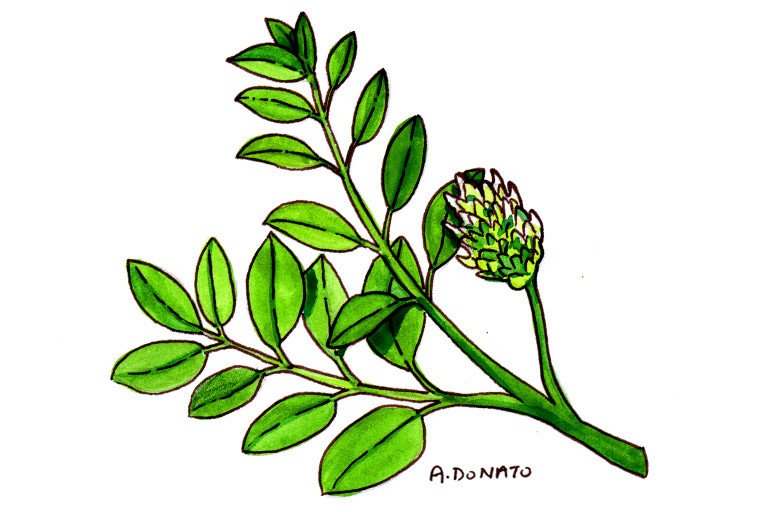
Common Names
- Gan cao
- Sweet root
- Glycyrrhiza
- Liquorice
For Patients & Caregivers
Tell your healthcare providers about any dietary supplements you’re taking, such as herbs, vitamins, minerals, and natural or home remedies. This will help them manage your care and keep you safe.
Licorice comes from the root of the licorice plant. It’s commonly used to flavor and sweeten foods and drinks. The herb is also an important part of traditional Chinese medicine and traditional Indian medicine, known as Ayurveda.
Licorice is used to treat:
- Gastrointestinal problems such as bloating, discomfort, nausea, and burping
- Peptic ulcers (sores in your stomach lining)
- Hepatitis (swelling of the liver)
- Bronchitis (when the tubes that carry air to your lungs are swollen)
- Inflammation (swelling)
Licorice also has other uses that haven’t been studied by doctors to see if they work.
It’s generally safe to use licorice in food and tea. Talk with your healthcare providers before taking licorice supplements. Herbal supplements are stronger than the herbs you would use in cooking.
Supplements can also interact with some medications and affect how they work. For more information, read the “What else do I need to know?” section below.
Side effects of licorice may include:
- High blood pressure
- Lethargy (lack of energy)
- Muscle pain
- Cardiac arrhythmia (irregular heartbeat)
- High sodium retention
- Low blood levels of potassium
- Reduced desire to have sex
- Decreased oil on your scalp
- Low blood platelet count
- Heavy licorice use can cause early pre-term births
Do not take licorice if:
- You’re taking cardiac glycosides (medications used to treat heart failure and irregular heartbeat). Licorice may increase their effects which can be harmful.
- You’re taking diuretics (medications that make you urinate often). Licorice may lower your blood potassium level.
- You have hypertension (high blood pressure) and take medication to treat it. Licorice causes hypertension and may reduce the effectiveness of hypertension medication.
- You’re taking cortisol acetate. Licorice was reported to increase levels of cortisol in a patient with Addison’s disease (disease where your body doesn’t make enough cortisol) who took cortisone acetate. Higher levels of cortisol can lead to increased side effects.
For Healthcare Professionals
Derived from the root of the plant, licorice is used to flavor foods. It is also used in traditional Chinese medicine to detoxify and enhance or balance the effects of other components in herbal formulations. In Ayurveda, licorice is used as a tonic, an expectorant, and as a demulcent. A number of compounds including glycyrrhizin are thought to be responsible for its biological effects. Licorice supplements are promoted for menopausal symptoms, digestive issues, cough, and bacterial and viral infections. Preclinical findings indicate antibacterial (2) (27), antiviral (48), anticancer (3) (4) (28) (29), anti-inflammatory (30), and hepatoprotective (49) effects. Licorice also demonstrated estrogenic effects (10), reduced cardiotoxicity associated with doxorubicin (31), and improved the antitumor effects of cyclophosphamide (32).
Clinical data suggest benefits in lowering dyspepsia (1) and hyperlipidemia (33). Concurrent intake of a glycyrrhizin-containing product during alcohol consumption was found to have hepatoprotective effects (50). Licorice along with weight loss and lifestyle modification was superior to lifestyle modification alone for the treatment of nonalcoholic fatty liver disease (80). When combined with fermented milk containing Lactobacillus paracasei, licorice reduced bacterial density and improved histologic inflammation in patients with H. pylori infection (62); and preoperative gargling with a licorice solution reduced postoperative sore throat compared to gargling with sugar water (51). Licorice also accelerated healing in patients with second-degree burns (81). Systematic reviews have confirmed benefits of topical licorice in preventing postoperative sore throat (63) (73).
Additional studies found symptom improvement in patients with Parkinson’s disease suggestive of neuroprotective effects (67). When used as a mouthwash, licorice prevented dental caries (74), periodontitis (88), radiation-induced mucositis (88), and improved oral health in intubated patients (89) as well as xerostomia in those undergoing hemodialysis (52). Benefits were also reported when used as a mucoadhesive film in patients with oral mucositis during radiotherapy (53). A systematic review and meta analysis found herbal formulas containing licorice to alleviate chemo-induced gastrointestinal toxicity in those with colorectal cancer (75).
Of note, chronic ingestion of even moderate doses of licorice has been associated with hypertension and hypokalemia (54) (68).
- GI disorders
- Peptic ulcers
- Hepatitis
- Bronchitis
- Inflammation
Glycyrrhizin, one of the bioactive compounds of licorice, can bind to glucocorticoid and mineralocorticoid receptors, and exert its effects via inhibition of 11b-hydroxysteroid dehydrogenase (12). Licorice can reduce serum testosterone by inhibiting 17-hydroxysteriod dehydrogenase (35) (36). It also contains isoflavones and other constituents that have estrogen receptor-modulating activities (10). The flavone and liquiritigenin components selectively activate ER-beta (11).
Animal studies suggest liquiritigenin may have neuroprotective effects via increasing expression of brain-derived neurotrophic factor and phosphorylation of extracellular signal-regulated kinase and cAMP response element binding in the hippocampus (55). Glycyrrhizic acid, a triterpene glycoside, demonstrated anti-allergic properties by restoring the immune balance of subsets 1 and 2 of T-helper cells in a dose-dependent manner. It also reduced B cells producing allergen-specific IgE and IgG1 (56).
Licorice demonstrated chemopreventive effects by modulating expression of Bcl-2/Bax proteins, which act as apoptotic regulatory factors (3), and via inhibiting carcinogenesis (4). Other mechanisms include inducing apoptosis in human oral squamous cell carcinoma cells by regulation of the JAK2/STAT3 signaling pathway (60), and by modulating cyclin B1-CDK1 for G2/M arrest in prostate cancer cells (61).
The most common side effect of licorice is hypokalemic hypertension, which occurs secondary to inhibition of 11beta-hydroxysteroid dehydrogenase, a renal enzyme responsible for converting cortisol to cortisone. This inhibition results in enhancing the mineralocorticoid effects of cortisol (36) that include sodium retention and potassium excretion.
Due to the adverse reaction profile of licorice, many researchers used the deglycyrrhizinated licorice extract that is free of glycyrrhizin.
- Hypertension (16) (45) (57) (59) (66) (68) (70) (71) (82), hypertensive retinopathy and nephropathy (59), lethargy, muscle pain, sodium retention, hypokalemia (17) (18) (19) (20) (26) (41) (59) (68) (70), adrenal crisis (21), ventricular fibrillation (22), cardiac arrythmias (24) (83), glycyrrhizic acid poisoning (25), leukoderma (42), thrombocytopenia (43) , pseudohyperaldosteronism (84) (85) (90) (91), respiratory failure (92) and carpal tunnel syndrome (23) with ingestion of licorice or licorice containing products.
- Intracranial hemorrhagic stroke and cerebral microbleeds: In a 68-year-old woman, associated with excessive use of licorice. Her symptoms resolved after discontinuing licorice (64).
- Early preterm births: A systematic review showed an association between heavy licorice use and early preterm births (65).
- Cardiac arrest: In several cases following excessive consumption of licorice products (69) (72).
- Severe refractory hypokalaemia with hypertensive crisis and acute pulmonary oedema: In a 79-year-old woman, associated with excessive consumption of licorice. Her symptoms improved after stopping licorice use (76).
- Arterial hypertension, hypokalemia, and metabolic alkalosis: In several cases following excessive intake of licorice. In all cases, symptoms resolved after appropriate treatments (77).
- Idiopathic mesenteric phlebosclerosis: In a 50-year-old woman, associated with long-term use of licorice. Her symptoms improved after discontinuing licorice (78).
- Lethal arrhythmia: In an 89-year-old woman following licorice use to treat chronic constipation for 2 months (86).
- Apparent mineralocorticoid excess: In a 65-year-old woman, associated with use of a licorice-containing supplement. Cessation of supplement led to resolution of symptoms (93).
- Cardiac glycosides: Licorice may potentiate toxicity (24).
- Diuretics: Licorice may increase the risk of hypokalemia (17) (18).
- Insulin: Licorice may increase insulin sensitivity (38) . Clinical relevance is not known.
- Anticoagulants: Licorice may increase the metabolism and clearance of warfarin (19). Clinical relevance is not known.
- Cyclosporine: Licorice greatly reduced the oral bioavailability of cyclosporine by activating P-gp and CYP3A4 (46). Clinical relevance is not known.
- Cortisol acetate: Licorice increased cortisol availability in patients with Addison’s disease in the hours following oral administration of cortisone acetate (47).
- Metformin: Pre-administration of licorice juice reduced the efficacy of metformin, in a rat model (58). The clinical relevance has yet to be determined.
- Antihypertensives: Because of its hypertensive effects, licorice may interfere with antihypertensive medications (66).
- MAO-inhibitors: Licorice may potentiate activity of MAOIs. Clinical relevance is not known (37).
- P-glycoprotein substrates: Licorice inhibited P-gp, resulting in increased intracellular concentration of the chemotherapy agent daunorubicin, which is a substrate of P-gp (34). Clinical relevance is not known.
- CYP450 substrates: Glycyrrhizin, a major constituent of licorice, induces CYP3A (39) and CYP2D6 (44), and can affect the intracellular concentration of drugs metabolized by this enzyme. However, other constituents, like glabridin, glycycoumarin and licochalcone A from different species of licorice can inhibit these enzymes (40). In another report, a standardized licorice extract did not cause any clinically relevant interactions with CYP3A4/5, CYP2C9, CYP2D6, or CYP1A2 (87).
- Phenprocoumon: Licorice use resulted in a sudden drop in INR values following an ischemic stroke in a 92-year-old female patient being treated with phenprocouman for stroke prevention. Her symptoms improved after continued treatment with phenprocoumon together with physio- and speech therapies (79).