History & Overview Annual Report President's Pages Center News Community Affairs
Make a Gift Cycle for Survival Fred's Team Rock & Run on the River Yankees Universe Fund Thomas Blake Sr. Memorial Research Fund Donating Blood & Platelets Volunteering Thrift Shop Park Avenue Potluck CELEBRATIONS
Press Releases In the News Information for Journalists News@MSKCC
Manhattan New Jersey Long Island Westchester
Working at Memorial Sloan-Kettering Work Sites College Recruitment About Nursing Job Fairs & Career Days IS Careers Job Search & Apply Online
Making an Appointment
Search About Herbs:

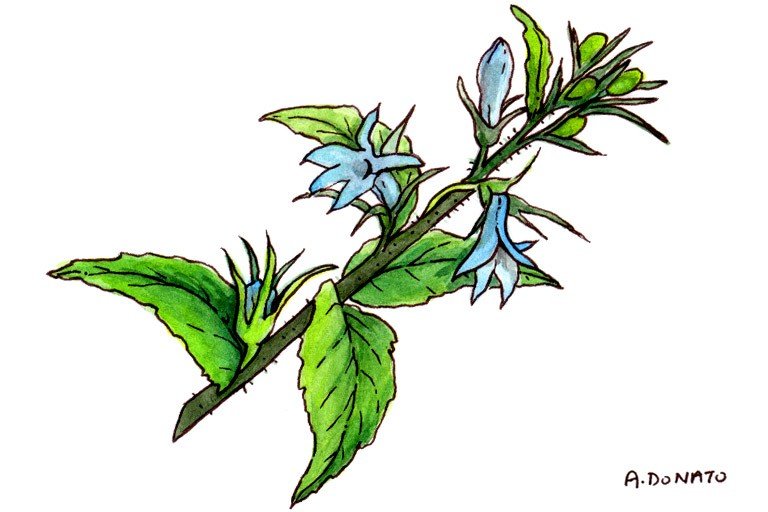
Lobelia

How It Works

Bottom Line: Current evidence shows that lobelia is not effective for smoking cessation, asthma, or any other medical condition.

The active compound in lobelia is lobeline. Lobeline has a similar activity in the body to nicotine, which explains its common use as an aid in smoking cessation. Like nicotine, lobelia stimulates the central nervous system (CNS), dilates the lung passageways, and increases respiration rate. However, at higher doses, lobelia has the opposite effect and causes CNS depression and reduced breathing rate. In experiments with rats and mice, lobeline increased the release of stimulatory neurotransmitters (dopamine and norepinephrine) from specific parts of the brain, but it is still unclear what significance this has in the human body. Strangely, lobeline can have both additive and antagonistic effects when used at the same time as nicotine.

Not all of lobeline's effects are positive. Many cases of lobeline toxicity have been reported in patients who used high doses or lobelia or used this herb for an extended period of time. For example, when lobeline was experimentally given to healthy volunteers via intravenous injection, the volunteers reported developing a cough, cessation and prolongation of breathing, the feeling of choking, and pressure in the throat and chest.

Purported Uses

  • To treat asthma
    Although lobelia is thought to dilate the bronchial tubes, there is no proof from clinical trials that lobelia is safe or effective for treating asthma.
  • To treat depression
    Although lobelia has been shown to cause release of excitatory neurotransmitters in the brains of research animals, there is no proof from clinical trials that this effect occurs in humans.
  • To relieve symptoms from drug withdrawal
    No scientific evidence supports this use.
  • To induce vomiting
    No scientific evidence supports this use.
  • To reduce inflammation
    No scientific evidence supports this use.
  • To help with smoking cessation
    A review of 16 clinical trials concluded that this herb is not effective for smoking cessation.

  • Research Evidence

    Quitting smoking:
    A systematic review of 16 separate clinical trials was performed to determine the usefulness of lobeline for smoking cessation. All of the clinical trials had flaws in their design, and none followed patients for more than two weeks in order to evaluate the long-term safety and effectiveness of lobeline. The reviewers concluded that no evidence supports the hypothesis that lobelia is effective for smoking cessation.

    Warnings

  • Doses greater than 20 mg of lobelia or lobeline are considered to be toxic. Patients should not use this supplement.
  • This product is regulated by the FDA as a dietary supplement. Unlike approved drugs, supplements are not required to be manufactured under specific standardized conditions. This product may not contain the labeled amount or may be contaminated. In addition, it may not have been tested for safety or effectiveness.

  • Do Not Take If

  • You are pregnant or breast-feeding (Lobelia is known to cross into breast milk).
  • You are using nicotine-containing products (Lobelia may have additive effects, resulting in toxicity).

  • Side Effects

  • Nausea
  • Vomiting
  • Sweating
  • Cough
  • Dizziness
  • Slow heart rate
  • High blood pressure
  • Seizures
  • Increased breathing rate (low doses) or decreased breathing rate (high doses).
  • Toxicity: At high doses or after prolonged exposure to lobelia, patients have experienced heart arrhythmias, bundle branch block, profuse perspiration, cardiovascular collapse, seizures, and coma.

  • Scientific Name

    Lobelia inflata


    Common Name

    Lobella, asthma weed, eyebright, gagroot, Indian pink, Indian tobacco, pukeweed, vomit weed, Lobelia berlandieri, Lobelia cardinalis

    Clinical Summary

    Derived from the aerial parts of the plant. Patients use this supplement for smoking cessation and to treat asthma and depression. The piperidine alkaloids (e.g. lobeline) are thought responsible for the activity of this botanical. Animal and in vitro studies show that lobeline crosses the blood-brain barrier, has similar activity to nicotine, and stimulates the release of dopamine and norepinephrine (5). At low doses lobelia has stimulant effects, but higher doses result in CNS depression. Significant toxicity has occurred following use including vomiting, seizures, cardiovascular collapse, and coma (2). Lobelia may have additive toxicity when combined with nicotine (12). Clinical studies evaluating lobelia for smoking cessation do not support its use (15). Patients should be warned not to use this supplement.

    Purported uses

  • Asthma
  • Depression
  • Drug withdrawal symptoms
  • Induce vomiting
  • Inflammation
  • Smoking cessation

  • Constituents

  • Alkaloids: Lobeline, lobelanine, lobelanidine(2)
  • Beta-amyrin palmitate(1)

  • Mechanism of Action

    Animal studies report that lobeline has anxiolytic and cardiovascular effects and increases cognitive performance. Lobelia has central stimulant activity, dilates bronchioles, and increases respiration rate at low doses, but higher doses cause CNS and respiratory depression (10). In rat and mouse models lobeline increases dopamine release from striatal synaptosomes, increases norepinephrine release from the hippocampus (5), and binds extensively to nicotinic receptors both centrally and peripherally (4). In vitro, lobeline redistributes dopamine pools in presynaptic vesicles and antagonizes their release following amphetamine stimulation. Lobeline can have both antagonistic and synergistic effects when combined with nicotine and does not induce receptor up-regulation as seen with nicotine (10). Intravenous administration of approximately 12 mcg/kg lobeline to healthy human subjects resulted in cough, apnea, prolonged inspiration and expiratory pause, the feeling of choking, and pressure in the throat and chest (9). Animal studies suggest that beta-amyrin palmitate stimulates the release of norepinephrine in the brain, possibly leading to an antidepressant effect (1).

    Pharmacokinetics

    Lobeline, an extract from Lobelia inflata, has high lipophilicity, crosses the blood brain barrier, and distributes widely throughout the body. Additional pharmacokinetic data is not available.
    (11)

    Contraindications

    Lobelia is known to cross into breast milk and should not be consumed by pregnant or nursing mothers.

    Adverse Reactions

    Reported: Nausea, vomiting, sweating, cough, dizziness, bradycardia, hypertension, seizures, respiratory stimulation (low doses) or depression (high doses).
    Toxicity: Sinus arrhythmia, bundle branch block, diaphoresis, cardiovascular collapse, seizures, coma.
    (2)

    Herb-Drug Interactions

    Nicotine: Lobelia may have additive effects when combined with nicotine-containing products, resulting in toxicity.
    (12)

    Literature Summary and Critique

    Stead LF, Hughes JR. Lobeline for smoking cessation. Cochrane Database Syst Rev 2002;(2):CD000124.
    Although 16 studies have been performed evaluating lobelia for smoking cessation, none met inclusion criteria set by Stead and Hughes. Trials evaluated only short-term efficacy (up to 14 days) of lobelia use with no long-term follow-up performed. Reduction in number of cigarettes, not abstinence, was the primary outcome for a majority of the studies reviewed. No evidence supports the hypothesis that lobelia is effective for smoking cessation.

    References

    1. Subarnas A, et al. A possible mechanism of antidepressant activity of beta-amyrin palmitate isolated from lobelia inflata leaves in the forced swimming test. Life Sci 1993;52:289-96.
    2. Fetrow CW, et al. Professional's Handbook of Complementary and Alternative Medicines. Philadelphia: Springhouse; 1999.
    3. Foster S, et al. Tyler's Honest Herbal: A Sensible Guide to the Use of Herbs and Related Remedies. New York: Haworth Herbal Press; 1999.
    4. Damaj MI, et al. Pharmacology of lobeline, a nicotinic receptor ligand. J Pharmacol Exp Ther 1997;282:410-9.
    5. Santha E, et al. Multiple cellular mechanisms mediate the effect of lobeline on the release of norepinephrine. J Pharmacol Exp Ther 2000;294:302-7.
    6. Miller DK, et al. Lobeline inhibits the neurochemical and behavioral effects of amphetamine. J Pharmacol Exp Ther 2001;296:1023-34.
    7. Decker MW, Majchrzak MJ, Arneric SP. Effects of lobeline, a nicotinic receptor agonist, on learning and memory. Pharmacol Biochem Behav 1993;45:571-6.
    8. Subarnas A, et al. An antidepressant principle of Lobelia inflata L. (Campanulaceae). J Pharm Sci 1992;81:620-1.
    9. Raj H, et al. Sensory origin of lobeline-induced sensations: a correlative study in man and cat. J Physiol 1995;482:235-46.
    10. Terry AV Jr, et al. Lobeline and structurally simplified analogs exhibit differential agonist activity and sensitivity to antagonist blockade when compared to nicotine. Neuropharmacology 1998;37:93-102.
    11. Reavill C, et al. Behavioural and pharmacokinetic studies on nicotine, cytisine and lobeline. Neuropharmacology 1990;29:619-24.
    12. Brinker F. Herb Contraindications and Drug Interactions, 3rd ed. Sandy (OR): Eclectic Medical Publications; 2001.
    13. Dwoskin LP, Crooks PA. A novel mechanism of action and potential use for lobeline as a treatment for psychostimulant abuse. Biochem Pharmacol 2002;63:89-98.
    14. McChargue DE, Collins FL Jr, Cohen LM. Effect of non-nicotinic moist snuff replacement and lobeline on withdrawal symptoms during 48-h smokeless tobacco deprivation. Nicotine Tob Res 2002;4:195-200.
    15. Stead LF, Hughes JR. Lobeline for smoking cessation. Cochrane Database Syst Rev 2002;(2):CD000124.

    Last Updated: Mar. 23, 2009
    E-mail your questions and comments to aboutherbs@mskcc.org.
    Bookmark and SharePrintEmail This Page