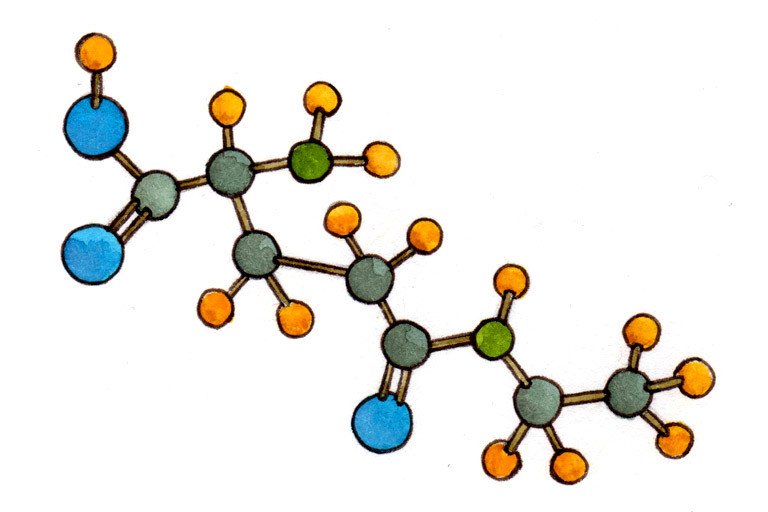
Common Names
- Theanine
- Gamma-glutamylethylamide
- N-ethylglutamic acid
For Patients & Caregivers
Tell your healthcare providers about any dietary supplements you’re taking, such as herbs, vitamins, minerals, and natural or home remedies. This will help them manage your care and keep you safe.
L-theanine is a chemical found in both green and black tea. It helps you relax by lowering stress and anxiety (strong feelings of worry or fear).
L-theanine supplements come as tablets, capsules, chewables, liquids, and powders.
L-theanine is used to:
- Improve sleep quality
- Reduce anxiety
- Lower your risk of getting a stroke (when there is no blood flow to your brain)
L-theanine has other uses, but doctors have not studied them to see if they work.
L-theanine that you get from tea is safe. Talk with your healthcare provider before taking L-theanine supplements. They are stronger than the L-theanine you get from food. Supplements can also affect how some medications work. For more information, read the “What else do I need to know?” section below.
Side effects have not been reported. But drinking too much tea may cause:
- Headaches
- Trouble staying asleep
- Nausea (feeling like you’re going to throw up)
- Irritability
- Stomach pain
- Talk with your healthcare provider if you’re taking medications that help you sleep such as lorazepam (Ativan®), diazepam (Valium®), or zolpidem (Ambien®). Taking these medications and L-theanine may increase drowsiness.
- Talk with your healthcare provider if you’re pregnant or breastfeeding. L-theanine may not be safe for you.
For Healthcare Professionals
L-theanine is a water soluble amino acid found in green tea and mushrooms. Purified L-theanine is available as an oral dietary supplement, and is used for its perceived antioxidant and relaxant effects (12). Preclinical studies suggest neuroprotective (2) (16) and enhanced chemotherapeutic effects (5) (6) as well as reduced chemotoxicity (7) (24), but L-theanine may also alter neurotransmitter levels (10) (11).
Data in humans are limited. Small studies suggest improvements in sleep (18) (32), but effects on anxiety are mixed (17) (32). Epidemiological data suggest green tea consumption may contribute to stroke prevention (4), but it is unclear whether L-theanine alone may confer this benefit. Other preliminary data suggest oral theanine along with cystine may reduce neuropathy in patients receiving oxaliplatin (33).
Patients undergoing chemotherapy should discuss the use of L-theanine with their physicians because most purported effects are not based on clinical trials, and epigallocatechin-3-gallate (EGCG) in green tea reduces activity of the chemotherapy drug bortezomib.
Green tea
- Sleep
- Anxiety
- Stroke
As a non-protein amino acid, L-theanine crosses the blood-brain barrier, exerting various neurophysiological and pharmacological effects including: anxiolytic and calming effects, due to inhibitory neurotransmitters and selective serotonin and dopamine modulation; cognitive improvements perhaps through decreased NMDA-dependent CA1 long-term potentiation (LTP) and increased NMDA-independent CA1-LTP; and improved selective attention during mental tasks likely due to changes in alpha brain wave activity (25). Neuroprotective effects are also thought to be due to its selective binding to glutamate receptors (2).
In animal models, L-theanine appears to have a dose-dependent biphasic effect on NSAID-induced gastric ulcers, delaying healing at higher doses (40 mg/kg), but accelerating healing at lower doses (10 mg/kg) perhaps through the maintenance of glutathione levels thus protecting against oxidative damage (26).
In human studies, L-theanine attenuated effects of caffeine on oxygenated hemoglobin, cognition, and mood, suggesting both independent and interactive effects between the two compounds (22). Other studies suggest that combining caffeine and theanine intake causes their individual effects to counteract each other (30) (31). L-theanine also stabilizes glutamatergic concentrations in the brain, which may explain its therapeutic effect in patients with schizophrenia (21).
L-theanine was shown to increase the antitumor activity of chemotherapeutic drugs doxorubicin and idarubicin (5) (6). These agents normally bind the glutamate receptor and the complex is transported across the cell resulting in reduced concentrations, hence attenuating effects of these drugs. Consequent mechanistic studies revealed that L-theanine, a glutamate analogue, competes with glutamate to bind the glutamate receptor, resulting in suppression of chemotherapy efflux (extracellular transport), increasing their concentration (27).
Mechanisms by which L-theanine may reduce doxorubicin adverse effects may include the variance of glutamate receptors expressed in normal and tumor cells. Whereas theanine binds the glutamate receptor in tumor cells, it is metabolized to glutamate in normal cells. This increase in glutamate likely results in increased efflux of doxorubicin from the cells, thereby decreasing toxicity (28). Animal models suggest prevention of doxorubicin-induced acute hepatotoxicity occurs via suppression of intrinsic caspase-3-dependent apoptotic signaling (24).
L-theanine does not induce or inhibit CYP450 enzymes (9).
Although there are no reported side effects from taking L-theanine, consuming large amounts of green tea can cause nausea, irritability, and GI upset because of the caffeine content.
- Hypersensitivity to green tea
- Pregnancy and lactation
- Sedatives
Please see monograph on Green Tea.
- Midazolam: In animal models, L-theanine had synergistic or additive effects (19). Clinical relevance has yet to be determined.