Common Names
- Xanthophyll
- Dihyroxycarotenoid
- Nonprovitamin A carotenoid
For Patients & Caregivers
Tell your healthcare providers about any dietary supplements you’re taking, such as herbs, vitamins, minerals, and natural or home remedies. This will help them manage your care and keep you safe.
Lutein is a chemical made by plants, fungi, and some bacteria. It’s also found in some foods, such as:
- Egg yolks
- Kale
- Spinach
- Bok choy
- Arugula
- Cauliflower
- Cabbage
- Broccoli
- Green beans
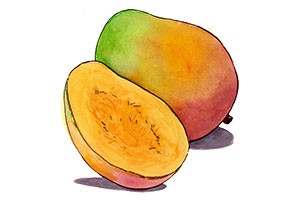
- Mangoes
- Papayas
- Peaches
- Oranges
Lutein supplements come as tablets, capsules, softgels, and powders.
Lutein is used to:
- Treat cataracts (cloudiness in the lens of your eye).
- Prevent and treat macular degeneration (an eye condition that can cause vision loss).
- Improve how clearly you see.
- Prevent cancer.
Lutein has other uses, but doctors have not studied them to see if they work.
Lutein that you get from food is safe. Talk with your healthcare provider before taking lutein supplements. They are stronger than the lutein you get from food.
Some herbal supplements can affect how some medications work. For more information, read the “What else do I need to know?” section below.
Side effects have not been reported.
For Healthcare Professionals
Lutein is a natural carotenoid pigment synthesized by plants and microorganisms. Carotenoids are classified as either provitamin A (alpha-carotene, beta-carotene, and beta-cryptoxanthin, which can be converted into retinol) or nonprovitamin A (lutein, lycopene, and zeaxanthin). Lutein has antioxidant (1) (2) and anti-inflammatory (3) activities, and supplements are marketed as protection against ocular diseases such as age-related macular degeneration (AMD) and for general eye health.
Preliminary studies on lutein supplementation in various populations suggest it may reduce biomarkers for coronary vascular disease, increase serum and plasma lutein, and reduce inflammatory cytokines (5) (6) (34). In addition, lutein supplementation may improve visual field in patients with retinitis pigmentosa (15) and retinal function in patients with early AMD (38). A recent meta-analysis also suggests benefit with lutein supplementation for AMD (40), although older studies found insufficient evidence (13) (14), and data on whether it improves macular pigment optical density are mixed (35) (36). Other long-term studies found no effects with supplementation on cognitive function (31) or risk for cataract surgery or vision loss (32).
Dietary lutein may protect against DNA damage, but this may be due to concomitant intake of other micronutrients (4). Epidemiologic studies also suggest an association between increased lutein consumption and decreased incidence of atherosclerosis (7) and cataracts (8) (9), although the effects of dietary lutein on macular degeneration are inconsistent (10) (11) (12).
With respect to effects on cancer risk, increased lutein consumption was associated with decreased risks for some types of kidney, bladder, and breast cancers (16) (17) (18), but not lung or prostate cancers (23) (39), and effects on risk of cervical or colon cancer are conflicting (19) (20) (21) (22).
Kale, spinach, winter squash, cruciferous vegetables, cabbage, green beans, yellow/orange fruits, mangoes, papayas, peaches, oranges (1). Lutein is absorbed best with meals that are higher in fat.
- Cataracts
- Macular degeneration
- Visual acuity
- Cancer prevention
Lutein is one of the predominant carotenoids that accumulates in both the lens and retinal macula (24). It scavenges reactive oxygen species, preventing damage to DNA and protein molecules (19) (25). As an oxycarotenoid, its structure is less hydrophobic than beta-carotene and lycopene. This enables lutein to react with free radicals in a membrane’s aqueous phase, resulting in increased membrane integrity, which may in turn affect tissue permeability to oxygen and other molecules (19). It may also protect against ocular damage by reducing the amount of blue light that reaches photoreceptors (25).
As a nonprovitamin A carotenoid, lutein does not have any vitamin A activity, but does have antioxidant, anti-inflammatory, and immune-enhancing properties. In an obese rat model, lutein independently reduced superoxide dismutase activity, and also raised glutathione peroxidase activity in lean rats when combined with ascorbic acid (26). In vitro and atherosclerotic mouse models demonstrate the ability of lutein to inhibit monocyte inflammatory responses to low-density lipoprotein in the artery wall and reduce monocyte migration (7). In humans, lutein supplementation decreases lipid peroxidation and inflammatory response (5).
Carotenoids including lutein inhibit mutagenesis and transformation, and premalignant lesions (1). In murine mammary cancer models, dietary lutein selectively modulated apoptosis and inhibited angiogenesis by increasing p53 and Bax proapoptotic gene expression, while decreasing Bcl-2 antiapoptotic gene expression with a subsequent increase in Bax:Bcl-2 ratio in tumors (27). Lutein-mediated AP-1 suppression and anti-inflammatory effects are due to its antioxidative and p38/c-Jun-N-terminal kinase inhibitory activities (3). In a hepatocellular carcinoma animal model, lutein reduced γ-glutamyl transpeptidase activity, a marker of cellular proliferation (2).