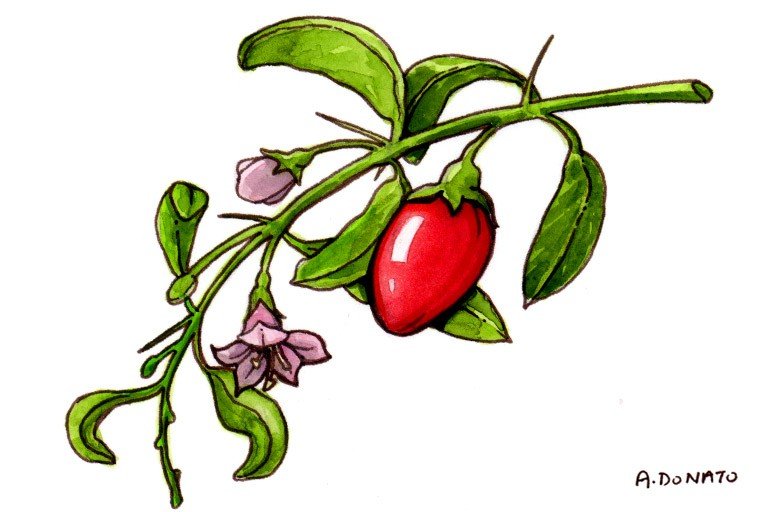
Common Names
- Gou qi zi
- Goji
- Wolfberry
- Box thorn
- Matrimony vine
For Patients & Caregivers
Tell your healthcare providers about any dietary supplements you’re taking, such as herbs, vitamins, minerals, and natural or home remedies. This will help them manage your care and keep you safe.
The safety and efficacy of lycium for chronic diseases has not been established.
Lycium berries, commonly referred to as goji berries, are used in traditional medicine to treat inflammation, skin irritation, nose bleeds, aches, and pains. Lycium is also used as a sedative. In Chinese medicine, it is commonly used with other botanicals for poor vision, anemia, and cough. As Goji berries, they are marketed as a superfood that are high in antioxidants.
Lab studies have identified polysaccharides from the plant that may improve immune response and effects of radiation therapy. Other experiments suggest Lycium may inhibit the growth of some cancer cells.
In humans, a few small studies suggest potential benefits in helping to lower cholesterol or blood sugar. However, data are limited and it has not been studied for cancer prevention or treatment. Well-designed clinical trials are needed to determine any benefits Lycium may have against chronic diseases.
- To treat aches and pains
Evidence is lacking to support this claim. - To prevent or treat cancers
Clinical studies have not been conducted to evaluate the anticancer potential of lycium. - To improve the effects of a specific cancer therapy
A small observational study showed benefits, but further well designed trials are necessary. - To support cardiovascular health
Limited data suggest potential benefit, but additional studies are needed. - As a sedative
Evidence is lacking to support this claim.
Case reports
Allergic reactions: After eating Lycium berries, in people with plant-based food allergies considered to be at high risk for a reaction.
Do Not Take if:
You have lipid transfer protein food allergies: Hypersensitivity reactions have been reported in patients at high risk of plant-based food allergies.
You are taking warfarin or other anticoagulants: A few cases of elevated INR were reported in patients on anticoagulant therapy following consumption of Lycium products.
You are taking CYP 3A4, 2C9, or 2C19 substrate drugs: Lycium extract may influence how these drugs are metabolized.
For Healthcare Professionals
The fruit of Lycium barbarum, commonly known as goji or wolfberry, is used in traditional medicine in several Asian countries to treat inflammation, skin irritation, nose bleeds, aches, and pains and as a sedative (1). Lycium is also used with other botanicals for poor vision, anemia, and cough (9). It is marketed as a superfood that is high in antioxidants.
Preclinical studies suggest that a polysaccharide isolated from lycium has antitumor (2) (10), immune-enhancing (3), neuroprotective (11) (26), and radiosensitizing (4), as well as hepato- and photoprotective (6) (12) effects. In addition, lycium appeared to inhibit growth of ER-positive breast cancer cells (13) and reduce doxorubicin-associated cardiotoxicity (17).
Studies in humans are limited. Preliminary data suggest improved well-being in healthy subjects (14) (15) (16), and hypoglycemic effects in type-2 diabetic patients (27). Other analyses point to the potential that lycium may have for liver disease, hyperlipidemia, and diabetes (28) (29) (37). A small study on lycium added to a healthy diet also suggests it may further improve HDL cholesterol levels (38). Protective effects on macula in elderly subjects have been described (19), and analysis of a lycium-containing formula suggests it might be a helpful adjuvant for dry eye (36), but additional studies are needed.
Data from an observational study suggest that when used with certain cancer treatments, lycium polysaccharides may exert beneficial effects (5). However, despite marketing claims of cancer-preventive potential, the efficacy and safety of lycium products for cancer treatment have yet to be established.
Goji berries
- Cancer
- Cardiovascular health
- Pain
- Sedation
- Vision
Lycium is rich in carotenoids and polysaccharides (38). The bark and berries contain betasitosterol, which can prevent cholesterol absorption in the gastrointestinal tract (7). The hepatoprotective effects of lycium polysaccharides (LBP) are in part via modulation of transcription factor NF-κB and MAPK pathways and autophagy (6). In another study, LBP antioxidant effects against insulin resistance were attributed to PI3K/AKT/Nrf2 pathway activation (24). It also exerted protective effects against focal cerebral ischemic injury by attenuating the mitochondrial apoptosis pathway (25). In murine models of acute pancreatitis, LBP reduced inflammation by upregulating NRF2 and HO-1 (30). Protective effects against diabetic peripheral neuropathy is thought to be mediated via autophagy induction (31).
LBP inhibited the growth of leukemia HL-60 cells (2) and increased expression of IL-2 and TNF-alpha (3). Antiproliferative effects may occur via activation of extracellular signal-regulated protein kinases (20). In H22 tumor-bearing mice, LBP alleviated immunosuppression and maintained antitumor immune responses (32).
Allergenic potential of goji berries has been attributed to cross-reactivity with lipid transfer protein from other foods (22).
Case reports
Allergic reactions: Following consumption of lycium berries in individuals with food and pollen allergies (22) (33), particularly those with lipid transfer protein food allergies considered to be at high risk for a reaction (22).
Bleeding and elevated INR: In a 65-year-old man on warfarin after drinking goji berry wine. INR values returned to normal after discontinuation of the product (34).
Warfarin: A few cases of elevated INR in patients on anticoagulant therapy were reported following consumption of concentrated Chinese herbal tea made from lycium (8) (18) (21).
CYP3A4 substrates: Lycium extract induces CYP3A4 by activating pregnane X receptor (PXR). This may increase the clearance of substrate drugs when used concomitantly (23).
CYP 2C9 and 2C19 substrates: Lycium juice, water and ethanol extracts inhibit CYP 2C9 and 2C19 enyzmes, and can affect the metabolism of certain prescription drugs (35). The clinical relevance needs to be determined.