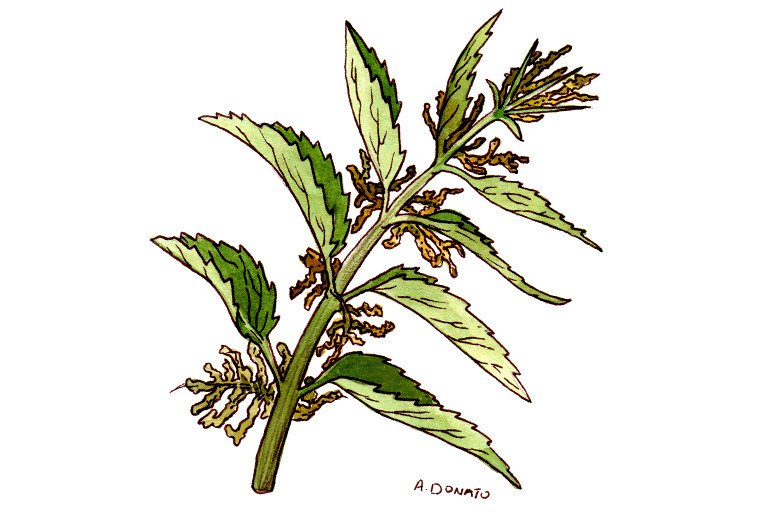
Common Names
- Stinging nettle
- Common nettle
- Greater nettle
For Patients & Caregivers
Tell your healthcare providers about any dietary supplements you’re taking, such as herbs, vitamins, minerals, and natural or home remedies. This will help them manage your care and keep you safe.
Several studies suggest nettle may help relieve symptoms of benign prostatic hyperplasia (BPH) and osteoarthritis, but additional studies are needed.
Nettle is a perennial herbaceous flowering plant native to Asia, Europe, and North America. The root is widely used to treat BPH, allergies, arthritis, and inflammation. Nettle is usually combined with herbs such as saw palmetto and pygeum for the treatment of BPH.
Limited data from clinical studies suggest nettle may be helpful for arthritis and symptoms associated with benign prostatic syndrome. A combination of saw palmetto and nettle reduced nighttime urinary frequency, and was similar to some drugs in patients with lower urinary tract symptoms or BPH. Nettle might also help improve blood sugar control, but additional studies are needed. Although anticancer properties have been described in lab studies, clinical trials have yet to be conducted.
- To treat allergies
Evidence is lacking to support this claim. - To treat arthritis
Clinical trials support the topical use of nettle for arthritis, but larger studies are needed to confirm these data. - To treat benign prostatic hypertrophy (BPH)
When combined with other herbs, nettle has shown positive results in clinical trials. - To clear up chest congestion
Evidence is lacking to support this claim. - To treat urinary tract disorders and difficult or painful urination
Nettle was shown to have beneficial effects in clinical studies. - To calm muscle spasms
Evidence is lacking to support this claim.
Case reports
- With nettle tea intake, enlarged breasts in a man and nipple discharge in a woman.
- Hives in a breastfed infant following a mother’s use of water boiled with stinging nettle to heal nipple cracks.
- Low blood sugar in a 78-year-old man after taking an herbal remedy containing nettle for BPH.
- Allergic rhinitis in 2 patients following exposure to nettle pollen.
Do Not Take if:
- You are taking CYP450 substrate drugs: Animal studies suggest nettle may increase the risk of side effects of these drugs. Clinical relevance has yet to be determined.
- You are taking diuretics or blood pressure drugs: Animal studies suggest nettle may have additive effects. Clinical relevance has yet to be determined.
For Healthcare Professionals
Nettle is a perennial herbaceous flowering plant native to Asia, Europe, and North America. The root is widely used to treat benign prostatic hypertrophy (BPH), allergies, arthritis, and inflammation. Nettle is usually combined with herbs such as saw palmetto and pygeum for the treatment of BPH. Several compounds have been isolated from nettle including flavonoid glycosides that appear to contribute to its biological effects, although the precise mechanism of action is unclear.
In vitro and animal studies indicate that nettle extract has reno- (1) and hepatoprotective (2) properties, and is effective against colitis in mice (3). Other preclinical data suggest nettle has antiproliferative effects in prostate cancer cells (10), may protect against cisplatin-induced toxicity (11), enhance cancer cell sensitivity to paclitaxel (22) or increase cisplatin cytotoxicity (23).
Studies in humans are limited, but suggest benefits with nettle in osteoarthritis of the hip, knee (4), and hand (5), gonarthritis (20), and for symptoms associated with benign prostatic syndrome (6) (7) (8). A combination of saw palmetto and nettle improved nocturnal voiding frequency compared to placebo, and was similar to tamsulosin or finasteride for moderate to severe lower urinary tract symptoms/BPH (21). In another study, nettle improved glycemic control in type-2 diabetic patients (9).
- Allergies
- Arthritis
- Benign prostatic hypertrophy
- Chest congestion
- Urinary problems
- Spasms
In vitro studies show that nettle extract inhibits several inflammatory events responsible for seasonal allergies (2). These include antagonist and negative agonist activity against the histamine-1 receptor, and inhibition of prostaglandin formation via inhibition of COX-1, COX-2, and hematopoietic prostaglandin D2 synthase, key enzymes in proinflammatory pathways (2).
Phenolic compounds derived from nettle inhibited alpha-glucosidase and alpha-amylase, chief enzymes involved in type-2 diabetes (24). Inhibition of these enzymes results in decreased reabsorption of glucose in the intestine.
Compounds in nettle essential oil including carvacrol may have cytotoxic and genotoxic effects (12).
Case reports
- With nettle tea intake, gynecomastia in a man and galactorrhea in a woman (15).
- Urticaria in a breastfed infant following a mother’s use of water boiled with stinging nettle to heal nipple cracks (16).
- Hypoglycemia in a 78-year-old man after taking an herbal remedy containing nettle for BPH (17).
- Allergic rhinitis in 2 patients following exposure to nettle pollen (25).
- Urticaria and pain in 2 adults after contact with an Australian nettle tree that required ICU admission (26).
- CYP450 substrates: Animal studies suggest nettle inhibits CYP450 enzymes and may affect intracellular concentrations of drugs metabolized by these enzymes (18). Clinical relevance has yet to be determined.
- Diuretics: Theoretically nettle may have an additive effect due to its diuretic activity (19). Clinical relevance has yet to be determined.
- Hypotensives: Animal studies suggest nettle has hypotensive action and may enhance effects of hypotensive drugs (19). Clinical relevance has yet to be determined.