How It Works
Bottom Line: There is some evidence to support use of pectin for diarrhea and for lowering cholesterol. More studies are needed to determine pectin's benefits for cancer.
Pectin is a soluble fiber present in most plants but is concentrated in the peel and pulp of citrus fruits (lemons, oranges, grapefruits) and apples. Modified Citrus Pectin (MCP) is obtained by changing pectin so it is better absorbed by the body. Data from studies in cells and mice showed that pectin and MCP have anticancer properties. There is also some evidence from human studies that pectin and MCP are effective in treating diarrhea and in lowering cholesterol. Pectin causes side effects such as abdominal cramps and diarrhea.
Purported Uses
Diarrhea
Pectin has been shown to be effective in treating diarrhea in children with persistent diarrhea.
Hypercholesterolemia
Diet supplemented with fiber was shown to benefit patients with high cholesterol in the blood.
Cancer prevention and treatment
More studies are needed to verify such effects
Research Evidence
Cholesterol Lowering Effects
This study was conducted with 125 individuals with high cholesterol. Half the patients were given a fiber supplement (mixture of guar gum, pectin, soy fiber, pea fiber and corn bran) and the other half were given placebo for 15 weeks. After 15 weeks, subjects on placebo were given the fiber supplement for another 36 weeks. Results of the study showed fiber supplementation can decrease LDL-cholesterol (bad cholesterol). There was no effect on HDL-cholesterol (good cholesterol). Similar effects were seen over the additional 36-week period of fiber supplementation. Side effects included diarrhea, gas, and loose stools that decreased with prolonged use. Researchers concluded that fiber supplementation reduces cholesterol levels.
Cancer Treatment
Ten patients with prostate cancer received 18 capsules (14.4g) of Pecta-Sol (Modified citrus pectin) in three doses per day for 12 months. Researchers measured the levels of prostate-specific antigen (PSA) before and after treatment. PSA is a protein found in the prostate tissue of patients with prostate cancer and other prostate-related diseases. Results from the study showed a significant increase in the time it takes for the PSA to double in quantity. However, since this study involved only ten patients, the results cannot be generalized. More studies are needed to verify such effects.
Treatment of Diarrhea
Sixty-two children, ages 5-12 months, with persistent diarrhea received a rice-based diet containing either 250 g/L of cooked green banana or 4 g/kg pectin, or the rice diet alone for 7 days. Results showed that children who were given banana or pectin in their diet recovered fully compared to those who had only rice-based diet. Researchers concluded that green banana and pectin are useful in managing persistent diarrhea in children.
Do Not Take If
You are taking lovastatin for high cholesterol because pectin may inhibit the action of lovastatin and may increase LDL cholesterol.
You are taking carotenoid and alpha-tocopherol supplements because pectin interferes with their absorption.
Side Effects
Abdominal cramps
Diarrhea
Common Name
Modified Citrus Pectin, Pectinic acid
Brand Name
Modified Citrus Pectin Power
Clinical Summary
Pectin is a soluble fiber rich in galactoside residues. It is present in most plants but is concentrated in the peel and pulp of citrus fruits, and in apples. Pectin is used as a gelling agent in food. It is also used as a remedy for diarrhea and for lowering cholesterol. Modified Citrus Pectin (MCP) is an altered form of pectin that has shorter carbohydrate chains and is claimed to be better absorbed by the body. In vitro and animal studies show that pectin induces apoptosis in colonic adenocarcinoma cells
(1) and has antiproliferative
(2) and anticancer effects
(3). Preliminary clinical data suggests that pectin is beneficial for treating diarrhea
(4) and hypercholesterolemia
(5). It has been promoted for reducing the risk of colon cancer and for reducing damage from radiation therapy but there is insufficient scientific evidence to support these uses. In a small non-randomized study, MCP was shown to increase the doubling time of prostate-specific antigen in patients with prostate cancer
(6). Gastrointestinal side effects such as abdominal cramps and diarrhea have been reported with use of pectin
(5) (6).
Food Sources
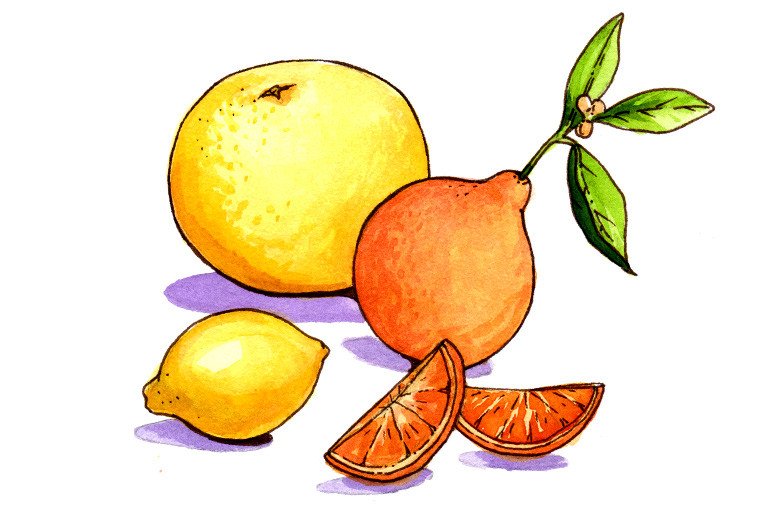
Citrus fruits (lemons, oranges, and grapefruits) and apples.
Purported uses
Cancer prevention
Cancer treatment
Diarrhea
High cholesterol
Constituents
Galactoside residues:
D-Galacturonic acid residues
Neutral sugars
Mechanism of Action
Modified Citrus Pectin (MCP) acts as a ligand for galectin-3, which plays a major role in tumor formation and progression
(7) (8). Binding of MCP to galectin-3 was shown to inhibit tumor growth, angiogenesis, and metastasis in vivo. MCP is thought to render galectin-3 incapable of binding its receptors that would result in angiogenesis
(9). Galectin-3 is also found on prostate cancer cells and in prostate tissue. In another study, MCP was shown to increase the doubling time of prostate-specific antigen (PSA) presumably by binding galectin-3
(6). Pectin was also shown to induce apoptosis in adenocarcinoma cells in vitro via caspase-3 activity resulting in DNA degradation
(1). Pectin-supplemented diet was shown to exert antiproliferative effects in mouse distal colon during colonic hyperplasia
(2). It also lowered cholesterol in patients with hypercholesterolemia.
Adverse Reactions
Reported (Oral): MCP caused mild abdominal cramps and diarrhea, which resolved after stopping the MCP.
(6)
Herb-Drug Interactions
When taken with lovastatin, pectin caused an increase in low-density lipoprotein in patients with hypercholesterolemia (10).
Pectin lowers the transit time of stool through the gut and may affect absorption of other drugs (11).
Absorption of supplements consisting of carotenoids and alpha-tocopherol is affected by pectin (12).
Literature Summary and Critique
References
- Olano-Martin E, Rimbach GH, Gibson GR, Rastall RA. Pectin and pectic-oligosaccharides induce apoptosis in in vitro human colonic adenocarcinoma cells. Anticancer Res 2003; 23(1A):341-346.
- Umar S, Morris AP, Kourouma F, Sellin JH. Dietary pectin and calcium inhibit colonic proliferation in vivo by differing mechanisms. Cell Prolif 2003; 36(6):361-375.
- Taper HS, Roberfroid M. Influence of inulin and oligofructose on breast cancer and tumor growth. J Nutr 1999; 129(7 Suppl):1488S-1491S.
- Rabbani GH, Teka T, Zaman B, Majid N, Khatun M, Fuchs GJ. Clinical studies in persistent diarrhea: dietary management with green banana or pectin in Bangladeshi children. Gastroenterology 2001; 121(3):554-560.
- Knopp RH, Superko HR, Davidson M et al. Long-term blood cholesterol-lowering effects of a dietary fiber supplement. Am J Prev Med 1999; 17(1):18-23.
- Guess BW, Scholz MC, Strum SB, Lam RY, Johnson HJ, Jennrich RI. Modified citrus pectin (MCP) increases the prostate-specific antigen doubling time in men with prostate cancer: a phase II pilot study. Prostate Cancer Prostatic Dis 2003; 6(4):301-304.
- Inufusa H, Nakamura M, Adachi T et al. Role of galectin-3 in adenocarcinoma liver metastasis. Int J Oncol 2001; 19(5):913-919.
- Nakamura M, Inufusa H, Adachi T et al. Involvement of galectin-3 expression in colorectal cancer progression and metastasis. Int J Oncol 1999; 15(1):143-148.
- Nangia-Makker P, Hogan V, Honjo Y et al. Inhibition of human cancer cell growth and metastasis in nude mice by oral intake of modified citrus pectin. J Natl Cancer Inst 2002; 94(24):1854-1862.
- Richter WO, Jacob BG, Schwandt P. Interaction between fibre and lovastatin. Lancet 1991; 338(8768):706.
- MICROMEDEX(R) Healthcare Series. 120. 2004. Thomson MICROMEDEX.
- Hoffmann J, Linseisen J, Riedl J, Wolfram G. Dietary fiber reduces the antioxidative effect of a carotenoid and alpha-tocopherol mixture on LDL oxidation ex vivo in humans. Eur J Nutr 1999; 38(6):278-285.