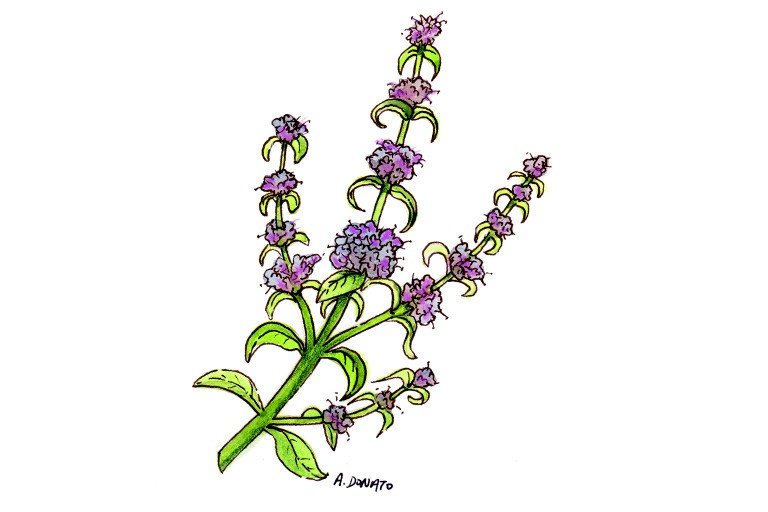
Common Names
- Squaw mint
- Mosquito plant
- Squaw balm
- Tickweed
For Patients & Caregivers
Tell your healthcare providers about any dietary supplements you’re taking, such as herbs, vitamins, minerals, and natural or home remedies. This will help them manage your care and keep you safe.
Pennyroyal is an extremely toxic herb that has caused multiorgan failure and death in several people.
Pennyroyal is a flowering plant that was used in folk medicine to induce abortion, alleviate menstrual symptoms, and to treat inflammatory conditions and minor ailments. The oil itself is highly toxic, and is not recommended for internal use. A substance called pugelone in pennyroyal is thought to be responsible for its toxic effects and tissue damage. Studies in both animals and humans show that pulegone is also directly toxic to the nervous system. There have been a number of case reports and also several deaths attributed to the use of this botanical.
There is no scientific evidence for use of pennyroyal in the following conditions:
- To induce menstruation
- To treat lung conditions
- To treat cancer
- To treat colds or flu
- To treat headaches
- To induce abortion
- To reduce inflammation
- As an insect repellant
- To relieve PMS symptoms
- To treat toothaches
- Dizziness
- Weakness
- Hallucinations
- Nausea, cramps, and stomach upset
- Liver and kidney toxicities
Case Reports
- At least 24 cases of pennyroyal toxicity, including liver and kidney failure, low blood sugar, blood clotting problems, acidic blood pH, GI hemorrhage, lung congestion, mental status changes, brain swelling, seizures, and death.
- A 76-year-old woman experienced acute liver failure, possibly caused by drug interactions with pennyroyal tea.
- There are several reports of young women who took pennyroyal oil for its abortion-inducing effects and died of multiorgan failure.
- Two cases of multiorgan failure in infants who were given pennyroyal herbal tea as home remedies.
Patient Warnings:
- This botanical contains compounds that are toxic to both animals and humans.
Do Not Take if:
In general, pennyroyal oil is highly toxic and is not recommended for internal use.
- You are pregnant or breastfeeding: Pennyroyal can cause miscarriage and other toxic effects.
- You are taking iron supplements: Pennyroyal may reduce bioavailability by 50% or more.
- You are taking CYP450 substrate drugs: A case report of acute liver failure was possibly caused by drug interactions with pennyroyal tea.
For Healthcare Professionals
An essential oil or tea derived from the leaves and flowering tops of the plant, pennyroyal was used in folk medicine to induce abortion, alleviate menstrual symptoms, and to treat inflammatory conditions, chronic bronchitis, and minor ailments. The oil itself is highly toxic, and is not recommended for internal use.
Pennyroyal oil contains several monoterpenes, principally pulegone, to which toxic effects on the liver and lungs are attributed. Oxidative metabolites of pugelone such as menthofuran are oxidized further by cytochrome P450 to reactive intermediates that form adducts with cellular proteins and cause organ damage (4).
Ingestion of pennyroyal oil in adults or tea in children causes severe toxicities (4) (5), including hepatic and renal failure, metabolic acidosis, pulmonary congestion, cerebral edema, seizures, bleeding and clotting disorders, and death.
- Cancer
- Inflammation
- Insect repellent
- Lung conditions
- Menstrual symptoms
Pennyroyal’s abortifacient properties are thought to be due to irritation of the uterus, causing contractions, but lethal doses are necessary for this to occur and the effect is inconsistent. Pennyroyal’s mint properties, attributable to the menthol component, theoretically may act in dilating respiratory passages in bronchitis or asthma when consumed as a tea (5). European and American pennyroyal oil consist of 80-90% and 16-30% (R)-(+)-pulegone, respectively, which is oxidized by CYP450 to menthofuran (about 50%) and other toxic metabolites (4). The menthofuran is further oxidized to an epoxide which is likely the ultimate toxic biological reactive intermediate that causes liver damage (15). Animal and human studies also show that pulegone is neurotoxic. Menthofuran is known to decrease glucose-6-phosphatase activity in rat models, causing hypoglycemia (1).
This botanical contains compounds that are toxic to both animals and humans.
- In general, pennyroyal oil is highly toxic and is not recommended for internal use.
- Due to its abortifacient effects, pennyroyal should not be consumed by pregnant or breastfeeding women.
Dizziness, weakness, syncope, hallucinations, abdominal cramps, nausea, GI upset, pupillary changes, hepatotoxicity, renal injury.
Toxicity: At least 24 cases of pennyroyal toxicity are in the literature, including fulminant hepatic and renal failure, hypoglycemia, coagulopathy, metabolic acidosis, GI hemorrhage, pulmonary congestion with consolidation, mental status changes, cerebral edema, seizures, disseminated intravascular coagulation, and death. Pennyroyal oil ingestion is treated with gastric lavage, activated charcoal, and N-acetylcysteine in patients evaluated soon after ingestion.
Case Reports
Acute liver failure: In a 76-year-old woman possibly caused by drug interactions with pennyroyal tea, which makes use of 1A2, 2E1, and 2C19 as substrates (16).
Multiorgan failure: Leading to death in two young adults, one with acute ingestion of pennyroyal extract (13), and another after ingestion of pennyroyal oil (5).
Multiorgan failure in infants: Two cases, after ingestion of pennyroyal oil from herbal tea used as home remedies (4).
CYP450 substrate drugs: A case report of acute liver failure was possibly caused by drug interactions with pennyroyal tea, which makes use of 1A2, 2E1, and 2C19 as substrates (16). CYP2E1 in particular has been determined to be the major metabolizing enzyme for pulegone, the key toxic constituent of pennyroyal (17).
Iron supplements: Monomeric flavonoids in pennyroyal may complex with iron in the intestinal lumen and reduce bioavailability by 50% or more (14).