History & Overview Annual Report President's Pages Center News Community Affairs
Make a Gift Yankees Universe Fund Fred's Team Cycle for Survival Thomas Blake Sr. Memorial Research Fund Donating Blood & Platelets Volunteering Thrift Shop Park Avenue Potluck Cookbook
Press Releases Information for Journalists News@MSKCC
Manhattan New Jersey Long Island Westchester
Working at Memorial Sloan-Kettering Work Sites College Recruitment About Nursing Job Fairs & Career Days Job Search & Apply Online
Making an Appointment
Search About Herbs:

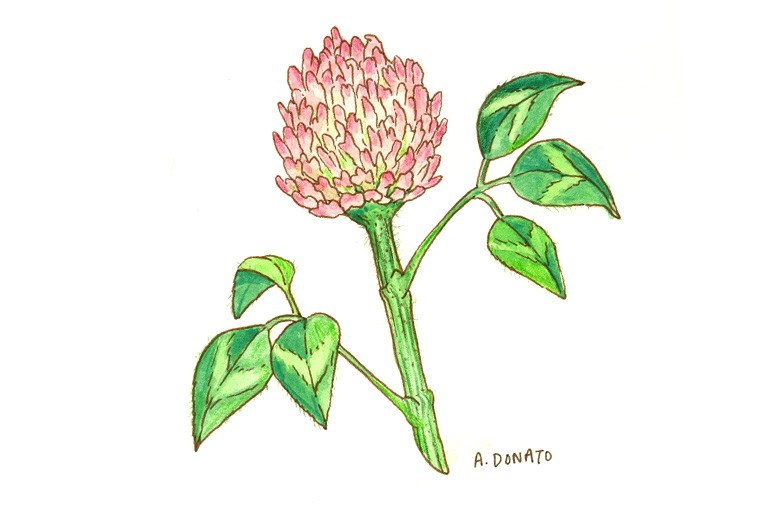
Red Clover

How It Works

Bottom Line: Red clover appears to be ineffective for relieving menopausal symptoms or preventing heart disease in postmenopausal women. People with estrogen-sensitive disease (such as estrogen receptor-positive breast cancer) should not use red clover.

Red clover contains isoflavones, which are compounds (also found in soy) that have been found to have estrogenic activity in laboratory experiments. The isoflavones in red clover include biochanin, daidzein, formononetin and genistein. However, when used in the body, the effects of red clover isoflavones are less clear. They seem to have estrogenic activity, but so far have not been found to relieve menopausal symptoms or cause the endometrium to grow. One study in 17 menopausal women found that red clover extract improved the elasticity of major arteries. Loss of elasticity has been seen to occur through menopause and it can contribute to increases in blood pressure and extra work on the heart. It is not known if red clover can really protect against the development of heart disease; this will require much longer-lasting clinical trials than the few that have been performed to date. 

In laboratory experiments, red clover extract stimulates the proliferation of estrogen receptor-positive breast cancer cells, indicating that this herb may not be helpful for women with estrogen-sensitive cancers.

Purported Uses

  • To relieve chest congestion
    No scientific evidence supports this use. 
  • To relieve the symptoms of menopause
    Some studies show that red clover has an estrogenic effect. The red clover product Promensil® was found to be no better than placebo in treating menopausal symptoms except it can reduce hot flashes more rapidly.
  • To prevent heart disease in post-menopausal women
    A handful of clinical trials have looked at the the effects of red clover on development of risk factors for heart disease in post-menopausal women, with no strong evidence that it helps. Almost all of the clinical trials found that red clover had no effect on blood cholesterol or triglyceride levels. One clinical trial found that red clover increased the elasticity of major arteries, which may help prevent a gradual rise in blood pressure that can contribute to heart disease.
  • To stop muscle spasms
    No scientific evidence supports this use.

  • Research Evidence

    A few clinical trials using red clover extracts in menopausal or post-menopausal women found that

  • Promensil®, a red clover product, was no more effective than placebo in relieving menopausal symptoms.
  • Red clover extract was associated with an improvement in elasticity of the major arteries, which may reduce the risk of developing high blood pressure. However, the long-term effects of red clover on risk of heart disease are not known.
  • In almost all of the clinical trials, red clover had no effect on blood cholesterol or triglyceride levels.
  • The effects of red clover on bone mineral density and endometrial growth are still unclear.

  • Warnings

  • This product is regulated by the F.D.A. as a dietary supplement. Unlike approved drugs, supplements are not required to be manufactured under specific standardized conditions. This product may not contain the labeled amount or may be contaminated. In addition, it may not have been tested for safety or effectiveness.

  • Do Not Take If

  • You are taking warfarin or other blood thinners (Red clover can increase the risk of bleeding).
  • You have a hormone-sensitive disease such as estrogen receptor-positive breast cancer, ovarian cancer, endometriosis, or others (Red clover may have estrogenic activity and should be avoided or used cautiously by patients with these estrogen-sensitive diseases).

  • Side Effects

  • None known

  • Special Point

  • Based on the available evidence, scientists think that red clover has estrogenic effects. There is no proof that red clover is any more safe than hormone replacement therapy (HRT) in the long-run, since no clinical trials have followed women taking red clover for more than six months.

  • Scientific Name

    Trifolium pratense

    Common Name

    Cow clover, Wild clover, Purple clover Beebread, Cow grass, Meadow clover, Purple clover

    Brand Name

    Promensil®, Rimonstil®

    Clinical Summary

    Red clover is a perennial herb traditionally used to treat skin disorders such as psoriasis and eczema, whooping cough, and mastitis. It contains compounds known as isoflavones that act as phytoestrogens. Isoflavones have generated considerable interest in the last decade because of their potential for cancer preventive, cardioprotective, antiosteoporotic effects and also for their ability to relieve menopausal symptoms. A Red clover isoflavone extract, Promensil, is promoted as a dietary supplement to relieve menopausal symptoms in lieu of hormone replacement therapy (HRT).
    In vitro studies indicate that red clover extract acts as an estrogen agonist and stimulates proliferation of ER positive breast cancer cells (1). However, Biochinin A, a red clover isoflavone, was shown to inhibit aromatase activity and expression (2), thereby conferring a protective effect. In other studies, isoflavone-enriched extracts of red clover demonstrated neuroprotective effects in human cortical neurons (3) (4) and reduced skin aging in mice by increasing the amount of collagen (5). Clinical trials in humans showed that red clover isoflavone supplementation decreased menopausal symptoms compared to placebo (6) (7) (8). However, conclusions from systematic reviews are conflicting: one suggests marginal benefit whereas the second found no evidence of effectiveness (9) (10). Red clover isoflavones may improve bone loss but more studies are needed (11). In a small study, dietary isoflavone intake improved arterial compliance, an index of the elasticity of large arteries, an important cardiovascular risk factor (12).


    Purported uses

  • Chest congestion
  • Menopausal symptoms
  • Spasms

  • Constituents

  • Isoflavones: Biochanin, daidzein, formononetin and genistein
  • Coumarins: Coumarin and medicagol
  • Other constituents: Various flavonoids, saponins, salicylic acid, coumaric acid, minerals, carbohydrates and fats
    (14)

  • Mechanism of Action

    Red clover extract stimulates cell proliferation of estrogen receptor positive breast cancer cells in vitro and acts as an estrogen agonist (1). However, Biochinin A, a red clover isoflavone, was shown to inhibit aromatase activity and expression (2), thereby conferring a protective effect. Red clover isoflavones also demonstrated cardioprotective (3) (4) and neuroprotective effects in vitro (12).


    Pharmacokinetics

    All four isoflavones are metabolized by the liver. Liver demethylation converts biochanin to genistein and formononetin to daidzein. Peak plasma levels of the isoflavones occur within 4-6 hours. Reported serum half-lives of isoflavones range from 9 to 16 hours. Isoflavones are primarily metabolized in either the gut or by the liver to active metabolites.
    (13)

    Contraindications

  • Patients with hormone-sensitive cancers should avoid Red clover because it has estrogenic activity.
  • Red clover may increase the effects of anticoagulants and antiplatelet drugs.

  • Adverse Reactions

    None reported

    Herb-Drug Interactions

    Anticoagulants / Antiplatelets: Red clover may increase their effects.


    Literature Summary and Critique

    Tice J, et al. Phytoestrogen Supplements for the Treatment of Hot Flashes: The Isoflavone Clover Extract (ICE) Study: A Randomized Controlled Trial. JAMA 2003 Jul 9;290(2):207-14.
    This was a large, multicenter, randomized, placebo-controlled trial of red clover extract. 252 postmenopausal women were randomly assigned to take isoflavone clover extract from either Promensil ®, Rimostil ® or an identical placebo daily for 12 weeks. Promensil ®, but not Rimonstil ®, was shown to reduce hot flashes at a faster rate than placebo during this period. However, the reduction of hot flashes counts after 12 weeks were similar in all three groups. The authors concluded that even though Promensil ® has biological effect, it does not have a signficant effect on menopausal symptoms including hot flashes.

    References

    1. Le Bail JC, Champavier Y, Chulia AJ, Habrioux G.Effects of phytoestrogens on aromatase, 3beta and 17beta-hydroxysteroid dehydrogenase activities and human breast cancer cells. Life Sci. 2000;66(14):1281-1291.
    2. Wang Y, Man Gho W, Chan FL, Chen S, Leung LK. The red clover (Trifolium pratense) isoflavone biochanin A inhibits aromatase activity and expression. Br J Nutr 2008;99(2):303-310.
    3. Chen HQ, Jin ZY, Li GH. Biochanin A protects dopaminergic neurons against lipopolysaccharide-induced damage through inhibition of microglia activation and proinflammatory factors generation. Neurosci Lett 2007;417(2):112-117.
    4. Occhiuto F, Zangla G, Samperi S, et al. The phytoestrogenic isoflavones from Trifolium pratense L. (Red clover) protects human cortical neurons from glutamate toxicity. Phytomedicine 2008.
    5. Circosta C, De Pasquale R, Palumbo DR, Samperi S, Occhiuto F. Effects of isoflavones from red clover (Trifolium pratense) on skin changes induced by ovariectomy in rats. Phytother Res 2006;20(12):1096-1099.
    6. Lukaczer D, Darland G, Tripp M, et al. Clinical effects of a proprietary combination isoflavone nutritional supplement in menopausal women: a pilot trial. Altern Ther Health Med 2005;11(5):60-65.
    7. Hidalgo LA, Chedraui PA, Morocho N, Ross S, San Miguel G. The effect of red clover isoflavones on menopausal symptoms, lipids and vaginal cytology in menopausal women: a randomized, double-blind, placebo-controlled study.Gynecol Endocrinol 2005;21(5):257-264.
    8. van de Weijer PH, Barentsen R. Isoflavones from red clover (Promensil) significantly reduce menopausal hot flush symptoms compared with placebo. Maturitas 2002;42(3):187-193.
    9. Coon JT, Pittler MH, Ernst E. Trifolium pratense isoflavones in the treatment of menopausal hot flushes: a systematic review and meta-analysis.Phytomedicine 2007;14(2-3):153-159.
    10. Lethaby AE, Brown J, Marjoribanks J, Kronenberg F, Roberts H, Eden J. Phytoestrogens for vasomotor menopausal symptoms.Cochrane Database Syst Rev 2007(4):CD001395.
    11. Atkinson C, Compston JE, Day NE, Dowsett M, Bingham SA. The effects of phytoestrogen isoflavones on bone density in women: a double-blind, randomized, placebo-controlled trial.Am J Clin Nutr 2004;79(2):326-333.
    12. Nestel PJ, Pomeroy S, Kay S, et al. Isoflavones from red clover improve systemic arterial compliance but not plasma lipids in menopausal women. J Clin Endocrinol Metab 1999;84(3):895-898.
    13. Anon. Promensil. Scientific brochure. North Ryde (Australia): Novogen; 1999.
    14. Newall C, et al. Herbal Medicines: A Guide for Health-Care Professionals. London: Pharmaceutical Press; 1996.

    Last Updated: Jul. 11, 2008
    E-mail your questions and comments to aboutherbs@mskcc.org.
    PrintEmail This Page