History & Overview Annual Report President's Pages Center News Community Affairs
Make a Gift Cycle for Survival Fred's Team Rock & Run on the River Yankees Universe Fund Thomas Blake Sr. Memorial Research Fund Donating Blood & Platelets Volunteering Thrift Shop Park Avenue Potluck CELEBRATIONS
Press Releases In the News Information for Journalists News@MSKCC
Manhattan New Jersey Long Island Westchester
Working at Memorial Sloan-Kettering Work Sites College Recruitment About Nursing Job Fairs & Career Days IS Careers Job Search & Apply Online
Making an Appointment
Search About Herbs:

Red Yeast Rice

How It Works

Bottom Line: Red yeast rice appears to lower blood cholesterol and triglyceride levels with few side effects, but there is no evidence that red yeast rice can treat cancer. Persons with liver disease, and pregnant women should not use red yeast rice.

Little is known about the way red yeast rice works. One of its constituents, monacolin K, also known as lovastatin is an active ingredient in the cholesterol-lowering drug, Mevacor®. The drug works by inhibiting an enzyme essential for the creation of cholesterol in the body; therefore it is assumed that red yeast rice works through a similar mechanism.

Purported Uses

  • To lower high cholesterol
    A few clinical trials show that the use of red yeast rice can reduce cholesterol and triglyceride levels in the blood.

  • Research Evidence

    High Cholesterol: 502 patients with high cholesterol took part in a study of red yeast rice in China. 324 patients received a preparation of red yeast rice and 122 patients received another Chinese herbal medicine. After eight weeks, patients who received the red yeast rice preparation had lower total cholesterol, triglycerides and LDL ("bad") cholesterol and higher HDL ("good") cholesterol levels. There were few reported side effects. While this study seems to show the red yeast rice can help patients with high cholesterol, a few facts weaken this study. First of all, the researchers left out the results of 10% of the patients in the trial without any stated reason. Secondly, the size of the control group and the choice of the control treatment is questionable. Better designed studies are necessary to corroborate these finidings.

    Another group of researchers studied 83 subjects with high cholesterol for twelve weeks. Subjects were randomized to receive either 2.4 grams of red yeast rice per day or placebo. Both groups also consumed a diet where total fat, calories and cholesterol were limited to levels comparable with the American Heart Association Step 1 diet. The subjects taking the red yeast rice showed significant reductions in total and LDL cholesterol compared to the control group. The subjects who took the red yeast rice had no reported side effects.

    Another group of researchers studied 14 subjects with high cholesterol as a result of HIV infection. Subjects were randomized to receive either 2.4 grams Cholestin daily or placebo for eight weeks. Subjects treated with Cholestin had significant reduction in total cholesterol and LDL cholesterol when compared with the control group. No adverse effects were seen.

    Warnings

    • A 26-year-old man developed a severe allergic reaction to red yeast rice.
    • Persons with liver disease, and pregnant women should not use red yeast rice.
    • Citrinin, a toxic fermentation byproduct, has been found in a number of preparations of red yeast rice. Because this product is regulated by the FDA as a dietary supplement, it may not be manufactured or tested under standardized conditions. Extra caution should be taken in ensuring the quality of this product.
    • Grapefruit juice may increase the effect of red yeast rice.

    Do Not Take If

  • You are pregnant.
  • You have liver disease.
  • You are under the age of eighteen.

  • Side Effects

  • Stomachache
  • Dizziness
  • Flatulence
  • Heartburn
  • Note: Lovastatin, an approved prescription drug, has been associated with muscle pain, tenderness and weakness. It is possible that red rice yeast may demonstrate similar side effects.

  • Special Point

    The U.S. Food and Drug Administration declared that the dietary supplement Cholestin, manufactured by Pharmanex, could not be marketed as a dietary supplement because it contained the same active ingredient as the approved prescription drug, Mevacor® (2).

    Scientific Name

    Monascus purpureus

    Common Name

    Angkak; Beni-koji; Hong Qu; Hung-chu; Monascus; Red Koji; Red Leaven; Red Rice; Red yeast ; Zhitai; Zue Zhi Kang

    Brand Name

    Cholestin3 ™

    Clinical Summary

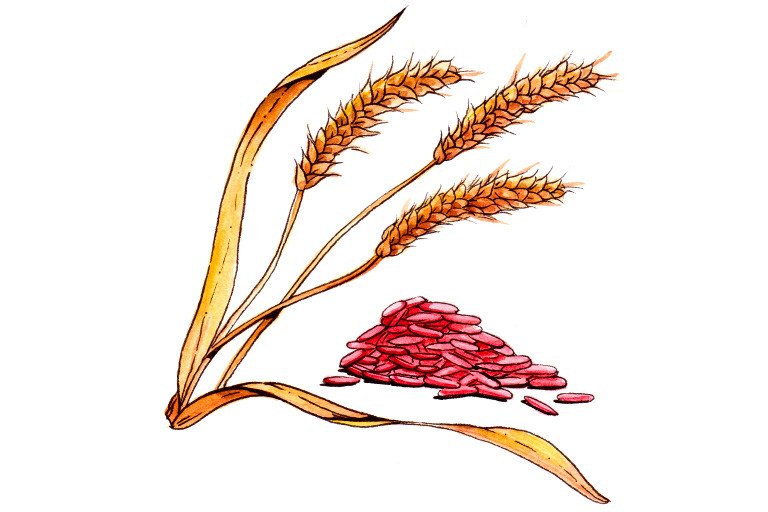
    Used in China as food and medicine for thousands of years, red yeast rice is the fermented product of the fungus, Monascus purpureus, grown on rice. It was first marketed as a dietary supplement in the United States by Pharmanex under the trade name Cholestin (1). The major active constituent, monacolin K, is the same as lovastatin, an active ingredient in the cholesterol-lowering drug, Mevacor® (2). A number of clinical trials have demonstrated effectiveness in using red yeast rice preparations for reducing cholesterol levels in hyperlipidemic patients (3) (4) (5) (14) (15) (16) (17). Tests of several preparations of red rice yeast revealed that many contained citrinin, a toxic fermentation byproduct (6). Adverse events include stomachache, heartburn, dizziness and flatulence (7). Lovastatin has been associated with muscle pain, tenderness and weakness, which theoretically may occur with red yeast rice. Persons with liver disease, pregnant women and persons under the age of eighteen should not use red yeast rice (1). A case of anaphylaxis in a 26-year-old man working with red yeast rice has also been reported (8).


    Food Sources

    Red yeast rice


    Purported uses

  • High cholesterol

  • Constituents

  • Rice starch
  • Fiber
  • Protein
  • Moisture
  • Ash
  • Phosphorus
  • Trace elements: calcium, aluminium, iron, manganese, magnesium, copper and silver
  • Monacolin I-VI, Monacolin K (Lovastatin), Dihydromonacolin Fatty Acids: palmitic, stearic, oleic, linoleic, linolenic (4) (6)

  • Mechanism of Action

    Components such as citrinin, monacolines and monankarin, and monascopyridines have been isolated from red yeast rice (10). Fermentation products are standardized to contain 0.4% 3-hydroxy-3-methylglutaryl coenzyme A (HMG-CoA) reductase inhibitors. HMG-CoA reductase is the rate-limiting enzyme in endogenous cholesterol biosynthesis (1). The principal HMG-CoA reductase inhibitor is monacolin K, also known as lovastatin (11). Lovastatin is also an active ingredient in the cholesterol-lowering drug, Mevacor® (2).

    Pharmacokinetics

    Little is known about the absorption, metabolism and excretion of red rice yeast. Lovastatin is partially metabolized by Cytochrome P450 3A4 (9).

    Warnings

  • A 26-year-old man developed anaphylaxis due to red yeast rice (8).
  • Persons with liver disease, and pregnant women should not use red yeast rice (1).
  • Citrinin, a toxic fermentation byproduct, was found at measurable concentrations in a number of preparations of red yeast rice (6).
  • Grapefruit juice may increase the effect of red yeast rice (9).

  • Adverse Reactions

    Reported: stomachache (3), heartburn, dizziness and flatulence (7).
    Case: Anaphylaxis in a 26-year-old man cooking with red yeast rice has been reported (8). In addition, rhabdomyolysis in a 28-year-old renal transplant recipient has also been reported (12).
    Note: Lovastatin, an approved prescription drug, has been associated with muscle pain, tenderness and weakness. Theoretically, these conditions may also occur with red rice yeast (1).

    Herb-Drug Interactions

  • Coenzyme Q10: Red yeast rice contains lovastatin which has been shown to lower coenzyme Q10 levels (13).

  • Literature Summary and Critique

    Heber D, et al. Cholesterol-lowering effects of a proprietary Chinese red-yeast-rice dietary supplement. Am J Clin Nutr 1999 Feb;69(2):231-6.
    Eight-three subjects with hyperlipidemia participated in a 12-week randomized controlled trial of red yeast rice supplementation. Subjects were randomized into two treatment arms to receive either 2.4 grams per day of red yeast rice or placebo. Both groups also consumed a diet similar to the American Heart Association Step I diet. Total cholesterol and LDL cholesterol was significantly reduced in the treatment arm when compared to control after eight and 12 weeks. There were no reported side effects in the treatment arm.
    Keithley JK, Swanson B, Sha BE, Zeller JM, Kessler HA, Smith KY. A pilot study of the safety and efficacy of cholestin in treating HIV-related dyslipidemia. Nutrition 2002;18:201-4. 14 subjects with dyslipidemia related to HIV participated in a randomized controlled trial of Cholestin. Subjects were randomized to receive either 1.2 grams Cholestin twice daily or placebo for eight weeks. One subject dropped out of each group. Among those who completed the protocol, significant declines from baseline in mean for fasting total cholesterol after two and eight weeks and for LDL cholesterol after eight weeks were observed. No adverse effects were seen. Researchers suggest that larger and longer-term trials of his approach should be conducted to confirm results.

    References

    1. Schulz V, Hansel R, Tyler VE. Rational Phytotherapy: A Physician's Guide to Herbal Medicine. New York: Springer, 2001.
    2. FDA Talk Paper. FDA determines Cholestin to be an unapproved drug. T98-28. May 20, 1998. (Last accessed Oct 27, 2003).
    3. Wang J, et al. Multicenter clinical trial of the serum lipid-lowering effects of a Monascus purpureus (red yeast) rice preparation from traditional Chinese medicine. Current Therapeutic Research, Clinical & Experimental 1997 58(12):964-978.
    4. Heber D, et al. Cholesterol-lowering effects of a proprietary Chinese red-yeast-rice dietary supplement. Am J Clin Nutr 1999 Feb;69(2):231-6.
    5. Keithley JK, Swanson B, Sha BE, Zeller JM, Kessler HA, Smith KY. A pilot study of the safety and efficacy of cholestin in treating HIV-related dyslipidemia. Nutrition 2002;18:201-4.
    6. Heber D, Lembertas A, Lu QY, Bowerman S, Go VL. An analysis of nine proprietary Chinese red yeast rice dietary supplements: implications of variability in chemical profile and contents. J Altern.Complement Med 2001;7:133-9.
    7. Thompson Coon JS, Ernst E. Herbs for serum cholesterol reduction: a systematic review. J Fam Pract 2003 Jun;52(6):468-78.
    8. Wigger-Alberti W, Bauer A, Hipler UC, Elsner P. Anaphylaxis due to Monascus purpureus--fermented rice (red yeast rice). Allergy 1999;54:1330-1.
    9. Kantola T, Kivisto KT, Neuvonen PJ. Grapefruit juice greatly increases serum concentrations of lovastatin and lovastatin acid. Clin Pharmacol.Ther. 1998;63:397-402.
    10. Wild D, Toth G, Humpf HU. New monascus metabolites with a pyridine structure in red fermented rice. J Agric.Food Chem. 2003;51:5493-6.
    11. Chang YN, Lin YC, Lee CC, Liu BL, Tzeng YM. Effect of rice--glycerol complex medium on the production of Lovastatin by Monascus ruber. Folia Microbiol.(Praha) 2002;47:677-84.
    12. Prasad GV, Wong T, Meliton G, Bhaloo S. Rhabdomyolysis due to red yeast rice (Monascus purpureus) in a renal transplant recipient. Transplantation 2002;74:1200-1.
    13. Ghirlanda G, Oradei A, Manto A, Lippa S, Uccioli L, Caputo S et al. Evidence of plasma CoQ10-lowering effect by HMG-CoA reductase inhibitors: a double-blind, placebo-controlled study. J Clin Pharmacol. 1993;33:226-9.
    14. Lin CC, Li TC, Lai MM. Efficacy and safety of Monascus purpureus Went rice in subjects with hyperlipidemia. Eur J Endocrinol 2005;153(5):679-86.
    15. Huang CF, Li TC, Lin CC, et al. Efficacy of Monascus purpureus Went rice on lowering lipid ratios in hypercholesterolemic patients. Eur J Cardiovasc Prev Rehabil. 2007;14(3):438-40.
    16. Becker DJ, Gordon RY, Morris PB, et al. Simvastatin vs therapeutic lifestyle changes and supplements: randomized primary prevention trial. Mayo Clin Proc. 2008;83(7):758-64.
    17. Becker DJ, Gordon RY, Halbert SC, et al. Red yeast rice for dyslipidemia in statin-intolerant patients: a randomized trial. Ann Intern Med 2009;150(12):830-9, W147-9.

    Last Updated: Jun. 30, 2009
    E-mail your questions and comments to aboutherbs@mskcc.org.
    Bookmark and SharePrintEmail This Page