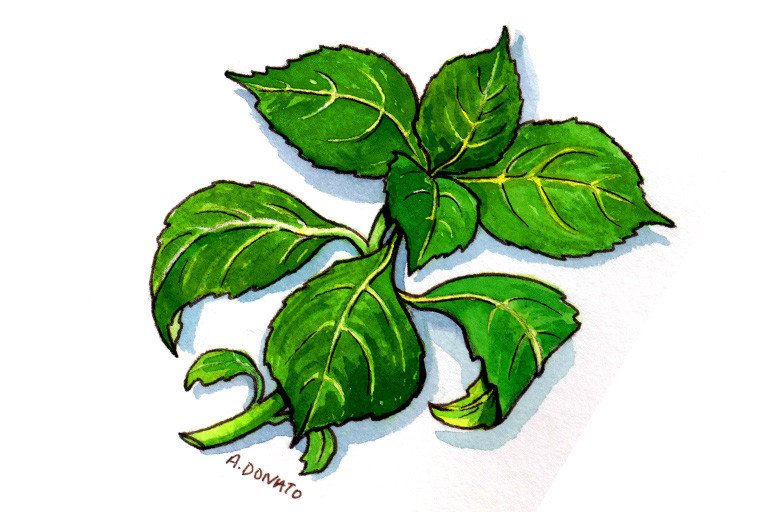
Common Names
- Salvia
- Diviner's sage
- Magic mint
- Maria Pastora
- Sherpherdess' herb
For Patients & Caregivers
Tell your healthcare providers about any dietary supplements you’re taking, such as herbs, vitamins, minerals, and natural or home remedies. This will help them manage your care and keep you safe.
Salvia divinorum is a mind-altering herb that has major adverse effects. It is illegal in some states and recreational use should be discouraged.
The active component of Salvia divinorum is a compound known as Salvinorin A. This has been shown to act on the nervous system to produce altered mental states. In laboratory and animal studies, Salvinorin A has been shown to affect certain pain receptors in the nervous system.
-
Mind-altering effects
This use is only supported by anecdotal reports. -
Depression
There is one report of Salvia divinorum’s effectiveness in treatment-resistant depression. More studies are needed. -
Drug addiction
Based on the chemistry of Salvia divinorum, some scientists have suggested using it to treat addiction to other drugs, such as cocaine and amphetamines. Clinical studies have yet to be conducted to support this use. -
Stress management
There is no evidence to support this claim.
- Use of Salvia by itself or in combination with alcoholic beverages and other drugs can cause neurologic, cardiovascular, and gastrointestinal effects.
- Psychosis
- A 15-year-old man with a history of salvia and marijuana use needed emergency psychiatric service following acute onset of mental status changes characterized by paranoia, blunted affect, thought blocking and slow speech.
- Smoking salvia has been implicated in the death of a 21-year-old man.
- A systematic review of studies/case reports of individuals with severe mental illness reported psychotic symptoms, significant changes in behavior, including agitation, aggression and violence, following use of salvia.
For Healthcare Professionals
Salvia divinorum, a type of sage, has been cultivated by the Mazatec people of Mexico for centuries for use as a hallucinogen during religious ceremonies. Chewing or smoking the leaves can cause depersonalization, visual changes, altered perceptions, and feelings of metamorphosis into objects (1). The plant was also reported to have antidepressant effects (4) and one of its major compounds Salvinorin A showed deleterious effects on learning and memory (13) (14).
S. divinorum has also gained popularity as a recreational drug and is widely available through the internet (2) (3). It was among the top five products marketed via the Internet in the UK in 2009 (12). Analysis of the 2006-2008 United States National Surveys on Drug Use and Health showed an 83% increase in the number of salvia users; its use, common among active drug users (11). Findings also indicate that abuse, driven by salvia, was more common than misuse in adolescents (16).
Several adverse effects have been reported with misuse and abuse of salvia. Some states have considered legislation to ban consumption of this herb and it is illegal in Australia, Finland and Denmark. S. divinorum should not be confused with the other plants used for cooking and medicinal purposes, such as Salvia officinalis, the common sage.
- Recreational use
- Depression
- Drug addiction
- Stress management
Salvinorin A, the active ingredient in Salvia divinorum, is a kappa opioid receptor agonist (6). It is a naturally occurring psychoactive compound and is being investigated as a treatment for diseases that produce hallucinations, such as schizophrenia and dementia (1). Salvinorin A can regulate dopamine levels and has been suggested as a potential treatment for stimulant abuse (5). Salvia divinorum may help to alleviate depression (4).
- Use of salvia by itself or in combination with alcoholic beverages and other drugs can cause neurologic, cardiovascular and gastrointestinal effects (7), as well as acute phase symptoms including visual and auditory hallucinations (18).
- Psychosis and paranoia that necessitated antipsychotic treatment (8).
- A 15-year-old man with a history of salvia and marijuana use needed emergency psychiatric service following acute onset of mental status changes characterized by paranoia, blunted affect, thought blocking and slow speech (9).
- A 57-year-old man with a previous severe brain injury developed a severe psychotic disorder 19 years after the injury, precipitated by heavy use of psychedelics that included salvia (10).
- A systematic review of studies/case reports of individuals with severe mental illness reported psychotic symptoms, significant changes in behavior, including agitation, aggression and violence, following use of salvia (17).