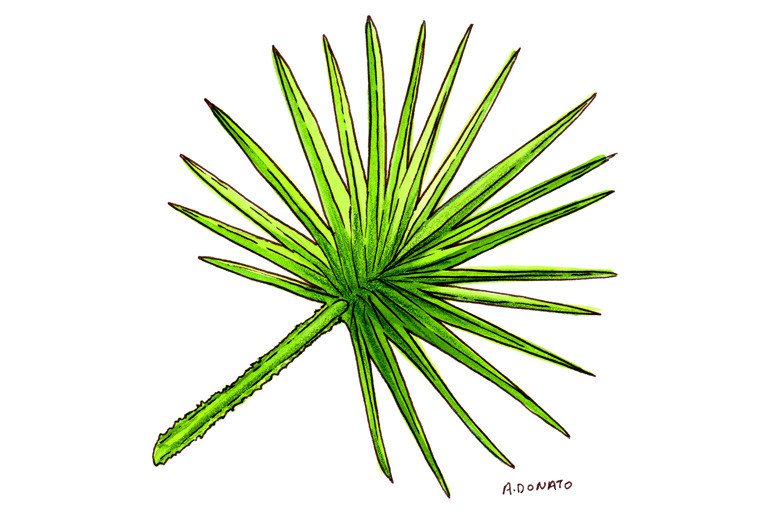
Common Names
- American dwarf palm tree
- Cabbage palm
For Patients & Caregivers
Tell your healthcare providers about any dietary supplements you’re taking, such as herbs, vitamins, minerals, and natural or home remedies. This will help them manage your care and keep you safe.
Saw palmetto was shown in some studies to help relieve the symptoms of benign prostatic hypertrophy (BPH), but it has not been shown to prevent or treat prostate cancer.
Studies in the laboratory show that saw palmetto works by countering effects of male sex hormones such as testosterone and DHT. It appears to reduce levels of these hormones in body tissues like the prostate. Other studies have noted that saw palmetto reduces the conversion of testosterone to DHT, its more potent form. Saw palmetto berry extracts also reduce inflammation and swelling by preventing the formation of compounds that cause these reactions.
In a laboratory study, a saw palmetto extract was found to slow the growth of normal prostate cells and increase their sensitivity to radiation, while not affecting prostate cancer cells. Since this may increase the risk of complications, patients should consult with a physician before using saw palmetto supplements during radiation therapy.
-
To treat benign prostatic hypertrophy (BPH)
Several clinical trials and meta-analyses have shown that saw palmetto improves urinary tract symptoms associated with BPH. -
To treat prostate cancer
Saw palmetto shows anti-inflammatory and anti-androgen properties in laboratory studies and reduces the levels of DHT in the prostate in clinical trials. However, it is not an effective treatment for prostate cancer. -
To promote urination
A few studies have shown benefits of saw palmetto. -
As an anti-inflammatory
Various studies suggest anti-inflammatory effects.
Common: Gastrointestinal upset, diarrhea, fatigue, headache, decreased libido and rhinitis
Most effects are reported as mild and similar to effects with placebo.
Case reports
- Potentially fatal blood accumulation around the heart: In a 76-year-old man taking a blood thinner for irregular heart rhythm who had also been taking saw palmetto. Although this condition appeared related to the use of his medication, saw palmetto may have contributed to this drug’s increased activity.
- Severe bleeding during surgery
- Blood in the urine and impaired blood clotting
- Severe inflammation of the pancreas
- Severe liver damage
- Hot flashes and first menstrual cycle: Two cases in children who were treated with saw palmetto for hair disorders.
Do Not Take if:
- You are taking warfarin or other blood thinners: Saw palmetto may increase the risk of bruising and bleeding.
- You are taking antiplatelets such as clopidogrel: Saw palmetto may increase the effects of these drugs.
- You are taking nonsteroidal anti-inflammatory drugs (NSAIDs): Saw palmetto may increase the side effects of these drugs.
For Healthcare Professionals
Saw palmetto is a dwarf palm that grows in the coastal lands of North America, West Indies, and Mediterranean countries. The fruits are a rich source of fatty acids and phytosterols and have been used to promote urination, reduce inflammation, and for treatment of conditions such as benign prostatic hyperplasia (BPH).
Various heterogeneous extracts of saw palmetto are available, but many basic research and clinical trials used a hexanic extract of S. repens, which has anti-inflammatory, anti-androgenic, and antiproliferative activities (36) (37). Whereas some data indicate that saw palmetto extracts improve lower urinary tract symptoms (LUTS) in both male (2) (3) (4) (5) (15) (17) (18) (26) (50) (54) and female (55) patients with BPH, conflicting data suggest no such effects (6) (14) (19) (28) (38) (56). In another large study, a saw palmetto extract did not affect serum prostate specific antigen (PSA) more than placebo even at high doses (30). But pretreatment with saw palmetto reduced intra- and postoperative complications in patients who underwent transurethral resection of the prostate and open prostatectomy (22), and reduced prostatic inflammation (51). Data also suggest benefits against chronic prostatitis/chronic pelvic pain syndrome (57). A saw palmetto extract was found to inhibit growth of normal prostate cells and increase their sensitivity to radiation in vitro, but did not affect malignant prostate cancer cells (20). A large epidemiologic study did not find associations with the use of saw palmetto and reduced risk of prostate cancer (27).
In an exploratory study, a hexanic extract of S. repens demonstrated anti-inflammatory effects in patients with BPH-related LUTS (39). In an open-label study, saw palmetto extract plus tamsulosin was found to be more effective than tamsulosin alone in reducing storage symptoms in BPH patients (40); and a randomized trial reported benefits of saw palmetto and bifiprost for preventing chronic bacterial prostatitis due to enterobacteriaceae (52).
Multi-phytotherapy approaches have also been investigated. One study suggests saw palmetto may benefit patients with chronic bacterial prostatitis when co-administered with nettle, curcumin, and quercitin (16). In addition, saw palmetto exerted anti-inflammatory effects when combined with selenium and lycopene (31). In randomized trials, patients with LUTS had greater improvement in International Prostate Symptom Scores (IPSS) and increased urine flow with this combination therapy in addition to tamsulosin than with either single therapy (41). The combination was also reported comparable to tadalafil for improving IPSS and urine flow (53).
Due to the increased risk of normal tissue complications, patients should consult with a physician before using saw palmetto supplements during radiation therapy. Data on the effects of saw palmetto on symptom management during radiation therapy have yet to be published (32).
- Benign prostatic hypertrophy (BPH)
- Prostate cancer
- Promote urination
- Inflammation
Studies with a liposterolic extract of saw palmetto berries showed that it reduced tissue uptake of both testosterone and dihydrotestosterone (DHT) by more than 40%, suggesting antiandrogenic activity (7). Further, the extract inhibited binding of DHT to its receptor (8) and blocked conversion of testosterone to DHT by inhibiting 5-alpha-reductase activity (9). The berries also inhibit cyclooxygenase and 5-lipoxygenase pathways, thereby preventing the biosynthesis of inflammation-producing prostaglandins and leukotrienes (10). Other possible mechanisms attributed to benefits in BPH include the blocking of estrogen receptor activity in the prostate as well as bladder muscle antispasmodic and anti-inflammatory activities (42). Possible mechanisms by which saw palmetto could cause hot flashes and vasomotor symptoms especially in children include its antiestrogenic activity influencing physiological endocrine activity and increased availability of sex hormone-binding globulin (35) (43).
Studies of a hexanic extract of S. repens suggests it decreases prostaglandin and leukotriene production to inhibit the arachidonic acid cascade and decreases B lymphocyte infiltrates and interleukin (IL)-1b and tumor necrosis factor (TNF)-a levels to adjust inflammatory status and gene expression (36). In animal models of prostate hyperplasia, it demonstrated a global anti-inflammatory effect on hyperplastic prostates with lobe-specific anti-androgenic effects (44). In human prostate and vascular cells in an inflammatory environment, it also decreases monocyte chemotactic protein-1 production and vascular cell adhesion molecule-1 expression (37). In human prostate carcinoma cells, inhibitory effects on cell growth were attributed to downregulation of inflammatory-related genes and activation of nuclear factor-kappa B pathway (45).
A chalcanonol glycoside from the seeds of saw palmetto as well as sterolic derivatives have demonstrated antiproliferative effects (46).
Common: Gastrointestinal disturbances, diarrhea, fatigue, headache, decreased libido, rhinitis (47) (48)
Most effects are reported as mild and similar to effects with placebo (47).
Case reports
- Hemopericardium: In a 76-year-old man receiving rivaroxaban who had also been taking saw palmetto. Although the development of hemopericardium appeared related to the use of rivaroxaban, saw palmetto may have contributed to the increase in rivaroxaban activity (49).
- Intraoperative hemorrhage, anticoagulant effects and prolonged bleeding time: In a 53-year-old white male during surgical resection of a tumor, despite negative results for a workup for bleeding disorders and no preoperative use of anti-inflammatory medications. Further inquiry led to disclosed use of saw palmetto for BPH. Prolonged bleeding time normalized a few days after the patient stopped taking this supplement (11).
- Hematuria and coagulopathy: In a 79-year-old man taking multiple medications along with long-term use of saw palmetto, the dosage of which he had recently increased to relieve BPH symptoms (21). Urinary symptoms and coagulation parameters improved with the discontinuation of saw palmetto.
- Acute pancreatitis: In a 65-year-old man following use of saw palmetto for 1 week before onset of symptoms. His condition improved after treatment and avoiding saw palmetto (23).
- Severe liver damage: In a 58-year-old man following consumption of saw palmetto to alleviate BPH symptoms (24).
- Hot flashes and subsequent menarche: In an 11-year-old girl after treatment for a type of alopecia with a food supplement for 2 months that contained saw palmetto (35); and in a 10-year-old girl using a food supplement that contained saw palmetto extract to treat hirsutism. Symptoms abated when the supplement was discontinued and reappeared with a supplement “re-challenge”. Menarche also commenced about 4 months post-supplement (43).
- Postoperative retroperitoneal hematoma: In a middle-aged man with a history of bilateral inguinal hernia repair after he took saw palmetto prior to surgery (58).
- Fixed drug eruption with localized blisters and erosion: In a 61-year-old man who took saw palmetto for treating BPH. The eruption cleared after saw palmetto withdrawal (59).
- Anticoagulants, antiplatelets: Saw palmetto may have additive anticoagulant effects, according to case reports (11) (21) (49).
- Nonsteroidal anti-inflammatory drugs (NSAIDs): Saw palmetto may increase the risk of side effects with these drugs, according to a case report (21).
- UGT (Uridine 5’-diphospho-glucuronosyltransferase) substrates: Saw palmetto inhibits UGT enzymes in vitro and can increase the side effects of drugs metabolized by them (25). Clinical relevance is not known.
- CYP 450 substrates: Saw palmetto inhibits cytochrome P450 3A4, 2D6, and 2C9 and may interfere with the actions of drugs metabolized by these enzymes (29). Clinical relevance is not known.
- May prolong bleeding time (11)