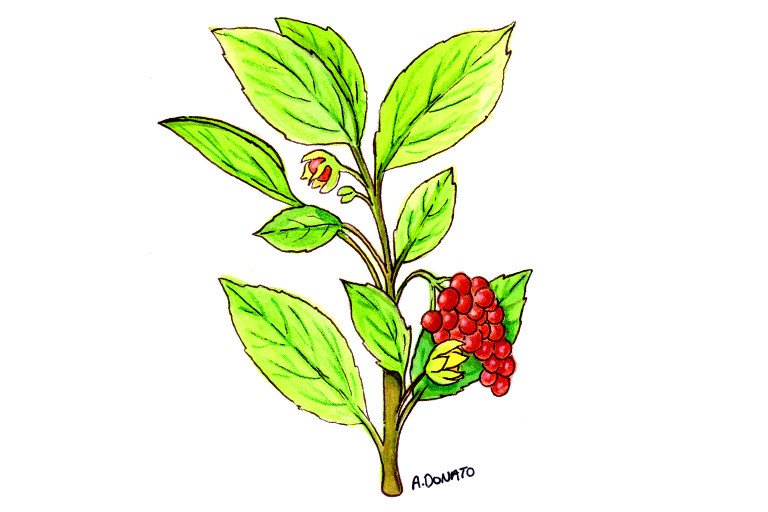
Common Names
- Wu wei zi
- Schizandra
- Five flavor berry
- Gomishi
- Omicha
- Omija
- Ngu mie gee
For Patients & Caregivers
Tell your healthcare providers about any dietary supplements you’re taking, such as herbs, vitamins, minerals, and natural or home remedies. This will help them manage your care and keep you safe.
Schisandra is a fruit extract used in traditional Chinese medicine, but few studies have been conducted in humans.
Schisandra has a long history of use in traditional Chinese medicine to treat liver conditions, stomach disorders, and as a tonic to improve vitality. It is also used in various formulas for fatigue and sleep. Its Chinese name, wu wei zi, means five-flavored fruit, to reflect the five flavors recognized in TCM: sour, bitter, sweet, salty, and pungent.
Scientists do not know how Schisandra works, but lab experiments have begun to identify some possible effects. Schisandra has antioxidant activity and appears to protect the liver and nervous system. Other animal studies suggest it may improve mental and physical functioning. Only a small number of studies have been conducted in humans and are too limited to draw any conclusions.
- To treat lung problems and coughs
Although schisandra is used to treat some lung symptoms in traditional Chinese medicine, clinical trials have not been conducted. - To treat gastrointestinal problems
The traditional use of schisandra to treat diarrhea and indigestion is not yet supported in clinical trials. A small study in liver transplant patients suggests schisandra may help with the side effect of diarrhea associated with immune suppressant medication. - To treat liver disease
A small study in liver transplant patients suggests schisandra can improve liver function. Another small study indicates it may be helpful in combination with other treatments for chronic hepatitis. However, these uncontrolled trials are inconclusive and larger, more rigorous studies are needed. - To increase strength and stamina
A small study in older adults doing regular low-intensity exercise suggests that a schisandra extract may enhance skeletal muscle strength, but it did not affect muscle mass. Additional studies are needed. - To reduce sweating
A small trial in women suggests that schisandra may help menopausal symptoms including hot flushes and sweating.
No serious side effects have been reported, but schisandra is not well studied in humans.
Patient Warnings:
Schisandra may reduce the effectiveness of some drugs or increase their adverse effects. Patients should talk with their doctors about the possibility of such drug interactions.
Do Not Take if:
- You are taking drugs that are substrates of CYP1A2, 3A4, or 3A5: In vitro and animal studies suggest schisandra can affect how these drugs are metabolized. Clinical relevance has yet to be determined.
- You are taking drugs that are substrates of P-glycoprotein: Schisandra may increase the risk of side effects of these drugs.
Special Point:
Schisandra can reduce the levels of certain liver enzymes on lab tests.
For Healthcare Professionals
Schisandra has a long history of use in traditional Chinese medicine to treat coughs (1), liver conditions (2), stomach disorders (3), sweating (4), as an adaptogen (5), and as a tonic to improve vitality. It is also used in various formulas for fatigue and sleep. Its Chinese name, wu wei zi, means five-flavored fruit, to reflect the five flavors recognized in TCM: sour, bitter, sweet, pungent, and salty.
In vitro studies suggest that schisandra has anti-inflammatory (1) (6), anticancer (7) (8), and cardioprotective effects (9). Animal studies also suggest cardio- and liver-protective effects (10) (11) (12). Schisandra appeared to enhance endurance and metabolism (13), improve cognitive functioning (14), and exhibit antimicrobial (15), antioxidant, neuroprotective (16), and anti-hyperglycemic activities (17) (18) (19) in other preclinical models. Active lignans isolated from schisandra, particularly schisandrin A, appeared to reverse P-glycoprotein-mediated multidrug resistance of various cancer cell lines to doxorubicin, vincristine, and paclitaxel (20).
Studies in humans are limited. Some suggest improvements in patients with fatty liver disease or hepatitis C when schisandra is used in combination with other substances (21) (22). In liver transplant patients, schisandra appeared to reduce tacrolimus-associated side-effects of diarrhea and agitation and improve liver function (24). In a small study of renal transplant patients who were CYP3A5 expressers, a schisandra preparation reduced tacrolimus dosing requirements, improved initial dose accuracy, and resulted in fewer dose changes (38). In small studies of women, schisandra did not induce significant changes in obesity-related measures (39), but was helpful for menopausal symptoms (40). A study of a proprietary formulation that included schisandra suggests improved performance of cognitive tasks (23). In older adults doing regular low-intensity exercise, preliminary data suggest supplementation with a schisandra extract may enhance skeletal muscle strength, but it did not affect muscle mass (42).
Additional research is necessary to determine actual efficacy attributable to schisandra and to uncover possible interactions or side effects associated with this supplement.
- Cough
- Diarrhea
- Indigestion
- Liver disease
- Strength, stamina
- Sweating
Lignans in schisandra have been linked to various effects including hepatoprotective (10), antiproliferative, and estrogenic activities (27). In vitro, schisantherins downregulated pro-inflammatory cytokines and mediators by blocking NF-κB and MAPK signaling (1). The anthocyanin Cya-3-O-xylrut has been identified as responsible for its antioxidant activity (18).
In animal toxicity models, pretreatment with schisandra lignans provided liver-protective effects via increased DT-diaphorase activity (10), and improved Phase I drug metabolism (28) (29). Schisandra also increased hepatic glutathione levels and glucose-6-phosphate and glutathione reductase activities (17). It lowered blood glucose levels via inhibition of α-glucosidase activity (19), and improved post-ischemic cardiac function by downregulating inflammatory cytokines, activating the eNOS pathway, inhibiting apoptosis, and enhancing cell proliferation (12). In amyloid-beta-induced memory impairment, schisandra increased superoxide dismutase and glutathione peroxidase activities and glutathione levels in the cerebral cortex and hippocampus of mice while decreasing malondialdehyde and oxidized glutathione (14). It also enhanced endurance and metabolism in rat skeletal muscle by upregulating PGC-1α expression (13).
In human renal cell carcinoma cells, a schisandra polysaccharide identified as SCP induced apoptosis via caspase-3 and -9 activation, increased PARP cleavage, and inactivation of the ERK pathway (8). Another polysaccharide known as SCPP11 exhibited antitumor effects in hepatic cancer models via increased thymus index as well as serum IL-2 and TNF-alpha levels, and enhanced phagocytosis and NO production (26). Pgp-mediated chemotherapy drug-resistance in various cancer cell lines was reversed by schisandrins through the inhibition of Pgp and total protein kinase C function/expression (20).
Schisandra coadministration increased oral bioavailability of tacrolimus via inhibition of Pgp-mediated efflux and CYP3A-mediated metabolism, and reduction of intestinal first-pass effect (30).
No serious side effects have been reported, although schisandra is not well studied in humans. A few minor adverse events, such as sleepiness and cold extremities, were observed in both treatment and placebo groups in one small trial (23).
- CYP1A2, 3A4, and 3A5 substrates: In vitro studies suggest that lignans isolated from schisandra can inhibit CYP3A4 and CYP3A5 enzymes (41). Animal studies suggest schisandra inhibits CYP3A4 and CYP1A2 and can affect the intracellular concentration of drugs metabolized by these enzymes. Long-term use can also induce CYP3A4 activity (33) (34). Clinical relevance has yet to be determined.
- P-glycoprotein substrates: Lab and human studies suggest schisandra can inhibit P-gp activity and may interfere with the metabolism of certain drugs (35) (36).
- Tacrolimus: In liver transplant patients, schisandra increased blood levels of tacrolimus, an immunosuppressant (24).
Schisandra can reduce levels of alanine aminotransferase (ALT) and aspartate aminotransferase (AST) but did not change total or direct bilirubin levels (21).