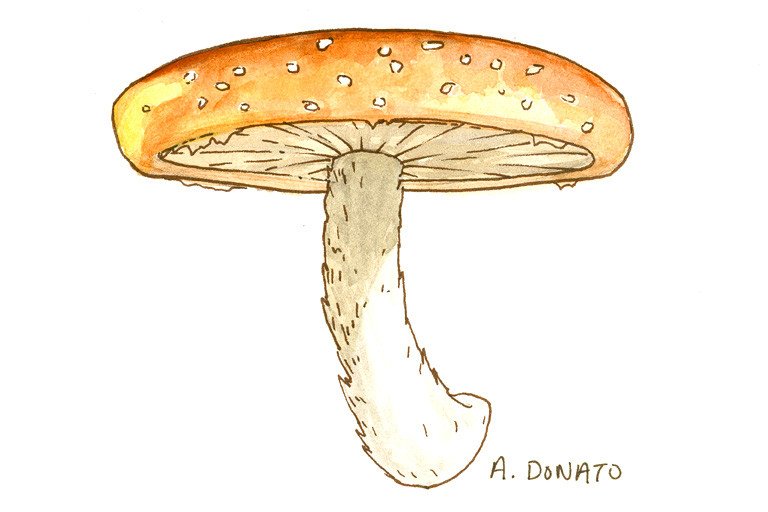
Common Names
- Forest mushroom
- Lentinula
- Pasania fungus
- Hua gu
For Patients & Caregivers
Tell your healthcare providers about any dietary supplements you’re taking, such as herbs, vitamins, minerals, and natural or home remedies. This will help them manage your care and keep you safe.
Small studies have evaluated shiitake mushroom extract, with mixed results. Lentinan, a polysaccharide extracted from shiitake, may help extend the survival of patients with some cancers when used with chemotherapy, but additional studies are needed.
Some of the medicinal properties of shiitake mushroom are attributed to a sugar molecule named lentinan, on which extensive research has been done. In laboratory tests, lentinan does not kill cancer cells directly, but enhances a number of aspects of the immune system, which may aid in the slowing of tumor growth. Lentinan also kills viruses and microbes directly in laboratory studies. Most studies of lentinan involve intravenous or intramuscular injections. It is uncertain whether the ingestion of shiitake mushrooms provides similar effects. One clinical trial has shown shiitake extract alone is not an effective treatment for prostate cancer.
- To prevent and treat cancer
A shiitake extract was found to be ineffective for the treatment of prostate cancer. However, an oral formulation of lentinan was shown effective in extending survival in patients with stomach, colorectal, pancreatic, and liver cancers. Larger studies are needed to confirm this effect. - To lower high cholesterol
Compounds in shiitake have cholesterol-lowering effects in lab studies, but there is no proof from clinical trials of their ability to also lower cholesterol in people. - To stimulate the immune system
Lentinan stimulates the activity of certain immune cells in lab studies and in people. However, it is unclear if lentinan or shiitake are effective in treating diseases such as AIDS and cancer. - To treat infections
Although lab studies suggest antiviral and antibacterial properties, clinical data are lacking.
- Skin inflammation
- Increased skin sensitivity to sunlight
- Abnormally high level of certain white blood cells
- Upset stomach
- Pneumonia caused by hypersensitivity to spores
- Small bowel obstruction from eating a whole shiitake mushroom
For Healthcare Professionals
Shiitake mushroom, native to East Asia, is cultivated worldwide for its purported health benefits. The fresh and dried forms of the mushroom are commonly used in East Asian cooking. It is also valued as an anticancer agent.
Lentinan (1,3 beta-D-glucan), a polysaccharide isolated from shiitake, is thought to be responsible for its beneficial effects. Although it has been shown to have anticancer effects (1) (34) (35) (36) (40), lentinan is considered a biological response modifier, rather than having a direct cytotoxic effect on tumor cells (37). Preclinical studies conducted with shiitake extracts revealed immunostimulatory (4), antiviral (31), hepatoprotective (5) (38), antihypercholemic (39), antiproliferative (4), cytotoxic (21), antimutagenic (6), and anticaries (7) properties.
Small randomized studies found shiitake to alter immune function in young adults (41), a useful adjuvant for preventing dyslipidemia in adults with borderline high cholesterol (54), and to modulate intestinal microbiota in hypercholesterolemic adults (55). In patients with advanced gastrointestinal cancer, an orally administered shiitake mycelial extract decreased the incidence of chemotherapy-associated adverse effects (22); and in combination with immunotherapy, improved QOL in cancer patients (48), although a polysaccharide/oligosaccharide complex from a shiitake extract failed to show effectiveness in the treatment of prostate cancer (8). More well-designed studies are needed to establish shiitake as a useful adjunct to cancer treatment.
Fresh or dried whole mushroom
- Cancer prevention
- Cancer treatment
- High cholesterol
- Immunostimulation
- Infections
Supplementation with shiitake mushroom enhanced gut immunity by upregulating interleukin (IL)-23 secretion in a murine model of acute dextran sodium sulfate-colitis (29). Shiitake extracts and the polysaccharide lentinan also exerted antiviral effects, by acting on initial replication processes of poliovirus type 1 (PV-1) and bovine herpes virus type 1 (BoHV-1) (31). Another polysaccharide isolated from shiitake exhibited antibacterial effects in mice by increasing T-helper (Th1) cell immunity, resulting in activation of macrophage-mediated immune response (32). Lentin exhibited antifungal properties, inhibited proliferation of leukemic cells, and suppressed activity of human immunodeficiency virus-1 (HIV-1) reverse transcriptase (3). Shiitake consumption in adults altered immune function via increased proliferation of gamma delta-T and NK-T cells, increased secretory immunoglobulin A in saliva, increased IL-1alpha, IL-4, IL-10, and tumor necrosis factor (TNF)-α levels, and decreased macrophage inflammatory protein-1alpha/chemokine C-C ligand 3 (MIP-1alpha/CCL3) levels (41). A low-molecular-weight lignin from shiitake inhibited hepatitis C virus by binding to viral apolipoprotein E (apoE) before interacting with cell surface heparan sulfate (38).
Eritadenine from shiitake may exert antihypercholemic effects and regulate lipid metabolism by inhibiting S-adenosyl homocysteine hydrolase activity, and supplementation with both eritadenine and shiitake mushroom upregulated CYP7A1 mRNA expression that was decreased in hypercholesterolemic mice (39). High doses of shiitake mushroom prevented obesity in rats by increasing plasma triacylglycerol accumulation in the liver (30).
Additional studies showed that dried shiitake extract caused apoptosis in human hepatocellular carcinoma (HepG2) cells by mediating caspase-3 and -8 pathways (21). Inhibition of lung cancer cells by the Latcripin-13 domain isolated from shiitake was shown to be due to apoptotic induction (40). Anticancer effects of the polysaccharide lentinan (1,3 beta-D-glucan) may be due to its ability to suppress cytochrome P450 1A enzymes that are known to metabolize procarcinogens to active forms (2). Polysaccharides SLNT1 and JLNT1 isolated from the mushroom also demonstrated antitumor effects by increasing serum IL-2 levels and TNF-α production, and by inducing apoptosis in tumor cells in mice (33).
Case Reports
- Hypersensitivity pneumonitis: In a lung cancer patient following exposure to shiitake spores (10), and in a 37-year-old man following inhalation of shiitake mushroom spores (23).
- Dermatitis, photosensitivity, eosinophilia, and gastrointestinal upset: Following prolonged consumption of shiitake powder (11) (12).
- Shiitake dermatitis, flagellate dermatitis and flagellate erythema: Patterns of whiplike, linear, erythematous wheals after consumption of raw or even cooked shiitake mushrooms which has been associated with toxic reactions to the constituent lentinan 24-27, 42-47, 49-52, 56-61.
- Intermittent dermatitis over a 16-year period: Linked to consumption of shiitake mushrooms in a 45-year-old male (19).
- Esophageal symptoms: Linked to a food allergy in a 37-year-old man following consumption of shiitake mushroom (20).
- Small bowel obstruction: Caused by ingestion of a whole shiitake mushroom, resulting in necrosis and mucosal damage in the small intestine (28); emergency laparotomy and a semetal small bowel resection (53); as well as laparoscopic small bowel incision in another case (53). In another case, the patient was treated with fasting and parenteral nutrition to clear the bowel obstruction caused by consuming several pieces of sauteed shiitake (62).
Chronic consumption of shiitake may increase eosinophil count (12).