History & Overview Annual Report President's Pages Center News Community Affairs Code of Conduct
Make a Gift Cycle for Survival Fred's Team Yankees Universe Fund Thomas Blake Sr. Memorial Research Fund Donating Blood & Platelets Volunteering Thrift Shop Park Avenue Potluck CELEBRATIONS
Press Releases In the News Information for Journalists News@MSKCC
Manhattan New Jersey Long Island Westchester
Working at Memorial Sloan-Kettering Work Sites College Recruitment About Nursing Job Fairs & Career Days IS Careers Job Search & Apply Online
Making an Appointment
Search About Herbs:

Tea Tree Oil

How It Works

Bottom Line: Tea tree oil may be effective in treating certain skin conditions. More studies are needed.

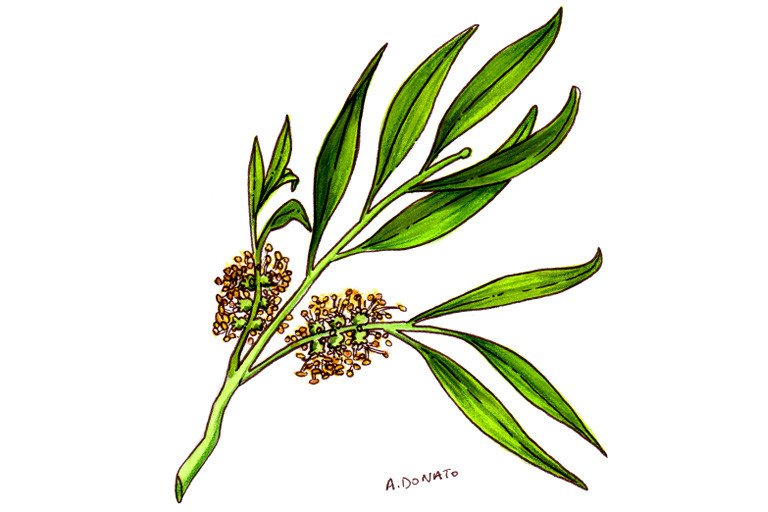
Tea tree oil is the essential oil distilled from Melaleuca alternifolia, a plant native to Australia. In laboratory tests, tea tree oil effectively killed a number of the bacteria and fungi most commonly found in skin infections and acne, including Candida albicans, Escherichia coli, Staphylococcus aureus, Pseudomonas aeruginosa, Staphylococcus epidermidis and Propionibacterium acnes. Tea tree oil was also found effective against some cancer cells in the laboratory.
In healthy volunteers, a tea tree oil extract was able to reduce inflammation caused by histamine injections.

Purported Uses

  • To treat acne
    One clinical trial showed that tea tree oil was as effective as benzoyl peroxide in treating acne, but there is no other evidence to support this use.
  • To treat minor burns
    No scientific evidence supports this use.
  • To treat fungal infections of the skin, fingernails, toenails
    One clinical trial showed that tea tree oil was as effective as antifungal medicines against fingernail/toenail fungal infections. However, clinical trials have presented mixed results when used to treat fungal infections of the foot.
  • To reduce inflammation
    One study shows that tea tree oil reduces inflammation caused by histamine injections in healthy volunteers, but there is no proof from clinical trials that it can reduce swelling from other causes (bee stings, psoriasis, eczema).
  • To treat insect bites and stings
    Tea tree oil may be able to reduce inflammation, but otherwise no scientific evidence supports this use.
  • To treat mucositis (swelling of the mucous membranes of the mouth)
    No scientific evidence supports this use. Intake of tea tree oil by mouth can cause severe toxicity.
  • To promote the healing of wounds
    Although they may have antimicrobial properties, tea tree oil products are not guaranteed sterile and therefore should not be applied to open wounds.
  • To treat dandruff
    One clinical trial supports this use.
  • To treat cold sores
    One small study shows possible benefits, but further study is necessary. Intake of tea tree oil by mouth can cause severe toxicity.

  • Research Evidence

    Fungal infections underneath the fingernails and toenails
    A randomized, controlled trial compared tea tree oil to a conventional anti-fungal therapy in the treatment of fungal infection underneath the fingernails and toenails. For six months, 117 patients were assigned to use either 1% clotrimazole or 100% tea tree oil, applied to the affected area twice a day. After therapy, the two treatment groups fared about the same with respect to resolution of their infection. This indicates that tea tree oil may be as effective as topical anti-fungal creams in treating fungal infections of the fingernails and toenails.

    Acne
    The effectiveness and safety of tea tree oil in treating mild to moderate acne was studied in a clinical trial in Australia. One hundred and twenty-four patients were assigned to use either a 5% tea-tree oil gel or a 5% benzoyl peroxide lotion. The tea tree oil gel proved to be as effective as benzoyl peroxide in treating acne, with fewer side effects, but tea tree oil took a longer time to start working. However, this study does not address the safety of long-term use of tea tree oil.

    Tinea pedis (fungal infection of the foot)
    One hundred and four patients participated in a randomized, controlled trial to determine whether tea tree oil is effective in treating tinea pedis (fungal infection of the foot). The patients were randomly assigned to one of three groups: one group used a 10% tea tree oil cream, the second group used a 1% tolnaftate cream (an antifungal drug), and the third group used a placebo cream. Although the tea tree oil group and tolnaftate group showed similar improvements in symptoms, tea tree oil was not actually effective in killing the infective fungus in most patients. A second study using 25% and 50% tea tree oil solution instead of a cream were more effective, although still less effective than standard topical treatments.

    Dandruff
    One hundred and twenty-six patients participated in a randomized, single-blind trial to determine whether tea tree oil is effective in treating dandruff. The patients were randomly assigned to use either 5% tea tree oil shampoo or placebo for four weeks. The tea tree oil was more effective than the placebo at reducing the itchiness, greasiness and total severity of the dandruff. The treatment was also well tolerated. 

    Warnings

  • Tea tree oil should only be used topically. When taken by mouth, it can cause severe toxicity, including an abnormal elevation in white blood cell count and coma.
  • This product is regulated by the FDA as a dietary supplement. Unlike approved drugs, supplements are not required to be manufactured under specific standardized conditions. This product may not contain the labeled amount or may be contaminated. In addition, it may not have been tested for safety or effectiveness.

  • Side Effects

  • When used topically, local skin irritation and/or an allergic reaction (contact dermatitis: itching, redness, and swelling) can occur.
  • When taken by mouth, tea tree oil can cause disorientation, whole body rash, and an abnormal elevation in white blood cell count.

  • Scientific Name

    Melaleuca alternifolia

    Common Name

    Melaleuca oil from Australia

    Clinical Summary

    Tea tree oil, derived from the leaves, should only be used topically. The active components are thought to be terpinen-4-ol, alpha-terpineol, and alpha-pinene. Tea tree oil has demonstrated in vitro antimicrobial (2) (12) and antiproliferative (14) (15) properties. Clinical studies suggest efficacy in treating acne (5), tinea pedis (6) (9), distal subungual onychomycosis (7), histamine-induced skin inflammation (8), dandruff (10) warts (16), and cold sores (11).
    Oral consumption of tea tree oil has resulted in serious adverse events including coma (1).
    Skin irritation and hypersensitivity reactions were reported following topical administration (3). Also, repeated topical exposure to lavender and tea tree oils resulted in gynecomastia in prepubertal boys (13).


    Purported uses

  • Acne
  • Burns
  • Cold sores
  • Eczema
  • Fungal infections
  • Inflammation
  • Insect bites and stings
  • Mucositis
  • Skin infections
  • Wound healing

  • Constituents

  • Volatile Oils: Terpinen-4-ol, 1-8-cineole, alpha-terpineol, sesquiterpenoid, and terpinolene (1)

  • Mechanism of Action

    Tea tree oil, especially terpinen-4-ol, appears to have antimicrobial activity against Candida albicans, Escherichia coli, Staphylococcus aureus and Pseudomonas aeruginosa. In addition, terpin-4-ol, alpha-terpineol, and alpha-pinene were found to possess antimicrobial effects against Staphylococcus epidermidis and Propionibacterium acnes (2). Terpinen-4-ol has also been shown to suppress inflammatory mediator production by activated human monocytes (8).
    In vitro studies have shown that tea tree oil has weak estrogenic and antiandrogenic properties that may alter estrogen and androgen signaling pathways (13).

    Warnings

    Tea tree oil should only be used topically. Internal administration may cause severe toxicity. Both coma and neutrophil leukocytosis have occurred following oral administration.

    Adverse Reactions

    Reported (topical): Local skin irritation and allergic contact dermatitis. (3)
    Reported (oral): Disorientation, systemic contact dermatitis, coma, body rash, and neutrophil leukocytosis. (4)
    Reported (topical): Repeated application of lavender and tea tree oils resulted in gynecomastia in prepubertal boys. (13)

    Herb-Drug Interactions

    None known

    Literature Summary and Critique

    Buck DS, et al. Comparison of two topical preparations for the treatment of onychomycosis: Melaleuca alternifolia (tea tree) oil and clotrimazole. J Fam Pract 1994;38:601-5.
    A double-blind, multicenter, randomized, controlled trial on 117 patients with distal subungual onychomycosis proven by culture. Patients received twice daily application of either 1% clotrimazole solution or 100% tea tree oil for 6 months. After 6 months of therapy, the two treatment groups were comparable based on culture cure and clinical assessment documenting partial or full resolution.

    Bassett IB, et al. A comparative study of tea-tree oil versus benzoyl peroxide in the treatment of acne. Med J Aust 1990;153:455-8.
    A single-blind, randomized clinical trial on 124 patients to evaluate the efficacy and skin tolerance of 5% tea-tree oil gel in the treatment of mild to moderate acne when compared with 5% benzoyl peroxide lotion. The results show that both products had a significant effect in ameliorating acne by reducing the number of inflamed and non-inflamed lesions, although the onset of action with tea tree oil was slower. Fewer side effects were experienced by patients receiving tea tree oil.

    Tong MM, et al. Tea Tree oil in the treatment of tinea pedis. Australia J Dermatol 1992;33:145-9.
    One-hundred and four patients completed a randomized, double-blind trial to evaluate the efficacy of 10% tea tree oil cream compared with 1% tolnaftate and placebo creams in the treatment of tinea pedis. Significantly more tolnaftate-treated patients (85%) than tea tree oil (30%) and placebo-treated patients (21%) showed conversion to negative cultures at the end of therapy. There was no statistically significant difference between tea tree oil and placebo groups. The tea tree group and the tolnaftate group showed significant improvement in clinical condition when compared to the placebo group. Tea tree oil appears to reduce the symptomatology of tinea pedis as effectively as tolnaftate 1%, but is no more effective than placebo in achieving a mycological cure.

    References

    1. Osborne F, et al. Australian tea tree oil. Herbal Medicine 1998 March;42-6.
    2. May J, et al. Time-kill studies of tea tree oils on clinical isolates. J Antimicrob Chemother 2000;45:639-43.
    3. Rubel DM, Freeman S, Southwell IA. Tea tree oil allergy: what is the offending agent? Report of three cases of tea tree oil allergy and review of the literature. Australia J Dermatol 1998;39:244-7.
    4. Carson C, Riley TV, Cookson BD. Efficacy and safety of tea tree oil as a topical antimicrobial agent. J Hosp Infect 1998;40:175-8.
    5. Bassett IB, Pannowitz DL, Barnetson RS. A comparative study of tea tree oil versus benzol peroxide in the treatment of acne. Med J Aust 1990;153:455-8.
    6. Tong MM, Altman PM, Barnetson RS. Tea tree oil in the treatment of tinea pedis. Australia J Dermatol 1992;33:145-9.
    7. Buck DS, Nidorf DM, Addino JG. Comparison of two topical preparations for the treatment of onychomycosis: Melaleuca alternifolia (tea tree) oil and clotrimazole. J Fam Pract 1994;38:601-5.
    8. Koh KJ, et al. Tea tree oil reduces histamine-induced skin inflammation. Br J Dermatol 2002;147:1212-7.
    9. Satchell AC, et al. Treatment of interdigital inea pedis with 25% and 50% tea tree oil solution: A randomized, placebo-controlled, blinded study. Australas J Dermatol 2002; 43: 175-8.
    10. Satchell AC, et al. Treatment of dandruff with 5% tea tree oil shampoo. J Am Acad Dermatol 2002; 47(6): 852-5.
    11. Carson CF, et al. Melaleuca alternifolia (tea tree) oil gel (6%) for the treatment of recurrent herpes labialis. J Antimicrob Chemother 2001; 48: 450-1.
    12. Bagg J, et al. Susceptibility to Melaleuca alternifolia (tea tree) oil of yeasts isolated from the mouths of patients with advanced cancer. Oral Oncol 2006; 42(5): 487-92.
    13. Henley DV, Lipson N, Korach KS, et al. Prepubertal gynecomastia linked to lavender and tea tree oils. N Engl J Med 2007;356(5):479-85.
    14. Calcabrini A, Stringaro A, Toccacieli L, et al. Terpinen-4-ol, the main component of Melaleuca alternifolia (tea tree) oil inhibits the in vitro growth of human melanoma cells. J Invest Dermatol. 2004 Feb;122(2):349-60.
    15. Greay SJ, Ireland DJ, Kissick HT, et al. Induction of necrosis and cell cycle arrest in murine cancer cell lines by Melaleuca alternifolia (tea tree) oil and terpinen-4-ol. Cancer Chemother Pharmacol. 2009 Aug 13. [Epub ahead of print]
    16. Millar BC, Moore JE. Successful topical treatment of hand warts in a paediatric patient with tea tree oil (Melaleuca alternifolia). Complement Ther Clin Pract. 2008 Nov;14(4):225-7.

    Last Updated: Feb. 10, 2010
    E-mail your questions and comments to aboutherbs@mskcc.org.
    Bookmark and SharePrintEmail This Page