Common Names
- Zinc gluconate
- Zinc sulfate
- Zinc acetate
- Zinc picolinate
For Patients & Caregivers
Tell your healthcare providers about any dietary supplements you’re taking, such as herbs, vitamins, minerals, and natural or home remedies. This will help them manage your care and keep you safe.
Zinc supplementation may reduce the length of a cold when taken within 24 hours of symptoms. Studies on whether zinc can help symptoms from cancer treatment produced mixed results.
Zinc is necessary for normal cell functioning, nerve signaling, and for the body to protect against infection or disease. Scientists think that zinc lozenges may prevent the common cold virus from attaching to the nasal cavities, windpipe, and lungs.
Zinc may help reduce some symptoms caused by radiation therapy. Optimal levels of zinc may also reduce the risk of various cancers, but further study is needed.
- To prevent and treat the common cold
Data suggest that short-term use of zinc lozenges may reduce the length of a cold if started within 24 hours of cold symptoms. However, side effects including bad taste and nausea are commonly reported. - To prevent or treat radiation therapy side effects
Results are mixed on whether zinc can preserve sense of taste or help relieve mouths sores and inflammation from radiation therapy. Additional studies are needed. - To treat arthritis
Clinical evidence does not support the use of zinc for arthritis. - To treat diarrhea
Data from several studies indicate that zinc may be effective in the treatment of diarrhea in children.
- Zinc lozenges can cause taste disturbances, nausea, vomiting, upset stomach, or diarrhea.
- Taking large doses can cause copper deficiency, depressed immune function, headache, chills, fever, and fatigue.
Patient Warnings:
- Taking more than 100 mg of zinc supplements per day may increase the risk of prostate cancer.
- When taken in large doses (100–300 mg/day), zinc can cause serious and chronic problems including copper deficiency, depressed immune function, headache, chills, fever, and fatigue. Individuals should also be aware of common products that may lead to this type of excess exposure, such as zinc-containing denture adhesives.
- Intranasal zinc products used to treat colds have been removed from the market due to adverse events, and were found to damage human nasal tissue.
Do Not Take if:
-
You are taking fluoroquinolones like ciprofloxacin, levofloxacin, gatifloxacin: If zinc is taken at the same time, it can decrease the availability and effectiveness of these drugs. Zinc should be taken either 2 hours before or 4 hours after these medications.
-
You are taking tetracyclines like doxycycline and minocycline: If zinc is taken at the same time, it can decrease the availability and effectiveness of these drugs. Therefore, zinc should be taken either 2 hours before or 4 hours after these medications.
-
You are taking drugs like penicillamine or eltrombopag for rare disorders such as Wilson’s disease or chronic autoimmune thrombocytopenia: The effectiveness of these drugs can be greatly reduced.
-
You take mineral or vitamin supplements: If zinc is taken at the same time, it can decrease the absorption and effectiveness of these supplements. Patients should take zinc 2 hours before or after foods high in calcium, phosphorus, iron, bran fiber, or phytates.
For Healthcare Professionals
Zinc is an essential element necessary for human physiologic functions including enzymatic reactions, bone formation, and regulation of synaptic signaling. It is thought to have antioxidant and immunostimulant activities, and is used as a dietary supplement to treat the common cold, diabetes, rheumatoid arthritis, warts, and male infertility. Zinc is also an ingredient in some over-the-counter products such as topical creams and denture adhesives. Zinc sulfate is the most studied supplement, but other forms such as gluconate are also marketed for their higher absorption.
Zinc deficiency is relatively rare in the United States, and more common in developing countries, in patients with various health conditions, and in those who habitually consume vegetarian diets (1) (2). Deficiency has been linked to various chronic ailments (26), increased mortality (29), and infertility (27) (28), but supplementation in men planning infertility treatment did not improve semen quality or live birth rates (75).
Studies on whether short-term use of zinc lozenges can help reduce common cold symptoms are mixed (3) (4) (5). Data from clinical trials suggest supplementation may reduce duration but not severity of cold symptoms if taken within 24 hours of onset (6).
In certain pediatric populations, zinc supplementation may help reduce respiratory tract infections (70) (80) or diarrhea (17) (18) (19) (81) (82). However, study results among children with cystic fibrosis are mixed (9) (71), and a Cochrane review cites a lack of corresponding reduction in required intravenous antibiotics (10). Zinc supplementation also had a negative treatment effect in severe pediatric bacterial pneumonia, causing significantly longer hospital stays and slower recovery (11). Other studies report that zinc supplementation may reduce markers of insulin resistance and metabolic syndrome in children (15) (16).
In the elderly, zinc supplementation increased serum concentrations and was associated with enhanced T-cell function (72). However, high-dose zinc with or without high-dose ascorbic acid did not reduce COVID symptoms among ambulatory adult patients (83). Zinc supplementation was also ineffective against rheumatoid arthritis, and serum concentrations can actually be higher in patients with RA than in healthy individuals (12) (13) (14). Among HIV-positive adults with heavy alcohol use, zinc supplementation did not reduce mortality or cardiovascular disease risks (84).
Animal models and human studies have linked zinc deficiency to an increased risk of developing esophageal squamous cell carcinoma (30) while both deficiency and excess intake (more than 100 mg/day) were linked to prostate cancer (31) (32) (33) (34) (35). However, zinc >15 mg/day for 10 years may reduce risk of advanced prostate cancer (36). At the same time, epidemiological studies illustrate a relationship between high zinc levels in breast tissue and breast cancer (37). Taken together, research suggests that optimal zinc intake plays a role in achieving protective effects.
Zinc may help manage some symptoms associated with cancer treatments, but evidence is mixed. Small studies suggest it may help reduce infection or fatigue in some patients undergoing chemotherapy (69) (73). Supplementation was reported to reduce mucositis in some patients receiving radiation or chemotherapy (38) (77), but not in head and neck cancer patients (39). Data are also mixed on whether it can help in taste preservation (40) (41) (42) or improve survival (43) (44). A meta-analysis suggests that overall, zinc-based therapy may reduce incidence of radiation-induced dysgeusia, but have minimal effects against ongoing symptoms (85).
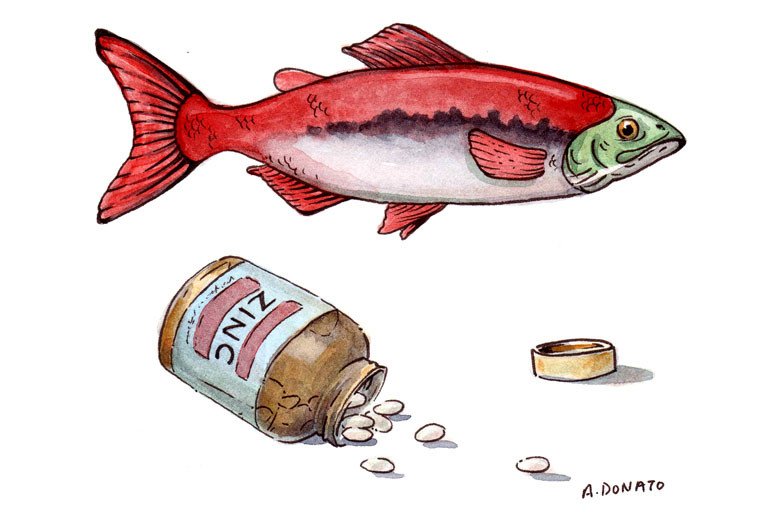
Meats, fish, poultry, legumes, and whole grains
- Common cold
- Diarrhea
- Radiation therapy side effects
- Arthritis
Zinc is a component of many proteins and performs a number of catalytic, structural, and regulatory functions. It is essential for the structural formation of biologically active molecules such as copper-zinc superoxide dismutase (Cu/Zn SOD), and enzymes including RNA polymerases, alcohol dehydrogenase, carbonic anhydrase, and alkaline phosphatase that depend on zinc as a cofactor (26) (45) (46). Zinc influences protein kinase C activity, immunocompetence, apoptosis, and metallothionein levels and has a number of antioxidant and antiinflammatory functions (9) (16) (45) (47) (48). However, whether zinc elicits antioxidant, anti-inflammatory, or antiapoptotic effects is concentration-dependent and relies on an intricate balance. Under conditions of zinc overload or deficiency, zinc ions become pro-oxidant, proinflammatory, and proapoptotic (46).
The role of zinc in taste perception likely relates to the presence of alkaline phosphatase within the taste-bud membrane (49). Zinc accumulation in bone tissue activates alkaline phosphatase and stimulates collagen synthesis in osteoblasts, which are involved in bone mineralization and calcification (50). Zinc has the ability to complex with viral coat proteins, altering assembly of viral particles (51), and its deficiency increases humoral and cell-mediated immunity dysfunction and susceptibility to infection (47). Supplemental zinc can reduce the ability of the rhinovirus to attach to the human respiratory tract (6). In patients with a common cold, zinc decreases plasma soluble interleukin-1 receptor antagonist (sIL-1fa) and soluble intercellular adhesion molecule-1 (sICAM-1), a cellular receptor for rhinovirus (4). In men with reduced sperm motility, zinc supplementation reduces oxidative stress, apoptosis, and sperm DNA fragmentation (27).
Zinc works with metallothioneins, Cu/Zn SOD, and p53 to combat oxidative stress and mediate DNA damage response and repair (52) (53). In vitro, intracellular zinc accumulation inhibits proliferation of human prostate cancer cells by causing G2/M arrest and upregulating CDKN1A gene expression, which expresses p21 (54) (55). Further, zinc deficiency depresses nuclear p21 and p53 levels (56). Animal models of esophageal cancer demonstrate that zinc-deficiency induces overexpression of proinflammatory mediators S100a8 and S100a9 as well as chemokines, chemokine receptors, cytokines, and Cox-2 (32) (33). Zinc replenishment reduces and also reverses these proinflammatory signatures (33).
Zinc dyshomeostasis has been implicated in breast cancer as a modulator of oxidative stress, DNA damage response/repair pathways, and cell proliferation/apoptosis (52). A diverse group of zinc transporters other than those associated with breast cancer play a role in regulating cell proliferation and apoptosis in prostate, pancreatic and ovarian cancers, suggesting zinc dysregulation in cancer is cell-type specific (52) (53) (54) (57).
Consumption of zinc >100 mg/day may increase the risk of prostate cancer (31).
When taken orally at large doses (100-300 mg/day), zinc can cause chronic toxicity including copper deficiency, depressed immune function, headache, chills, fever, and fatigue (58) (59). Individuals should also be aware of common products that may accidentally lead to this type of excess exposure, such as zinc-containing denture adhesives, that have caused serious systemic adverse effects (see following case reports) (60) (61) (62).
Intranasal zinc products used to treat colds have been removed from the market due to adverse events, and were found to damage human nasal tissue (7) (8).
Oral, Common: Taste disturbances, nausea, vomiting, dyspepsia, and diarrhea (5) (6).
Oral, Toxicity: With high doses, copper deficiency, depressed immune function, headache, chills, fever, and fatigue (58) (59).
Topical: Itching or pain, hypopigmentation, erythema, swelling, scaling, blackening (25).
Case reports
Anosmia caused by intranasal application: More than 130 reports of anosmia—the loss of sense of smell—led to the removal of intranasal zinc from the market (8).
Hyperzincemia and hypocupremia from overuse of zinc-containing denture adhesives: Serious adverse systemic effects include elevation of serum zinc levels resulting in depressed levels of serum copper, which can cause bone marrow depression, widespread sensory and motor neuropathies, or myelopathy (60) (61) (62).
Fluoroquinolones like ciprofloxacin, levofloxacin, and gatifloxacin: Concomitant administration of zinc can reduce bioavailability of fluoroquinolones. Zinc should be administered either 2 hours before or 4 hours following fluoroquinolone intake (78).
Tetracyclines like doxycycline and minocycline: Concomitant administration of zinc may reduce bioavailability of tetracyclines. Zinc should be administered either 2 hours before or 4 hours following tetracycline intake (79).
Penicillamine: Coadministration with zinc may result in decreased penicillamine levels (63).
Thrombopoietin receptor agonists: Significant reduction in eltrombopag absorption due to chelation when coadministered with a polyvalent cation-containing antacid. Therefore, there should be at least 4 hours between eltrombopag and any zinc-containing medication or supplement (64).
Minerals / Vitamins
Iron: Concurrent iron and zinc supplementation may decrease absorption or impair bioavailability of both elements (65) (66).
Although human studies have been equivocal, patients should take zinc 2 hours before or after foods that are high in calcium, phosphorus, bran fiber, or phytate to avoid nonabsorbable complexes (45) (67).