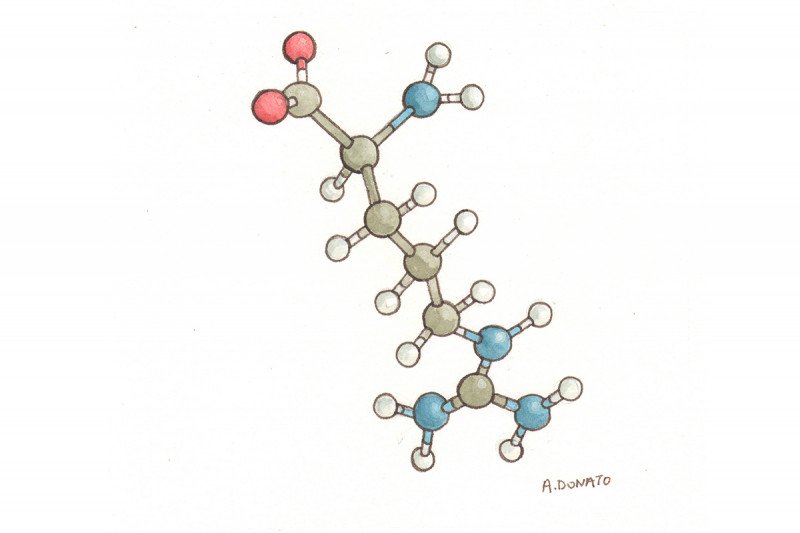
How It Works
Bottom Line: Arginine has not been shown to treat cancer in humans.
Arginine is an amino acid that is produced by the body. It has been used for various conditions such as high blood pressure, heart conditions, migraine headaches and erectile dysfunction. Arginine has also been shown in clinical studies to enhance wound healing, immune function and athletic performance.
Purported Uses
Angina
There is scientific evidence that supports the benefit of arginine for angina. These effects are due to its vasodilatory properties.
Atherosclerosis (Hardening of blood vessel walls)
A few studies have shown that arginine may be effective for atherosclerosis
Wound healing
This use is supported by evidence from clinical trials
Immune stimulation
Arginine given in high doses may increase immune function in breast cancer patients
Erectile dysfunction
Arginine has been shown in clinical trials to help improve sexual function in men
Migraine headache
When taken with ibuprofen, arginine increased pain relief in patients with migraine headaches
Type 2 Diabetes
Along with a low calorie diet and exercise, arginine may increase weight loss and improve insulin response in type 2 diabetic patients.
Research Evidence
High Blood Pressure
In this study, 13 patients with hypertension and angina were given 2 grams of oral Arginine for 4 weeks. This was in addition to medication for hypertension and angina. Researchers observed a decrease in hypertension and angina attacks. Patients also reported improved quality of life.
Immune suppression
Thirty-six patients with colorectal cancer scheduled for surgery were divided into two groups. Each group received 750ml/day of arginine, omega-3 fatty acids and ribonucleic acid orally for 5 days. Blood test results showed that patients who received the oral supplements maintained the immune system cell count compared to those in the control group.
Warnings
There is some evidence that suggests increase in breast tumor growth after taking arginine supplements but more studies are needed to establish this.
Long-term arginine supplementation in patients with peripheral artery disease may be harmful.
Do Not Take If
If you are taking medicine for high blood pressure, heart conditions, or erectile dysfunction (arginine may have additive blood pressure lowering effects.)
Side Effects
Abdominal pain
Bloating
Nausea
Diarrhea
Large doses of arginine can increase excretion of lysine in urine
Scientific Name
2-amino-5-guanidinovaleric acid
Clinical Summary
Arginine is an amino acid that is synthesized in the body. Oral arginine has been used for various conditions such as hypertension, angina, atherosclerosis, migraine headache, and erectile dysfunction. Its vasodilatory properties are thought to be responsible for the beneficial effects. Arginine has also been used to enhance wound healing, immune function, and athletic performance.
Some studies support potential uses of arginine in coronary artery and peripheral artery diseases (PADs)
(10) (11) (12) (13); however, long term supplementation of arginine may actually worsen PAD
(14). Furthermore, arginine supplementation does not benefit the blood pressure and kidney function in women with preeclampsia
(15). Large doses of oral arginine improved subjective assessment of sexual function in men with organic erectile dysfunction
(16). Arginine added to ibuprofen may increase pain relief in patients with migraine headaches
(17). In addition, oral arginine has been studied for its effect on modifying or preventing the development of nitrate tolerance during continuous transdermal nitroglycerin therapy
(18), and may enhance growth hormone release by inhibition of endogenous somatostatin
(19). Arginine supplementation by enteral feeding was shown to decrease shock in severely burned patients
(4).
Arginine supplementation has been studied in cancer patients. Postoperative enteral formulas enhanced with arginine may improve wound healing
(1) and enhance immune status
(27).
Food Sources
Nuts, seeds, soy foods, legumes, and chocolate.
Purported uses
Fatigue
Hypertension
Angina
Atherosclerosis
Wound healing
Immune stimulation
Erectile dysfunction
Migraine headaches
Mechanism of Action
Arginine is unique among amino acids for its vasodilatory properties
(11). Arginine acts as a precursor for the synthesis of endogenous nitric oxide (NO) via the action of nitric oxide synthase (NOS). Nitric oxide's functions as a paracrine-signaling molecule mediating vasodilation and inhibition of platelet activation, monocyte and leucocyte adhesion, and smooth muscle cell proliferation. Nitric oxide also helps to control vascular oxidative stress and redox-regulated gene expression
(22). Arginine is also needed for the synthesis of creatine which is important in muscle contraction
(22). In colorectal adenoma cells, arginine reduces the expression of survivin, an inhibitor of apoptosis, and induces iNOS expression
(23).
Pharmacokinetics
AbsorptionDietary arginine amounts to approximately 2-6g/day depending on protein intake levels
(21). The kidney is the main organ for endogenous arginine synthesis from L-ornithine and L-citrulline precursors. The liver also synthesizes arginine, but it is reutilized in the urea cycle and therefore contributes little to plasma arginine fluctuations
(22). After ingestion, a small amount of arginine is metabolized by the liver and the enterocytes
(24). The enzyme arginase converts arginine to ornithine, with 50% of orally ingested arginine undergoing this route.
DistributionData on the pharmacokinetics of oral arginine in humans is limited. Animal studies found the highest tissue concentrations in the heart, skin, liver, small intestine and stomach
(22).
Metabolism/ExcretionHalf of orally ingested arginine are converted to ornithine by the enzyme arginase. Normally, most Arginine is reabsorbed in the kidneys.
Warnings
Limited studies suggest that arginine supplementation may increase breast tumor growth, but more research is needed to examine this
(9) (21).
Adverse Reactions
Large doses of > 10g/day are not associated with reported significant side effects or toxicities.
Abdominal pain, bloating, nausea and diarrhea have been reported with oral administration (5) (8) (20).
Herb-Drug Interactions
Large doses of arginine can increase urinary excretion of lysine (21).
Due to arginines vasodilatory properties, theoretically it may have additive hypotensive effects with drugs such as antihypertensives, sildenafil and nitrates (11) (20).
Lab Interactions
High doses of intravenous arginine may results in the spillover into urine
(22).
Literature Summary and Critique
Wilson AM, et al. L-arginine supplementation in peripheral arterial disease: no benefit and possible harm. Circulation. Jul 10 2007;116(2):188-195.
Because arginine supplementation provides short-term benefits to patients with peripheral artery disease (PAD), the objective of the Nitric Oxide in Peripheral Arterial Insufficiency (NO-PAIN) study, a prospective, randomized, double-blind, placebo-controlled trial, was to assess its long-term benefits. After 6 months of arginine (3 g/day) or placebo, 133 participants with PAD were examined for claudication distance and NO availability. Reduced improvements in NO, flow-mediated vasodilation, and walking distance were detected in participants receiving arginine as compared to the placebo group. The discordance between previously reported short-term studies and this long-term study may be due to unknown counterregulatory mechanisms such as arginase induction.
Lucotti P, et al. Beneficial effects of a long-term oral L-arginine treatment added to a hypocaloric diet and exercise training program in obese, insulin-resistant type 2 diabetic patients. Am J Physiol Endocrinol Metab. Nov 2006;291(5):E906-912.The effect of arginine supplementation (8.3 g/day) was assessed in this study of 33 middle-aged, obese, type 2 diabetic participants undergoing an exercise training program and a hypocaloric diet. After 21 days, participants receiving arginine supplementation showed greater improvements in body composition as assessed by reduced fat mass and waste circumference as well as improved glucose tolerance as compared to the control group. Long-term studies are required to determine if arginine supplementation further reduces cardiovascular disease in these subjects.
Matsuda A, Takasaki H, Suzuki H, et al. Preoperative Oral Immune-Enhancing Nutritional Supplementation Corrects Th1/Th2 Imbalance in Patients Undergoing Elective Surgery for Colorectal Cancer. Dis Colon Rectum 2006 ;49(4):507-16.
Thirty-six patients with colorectal cancer scheduled for surgery were randomly divided into two groups; 19 patients received preoperative 750ml/day oral supplementation containing arginine, omega-3 fatty acids and ribonucleic acid for five days. The control group did not receive oral supplementation pre or post-operatively. Peripheral blood samples were drawn on the morning of surgery and 3, 7 and 14 days postoperatively. Flow cytometry determined the proportions of CD4+ T cells producing intracellular cytokines. Th1/Th2 balance shifted to Th2 dominance in the control group. Th2 dominance is associated with immune suppression in the cancer bearing state preoperatively, and surgical stress postoperatively. The supplemented group maintained the preoperative levels of Th1/Th2 until day 14. Preoperative immunonutrition may correct the altered Th1/Th2 balance in the preoperative cancer-bearing state and postoperatively.
Palloshi A, Fragasso G, Piatti P, et al. Effect of oral L-arginine on blood pressure and symptoms and endothelial function in patients with systemic hypertension, positive exercise tests, and normal coronary arteries. Am J Cardiol. 2004;93(7):933-935.
Thirteen patients with grade 2 to 3 hypertension, microvascular angina and positive exercise tests received 2 grams of oral Arginine for 4 weeks. The patients were on full antihypertensive and antianginal therapy aimed at optimal control of blood pressure. Compared with baseline measurements, Arginine supplementation significantly decreased mean systolic blood pressure at rest (166 +/- 27 to 146 +/- 12 mm Hg; p<0.005). The frequency of angina attacks decreased from 12 +/- 3 to 4 +/- 1 per week, and nitroglycerin use decreased from 9 +/ 2 to 3 +/- 1 per week. The patients self-rated overall quality of life increased. (p values < 0.001) The authors suggest that Arginine may represent a useful therapeutic option for hypertension and microvascular angina, However, this study is based on a small sample size. Large well-designed clinical trials are needed to confirm this effect.
References
1. Farreras N, Artigas V, Cardona D, Rius X, Trias M, Gonzalez JA.
Effect of early postoperative enteral immunonutrition on wound healing in patients undergoing surgery for gastric cancer. Clin Nutr. 2005;24(1):55-65.
2. de Luis DA, Izaola O, Cuellar L, Terroba MC, Aller R.
Randomized clinical trial with an enteral arginine-enhanced formula in early postsurgical head and neck cancer patients. Eur J Clin Nutr. 2004;58(11):1505-1508.
3. Casas-Rodera P, Gomez-Candela C, Benitez S, et al.
Immunoenhanced enteral nutrition formulas in head and neck cancer surgery: a prospective, randomized clinical trial. Nutr Hosp. Mar-Apr 2008;23(2):105-110.
4. Yan H, Peng X, Huang Y, Zhao M, Li F, Wang P.
Effects of early enteral arginine supplementation on resuscitation of severe burn patients. Burns. Mar 2007;33(2):179-184.
5. Brittenden J, Park KG, Heys SD, et al.
L-arginine stimulates host defenses in patients with breast cancer. Surgery. 1994;115(2):205-212.
6. Heys SD, Ogston K, Miller I, et al.
Potentiation of the response to chemotherapy in patients with breast cancer by dietary supplementation with L-arginine: results of a randomised controlled trial. Int J Oncol. 1998;12(1):221-225.
7. Chander V, Chopra K.
Effect of molsidomine and L-arginine in cyclosporine nephrotoxicity: role of nitric oxide. Toxicology. 28 2005;207(3):463-474.
8. Shihab FS, Bennett WM, Isaac J, Yi H, Andoh TF.
Nitric oxide modulates vascular endothelial growth factor and receptors in chronic cyclosporine nephrotoxicity. Kidney Int. 2003;63(2):522-533.
9. Park KG, Heys SD, Blessing K, et al.
Stimulation of human breast cancers by dietary L-arginine. Clin Sci (Lond) 1992;82(4):413-417.
10. Gornik HL, Creager MA.
Arginine and endothelial and vascular health. J Nutr. 2004;134(10 Suppl):2880S-2887S; discussion 2895S.
11. Huynh NT, Tayek JA.
Oral arginine reduces systemic blood pressure in type 2 diabetes: its potential role in nitric oxide generation. J Am Coll Nutr. 2002;21(5):422-427.
12. Palloshi A, Fragasso G, Piatti P, et al.
Effect of oral L-arginine on blood pressure and symptoms and endothelial function in patients with systemic hypertension, positive exercise tests, and normal coronary arteries. Am J Cardiol. 2004;93(7):933-935.
13. Siasos G, Tousoulis D, Vlachopoulos C, et al.
Short-term treatment with L-arginine prevents the smoking-induced impairment of endothelial function and vascular elastic properties in young individuals.Int J Cardiol. Jun 6 2008;126(3):394-399.
14. Wilson AM, Harada R, Nair N, Balasubramanian N, Cooke JP.
L-arginine supplementation in peripheral arterial disease: no benefit and possible harm.Circulation. Jul 10 2007;116(2):188-195.
15. Hladunewich MA, Derby GC, Lafayette RA, Blouch KL, Druzin ML, Myers BD.
Effect of L-arginine therapy on the glomerular injury of preeclampsia: a randomized controlled trial. Obstet Gynecol. 2006;107(4):886-895.
16. Chen J, Wollman Y, Chernichovsky T, Iaina A, Sofer M, Matzkin H.
Effect of oral administration of high-dose nitric oxide donor L-arginine in men with organic erectile dysfunction: results of a double-blind, randomized, placebo-controlled study. BJU Int. 1999;83(3):269-273.
17. Sandrini G, Franchini S, Lanfranchi S, Granella F, Manzoni GC, Nappi G.
Effectiveness of ibuprofen-arginine in the treatment of acute migraine attacks. Int J Clin Pharmacol Res. 1998;18(3):145-150.
18. Parker JO, Parker JD, Caldwell RW, Farrell B, Kaesemeyer WH.
The effect of supplemental L-arginine on tolerance development during continuous transdermal nitroglycerin therapy. J Am Coll Cardiol. 3 2002;39(7):1199-1203.
19. Loche S, Carta D, Muntoni AC, Corda R, Pintor C.
Oral administration of arginine enhances the growth hormone response to growth hormone releasing hormone in short children. Acta Paediatr. 1993;82(10):883-884.
20. Cheng JW, Baldwin SN.
L-arginine in the management of cardiovascular diseases. Ann Pharmacother. 2001;35(6):755-764.
21. Wilmore D.
Enteral and parenteral arginine supplementation to improve medical outcomes in hospitalized patients. J Nutr. 2004;134(10 Suppl):2863S-2867S; discussion 2895S.
22. Boger RH, Bode-Boger SM.
The clinical pharmacology of L-arginine. Annu Rev Pharmacol Toxicol. 2001;41:79-99.
23. Ma Q, Wang Y, Gao X, Ma Z, Song Z.
L-arginine reduces cell proliferation and ornithine decarboxylase activity in patients with colorectal adenoma and adenocarcinoma. Clin Cancer Res. Dec 15 2007;13(24):7407-7412.
24. Paddon-Jones D, Borsheim E, Wolfe RR.
Potential ergogenic effects of arginine and creatine supplementation. J Nutr. 2004;134(10 Suppl):2888S-2894S; discussion 2895S.
25. Lucotti P, Setola E, Monti LD, et al.
Beneficial effects of a long-term oral L-arginine treatment added to a hypocaloric diet and exercise training program in obese, insulin-resistant type 2 diabetic patients. Am J Physiol Endocrinol Metab. Nov 2006;291(5):E906-912.
26. Matsuda A, Furukawa K, Takasaki H, et al.
Preoperative oral immune-enhancing nutritional supplementation corrects TH1/TH2 imbalance in patients undergoing elective surgery for colorectal cancer. Dis Colon Rectum. Apr 2006;49(4):507-516.
27. Okamoto Y, Okano K, Izuishi K, et al.
Attenuation of the Systemic Inflammatory Response and Infectious Complications After Gastrectomy with Preoperative Oral Arginine and omega-3 Fatty Acids Supplemented Immunonutrition. World J Surg. 2009, Jul 23. [Epub ahead of print]