New York State Stem Cell Science (NYSTEM) works to further the agenda of the Empire State Stem Cell Board, whose mission is to foster a strong stem cell research community in New York State. NYSTEM aims to accelerate the growth of scientific knowledge about stem cell biology and promote the development of therapies and diagnostic methods to alleviate disease and improve human health.
Investigators from Memorial Sloan-Kettering, along with colleagues from Weill Cornell Medical College, Northwestern University Chicago, and Rush University Medical Center Chicago, have received a contract from NYSTEM for almost $15 million over four years to develop a cell-based therapy for Parkinson’s disease.
Parkinson’s disease (PD) is the second most common neurodegenerative disorder and is estimated to affect more than four million patients worldwide. This number is predicted to more than double by 2030.
A fundamental characteristic of PD is progressive, severe, and irreversible loss of specific dopamine-producing neurons (DA neurons) in the midbrain that ultimately may result in disabling motor dysfunction. Multiple therapies have been developed for PD, but none can replace the lost cells. Cell transplantation has been considered a promising therapy, but in spite of extensive efforts to develop it in laboratories across the world, this approach has faced multiple challenges, including the absence of an appropriate cell source that can match the lost cells in function and safety.
In 2011, our team made a major discovery that enables the derivation of nearly unlimited numbers of authentic, engraftable midbrain DA neurons from human embryonic stem cells (hESCs). In recent publications, we have demonstrated that these cells can survive in three independent PD models and can reverse motor deficits of the disease.
In addition, the cells have an excellent safety profile with no evidence of tumor or excessive growth in any of the animals tested.
The NYSTEM grant will enable the creation of a multidisciplinary consortium with the overarching goal of developing an optimized, clinical-grade source of human DA neurons for cell therapy in PD.
The investigators anticipate that by the end of the project period in 2017, the team will be ready to submit an Investigational New Drug (IND) application to the US Food and Drug Administration for a clinical trial in Parkinson’s patients.
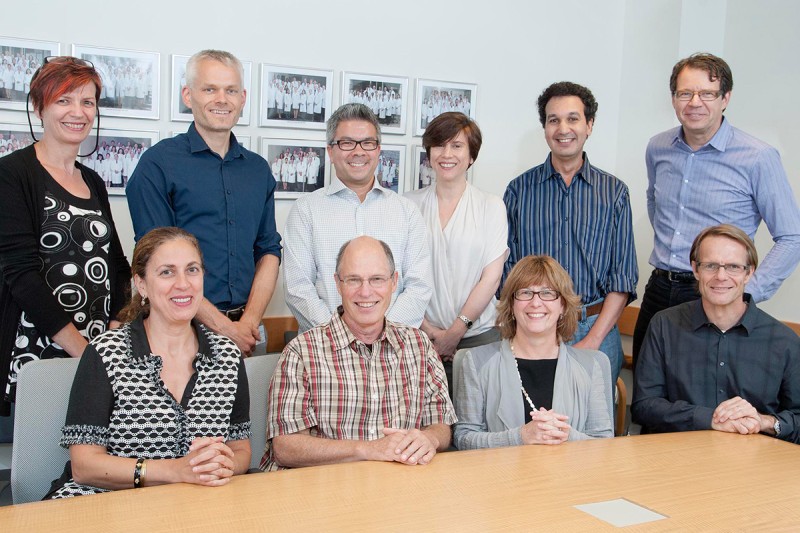
The team consists of scientists, neurologists, surgeons, industry leaders, ethicists, trial experts, and patient advocates who are dedicated to the achievement of this goal.

Isabelle Rivière, PhD
Memorial Sloan-Kettering

Mark Tomishima, PhD
Memorial Sloan-Kettering
Any new therapy has to meet several requirements to be considered by the US Food and Drug Administration (FDA). These regulations are designed to protect patients, doctors, and hospitals. They require researchers to have the facilities and reagents as well as the protocols to produce a reliable and safe product.
This project focuses on the identification of cells and reagents that will allow for the production of clinical-grade DA neurons under good manufacturing practice (GMP) conditions. Under the leadership of Isabelle Rivière and Mark Tomishima, whose expertise encompasses translational research and stem cell biology, respectively, the group will identify the right pluripotent stem cell — one that can fulfill the stringent requirements for cellular therapies by the FDA — and source media and other reagents that are GMP compliant. In addition, they will establish production standards for a large-scale bank of frozen (cryopreserved) DA neurons to be used in the transplantation studies.
The team will also provide materials to advance studies performed by the other groups of the consortium.
Viviane Tabar, MD
Memorial Sloan-Kettering
Experiments can be carried out in vitro in a cell culture dish or in vivo in living organisms. These two approaches are neither redundant nor competing, but rather they act in concert to better our understanding of the physiology and biology of hESC-derived DA neurons and Parkinson’s disease. Neurodegenerative diseases are often characterized by changes in behavior and changes in functions of daily life — both virtually impossible to model in a laboratory cell culture dish.
Under the guidance of Viviane Tabar, the team will develop standard operating procedures (SOPs) that will allow us to test the impact of transplanted, hESC-derived DA neurons on the health and behavior of parkinsonian animals. Not only will we gain insights into the safety and function of these cells, we will also learn about potential variability of the preparations. Furthermore, these models will be used to evaluate additional projects — Cell purification and enrichment of A9 type DA neurons and Use of engineered cell surface polysialic acid (PSA) to promote in vivo integration and fiber outgrowth of grafted DA neuron.
Jeffrey H. Kordower, PhD
Rush University
Studies in rodents have allowed us to gain valuable insights into the pathology and biology of almost all human biology and disease biology. However, while making a fine model system, mice are exactly that: a model. Sometimes a positive effect in mice isn’t recapitulated later in human trials, or unpredicted side effects and off-target effects emerge only in clinical trials. Ultimately safety and function are best evaluated in primates prior to therapies finding their way into the clinic.
Jeffrey H. Kordower brings years of experience in cellular therapies for neurodegenerative diseases and behavioral studies to the consortium. His laboratory will evaluate the DA neuron product produced under GMP conditions, perform large-animal studies and behavioral experiments, and process tissues for later analysis.
Lorenz Studer, MD
Memorial Sloan-Kettering
Fetal tissue transplantation studies for Parkinson’s disease have had mixed outcomes in double-blinded clinical trials. One possible explanation for this is the heterogeneity of the transplant (graft). A mixed population may be desired in some cases, but the more knowledge about the graft composition we have, the more reliable the product should be.
For this project, Lorenz Studer’s team uses directed differentiation of hESCs, which allows for the routine production of large quantities of DA neurons. Although the cultures are already largely positive for DA markers, further purification especially of A9 DA neurons may be desirable. A9 DA neurons are the specific cell type lost in Parkinson’s disease. Using monoclonal antibodies against cell surface markers specifically expressed on A9 DA neurons, this project is targeted at the specific isolation of transplantable A9 DA neurons.
Urs Rutishauser, PhD
Memorial Sloan-Kettering
Billions of signals are transmitted between different parts of the brain. These signals coordinate basic functions of human life and are the basis of our cognitive function. If cells are transplanted into this complex network, it is essential that they form the right connections.
Neurons — the cells able to make these connections — send out extensions, termed axons, to establish this grid. This process of axon outgrowth and increased neuronal plasticity is facilitated polysialic acid (PSA), which is added to proteins on the surface of neurons.
In this project we interrogate the ability of polysialyltransferase (PST) to promote the outgrowth of cellular processes that may be essential for repair of the injured adult nervous system.
Michel Sadelain, MD, PhD
Memorial Sloan-Kettering
Embryonic stem cells (ESCs) are very powerful cells, capable of generating every cell type of the human body. Our understanding of how that is achieved is growing daily. Herein lies the challenge.
We need to ensure that the cells transplanted are only of the dopaminergic cell type and free of pluripotent stem cells. While our protocols are highly efficient, and additional purification steps are taken, we are testing an additional safety strategy. By introducing a “safety switch” into the transplanted cells we could, in theory, specifically eliminate the grafted cells using a small drug-like compound.
For this project we are testing various genomic locations in the ESC line for the introduction of one of two suicide genes with different mechanisms of action. If these experiments are promising, the final product will contain such safety switches.
Claire Henchcliffe, MD
Weill Cornell Medical College
Flint Beal, MD
Weil Cornell Medical College
While scientists in the lab are busy finding the right conditions to make the best possible transplant product, our team is active in designing the clinical trial.
This task is not trivial. Prior to the first transplant, we need to identify the most suitable patients, carefully outweighing the risks and benefits for this group.
We also need to consider the best strategy to evaluate the outcome of the trial. How can we measure improvement? How can we ensure safety for the patient and the clinician? How long will it take to see an improvement and when will we know how long the therapy will last?
All these questions and more are discussed by our team of experts, encompassing clinicians, physician-scientists, ethicists, trial experts, and statisticians.
Stefan Irion, MD
Memorial Sloan-Kettering
E-mail: irions@mskcc.org
We have a dedicated program manager coordinating the various subgroups to ensure timely execution, foster crosstalk, and promote scientific and public engagement.
Our research has laid the foundation for new therapy under investigation for Parkinson’s disease. However, for the therapy to be realized, every step must be taken with caution, and conclusions must be scrutinized from every angle.
We have assembled a team of experts who will do just that, and an external oversight committee will help us make the right decisions. One step in the wrong direction could jeopardize the project. It is thus our responsibility to follow a clear path and align our protocols with the current state of research and the regulatory environment. This means that right now we cannot accept requests for trial participation, counseling, or other services related to this project.