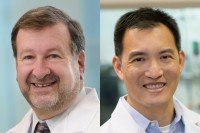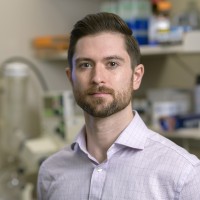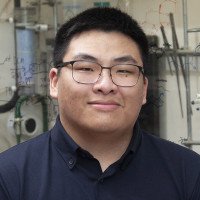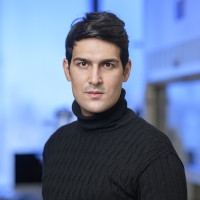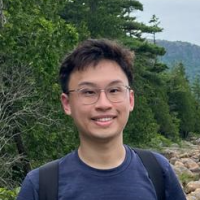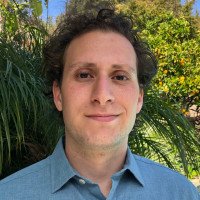
Pictured: Derek Tan
Office phone:
646-888-2234
Office fax:
646-422-0416
Laboratory phone:
646-888-2228
E-mail:
tand@mskcc.org
Research Topics:
Cancer Therapeutics & Drug Development; Chemistry, Biochemistry & Chemical Biology

Check out Jackie Wurst and Guodong Liu's paper in J. Am. Chem. Soc.!

Detailed mechanistic studies of our MeOH-catalyzed kinetic spirocyclization reaction have revealed striking roles for simple solvents in catalysis.

Congrats to Gustavo Moura-Letts, Chris DiBlasi, and Renato Bauer on their latest paper in PNAS!
We report the solid-phase synthesis and cheminformatic analysis of a novel 190-membered library of alkaloid- and terpenoid-like molecules.

Visit our News Articles page to keep up-to-date on all the latest news from the Tan Lab.

Congratulations to Dr. Jacqueline Wurst, who defended her thesis entitled “Studies on the Stereoselective Synthesis of Glycal Derived Spiroketals” on April 27, 2011!

Diversity-Oriented Synthesis and Rational Drug Design - New Chemical Probes for Biology and Medicine

Diversity and Design Enlarge Image Diversity and Design Two approaches to identifying new small molecule ligands for chemical biology and drug discovery research Genome sequencing efforts and an increasingly molecular understanding of biology have revealed myriad new biological targets of both fundamental and potential therapeutic interest. Small molecules are extremely powerful tools for dissecting the functions of and evaluating the therapeutic potential of these targets. However, the identification of new, highly specific small molecule probes remains a significant current challenge in chemical biology and drug discovery. This can be attributed to the fact that existing drugs address only a very small set of ≈200 human protein targets, and most probe and drug discovery efforts focus on a correspondingly narrow range of related chemical structures. To overcome these challenges, we are using two complementary approaches to ligand discovery involving rational drug design and diversity-oriented synthesis. We leverage insights from biologically active natural products at multiple levels to guide these efforts. At the heart of our program lies a deep interest in advancing the frontiers of synthetic organic chemistry.

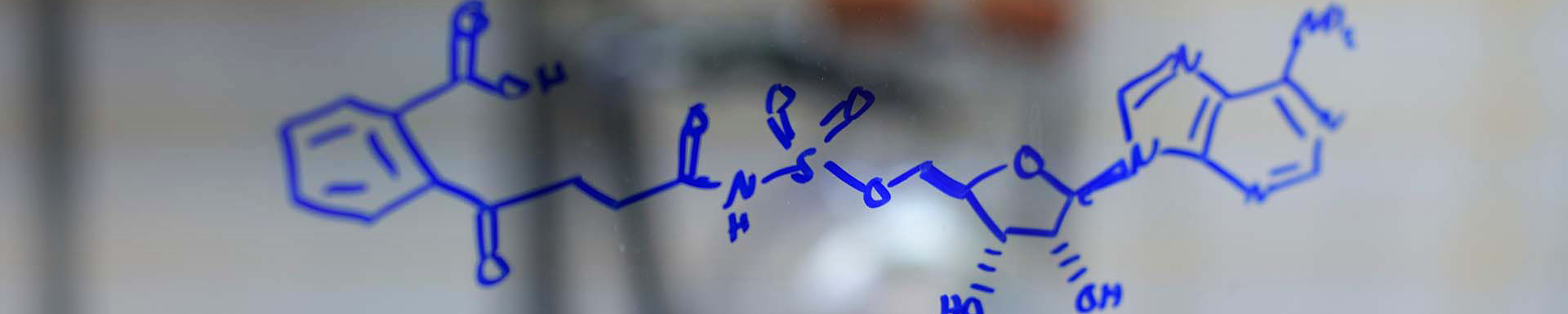
Rational Drug Design Enlarge Image Rational Drug Design Designed adenylation enzyme inhibitors such as salicyl-AMS are new potential antibiotic In the area of rational drug design, we leverage knowledge of reaction mechanisms and protein structure to design new enzyme inhibitors. In particular, we have developed a series of sulfonyl­adenosine-based molecules as inhibitors of adenylation enzymes. Many of these enzymes are involved in biosynthetic pathways that are required for virulence in pathogenic bacteria, including siderophore biosynthesis in Mycobacterium tuberculosis and Yersinia pestis. We have identified a number of promising lead compounds and are investigating their potential as new antibiotics. Notably, many pharmaceutical companies have abandoned their efforts in antibiotic drug discovery in recent years, emphasizing the need for continuing advances by academic researchers to combat the growing threat of bacterial multidrug resistance. Recently, we have also applied similar probe design strategies to eukaryotic E1 activating enzymes that catalyze key steps in ubiquitination and related processes, revealing profound active site remodeling during catalysis.

Diversity-Oriented Synthesis Enlarge Image Diversity-Oriented Synthesis Novel natural product-based libraries target under represented regions of chemical space In the area of diversity-oriented synthesis, we are developing discovery libraries based on privileged structural motifs from natural products. Such structures have a demonstrated ability to bind multiple classes of biological targets, but have distinct structural and physicochemical properties compared to existing drugs. Thus, these libraries are designed to access complementary regions of chemical structure space and spectra of biological targets. Notably, many of the existing approaches to synthesizing these structures are unsuitable for diversity-oriented synthesis, due to the exceptional requirements for reaction efficiency and flexibility. Thus, we are presented with numerous opportunities to develop new chemical methodologies with broader applications in organic synthesis. Our current synthetic targets include spiroketals, polyketides, and alkaloid/terpenoid-like polycyclics.

We leverage multidisciplinary collaborations with biologists to evaluate the molecules we synthesize, with particular interests in cancer, infectious diseases, and metabolic disorders. This collaborative approach brings together the strengths of both chemists and biologists and is a critical aspect of our program. Our Tri-Institutional Research Program, which encompasses Sloan-Kettering, Cornell University, and the Rockefeller University, provides an ideal, fertile environment for these efforts. The small molecule probes we are discovering are powerful tools for studying fundamental questions in biology and for validating new therapeutic targets in model systems. These molecules also provide valuable starting points for developing new mechanism-based therapeutics.

For more details, see our Research Projects page.

Zuckerman Research Center houses chemistry and chemical biology research in NYC Chemistry and Chemical Biology Research at MSKCC The new MSKCC Zuckerman Research Center opened in summer 2006 and the Tan Lab moved into the top (21st) floor on September 27! (top) Building construction from July 20, 2004 thru June 20, 2005. (bottom) Current view to the southeast from the 21st floor.