Immuno-Oncology Program
The Katharine Hsu Lab
Research

Katharine C. Hsu, MD, PhD
Attending Physician; Member; Director, Tri-Institutional MD-PhD Program
My laboratory studies the natural killer (NK) cell and the molecules that control its ability to recognize and kill cancer and virally infected cells. Improved understanding of how NK cells behave is critical to advancing our ability to harness their innate capacity for tumor recognition and eradication. Therefore, an important component of my research focuses on the basic biology of the NK cell, identifying the molecules involved in controlling NK reactivity, and determining the laboratory and clinical conditions under which NK activity can be modified.

Featured News
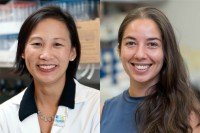
Part natural killer, part T cell, this hybrid immune cell has a “double sword” for fighting cancer.
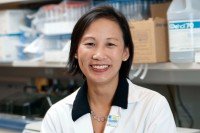
In her new role, Dr. Hsu will work to diversify matriculating classes and train students to become skilled leaders as both clinicians and biomedical researchers.
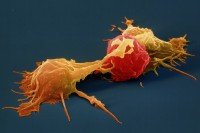
In the Lab
In the future, more-advanced genetic testing might offer better ways to match up patients who need a bone marrow transplant with potential donors.
People
Katharine C. Hsu, MD, PhD
Attending Physician; Member; Director, Tri-Institutional MD-PhD Program
- Physician-scientist Katharine Hsu studies the biology of human natural killer cells and how they contribute to disease processes.
- MD, PhD, Cornell University Medical College
- [email protected]
- Email Address
- 646-888-2667
- Office Phone
- View physician profile
- Physician profile
Members


Scientific Research Lead

Research Fellow
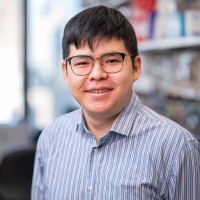
Research Tech

Research Scholar
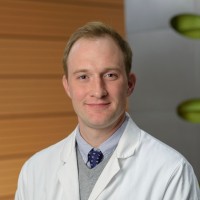
Assistant Attending
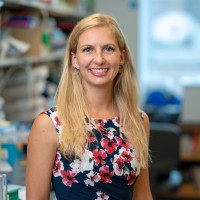
Research Scholar



Postdoctoral Fellow
Senior Research Technician
Postdoctoral Fellow
Pediatric Oncology Fellow
Oncology Fellow
Technician
Sr. Research Technician
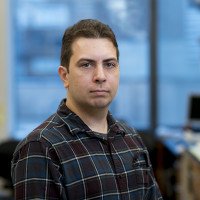
Research Technician
Pediatric Oncology Fellow, St. Baldrick’s Foundation Fellowship

Research Technician

Senior Research Technician

Research Teach
Senior Research Scientist

Research Fellow
Technician
Medical Resident
Sr. Research Technician

Clinical Fellow
Research Fellow
Post-doctoral Fellow
Post-doctoral Fellow
Clinical Oncology Fellow

Post-doctoral Fellow
Post-doctoral Fellow
Clinical Fellow
Visiting BMT Fellow