The Scott Lowe Lab
Research

About the Scott Lowe Lab
Cancer biologist Scott Lowe uses genetically engineered mouse models to study how the genetic alterations in cancer cells contribute to tumorigenesis, alter treatment response, and create molecular vulnerabilities that may be targeted therapeutically.
Cancer arises through an evolutionary process whereby normal cells acquire mutations that erode growth controls. Still, cancer is not an inevitable consequence of mutation, but is kept in check by intrinsic tumor-suppressor programs activated in damaged cells. We study such programs to reveal, and ultimately exploit, the strategies nature uses to combat cancer.
Our early studies focused on cell-intrinsic programs that prevent tumorigenesis (e.g., apoptosis, senescence), and have broadened to cell-extrinsic mechanisms (e.g., immune surveillance). New areas of interest include how tumor-suppressive programs are blunted by environmental factors known to increase cancer incidence (e.g., obesity, aging) and how excessive activation of tumor-suppressive programs (e.g., senescence) can harm function of normal tissue. To gain a mechanistic understanding of these phenomena, we apply mouse models in which cancer arises in an intact tissue ecosystem, which is a long-standing strength of our program. Our affiliation with Memorial Sloan Kettering Cancer Center enables us to probe human systems as well.
Another major goal is to harness our knowledge of tumor suppression therapeutically. We and others have shown that reengaging tumor-suppressive programs in established cancer cells can coordinate tumor regression through both cell-intrinsic and cell-extrinsic components (1-5), so these programs represent attractive strategies for tumor control. With Michel Sadelain, we have also developed a cell therapy approach to remove excessive senescent cells from tissues (6); this therapy may have beneficial effects on cancer and non-cancer pathologies. Advancing these concepts are major goals of our current research.
Research Projects

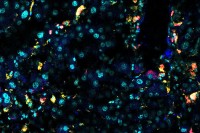
Featured News

People
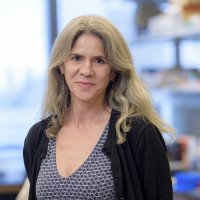
Scott W. Lowe, PhD
Chair, Cancer Biology & Genetics Program, SKI; Chair, Geoffrey Beene Cancer Research Center; Investigator, Howard Hughes Medical Institute
- PhD, Massachusetts Institute of Technology
- [email protected]
- Email Address
- 646-888-3342
- Office Phone
- Download CV
- PDF File
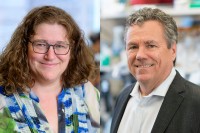
Members