Q&A

On Cancer: Diagnostic Radiologist Carol Lee Discusses What Women Should Know about Breast Density

By Media Staff  |  Wednesday, January 30, 2013
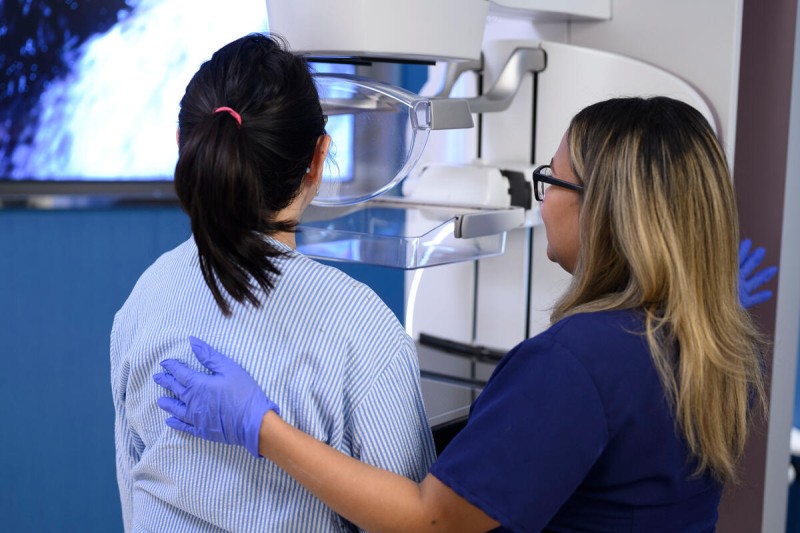
Pictured: Mammogram A new law requires radiologists to inform women if dense breast tissue is found on a mammogram.

To help improve breast cancer detection and prevention, New York Governor Andrew Cuomo recently signed legislation that requires radiologists to inform women if dense breast tissue is found on a mammogram. The law, which went into effect this month, is raising awareness among women about this topic.

In an interview, we discussed the concept of breast density with diagnostic radiologist Carol H. Lee. Dr. Lee suggests that if you find out you have dense breasts, you should discuss potential next steps with your doctor. Each individual woman’s risk for breast cancer is different, and many factors – such as family history and lifestyle – must be taken into account when determining whether additional forms of breast cancer screening are necessary.

What are dense breasts?

Breasts are made up of different types of tissue: fatty, fibrous, and glandular. Fibrous and glandular tissues appear as white on a mammogram and fatty tissue shows up as dark. If most of the tissue on a mammogram is fibrous and/or glandular, the breasts are considered to be dense.

Because cancer cells also appear as white on a mammogram, it may be harder to identify the disease on a mammogram in women with dense breasts.

How common are dense breasts?

Breast density is classified into one of four categories, ranging from almost entirely fatty (level 1) to extremely dense (level 4). Dense breasts are completely normal. About half of all women have breasts that fall into the dense category (levels 3 and 4). Dense breasts tend to be more common in younger women and in women with smaller breasts, but anyone – regardless of age or breast size – can have dense breasts.

How does a woman know she has dense breasts?

The only way to determine whether a woman has dense breasts is with a mammogram. A breast exam cannot reliably tell whether a breast is dense.

What does having dense breasts do to a woman’s risk for breast cancer?

If you compare the 10 percent of women who have extremely dense breasts with the 10 percent of women who have very little breast density, the risk for breast cancer is higher in those with very dense breasts.

However, most women fall somewhere in between in terms of breast density, so it’s nearly impossible to determine whether a particular woman’s breast density is a risk factor for the disease.

What should women who are told they have dense breasts do?

Women found to have dense breasts should talk to their doctors about their individual risk for breast cancer and together decide whether additional screening makes sense.

Tests such as ultrasound or MRI can pick up some cancers that may be missed on a mammogram, but these methods also have disadvantages. Because they are highly sensitive, they may give a false-positive reading, resulting in the need for additional testing or biopsy that turns out to be unnecessary. There is also no evidence to show that using screening tests other than mammography in women with dense breasts decreases the risk of death from breast cancer.

Ultimately, women who have dense breasts should weigh the pros and cons of additional screening with their doctor.

Should women who do not have dense breasts make any changes to their regular screenings?

Women who do not have dense breasts may still develop breast cancer, and should continue to receive regular mammograms. Regular mammography is the only screening method that has been shown to decrease deaths from breast cancer, and all women of appropriate age should have mammograms, regardless of their breast density.

Memorial Sloan-Kettering provides comprehensive, individualized breast cancer screening services that include mammography, ultrasound, and MRI, through our Breast Screening Program, located in Manhattan.

Comments

It was always my understanding that dense breast tissue simply made it more difficult to detect a cancer should it occur. The above comments would suggest that density itself increases cancer risk. Is this true? By what mechanism? Can you provide references? Thank you.
Thank you for your comment. We spoke with Dr. Lee, and she said that it is generally agreed that women with dense breasts are at increased risk for breast cancer. For example, the 10 percent of women with extremely dense breasts have four to six times increased risk compared to women with mostly fatty breasts. However, most women fall between these extremes, and it is nearly impossible in any given woman to determine her level of risk based on the mammogram alone. The mechanism by which density is associated with risk is that breast density can be caused by glandular tissue, which is the tissue in which most breast cancers arise. Therefore, the more glandular tissue, the more the risk. It is also very important to understand that women with non-dense breasts can develop breast cancer. A reference discussing mammographic density and breast cancer risk is in the Journal of the National Cancer Institute 2012;104(18);1345.
I was wondering if breast feeding has an effect on a woman's breast density in the long-run? Apparently, recent research has shown that breast feeding can help to lower a woman's risk of developing breast cancer, but I was curious about the underlying factors that could play a role. I read about this in a really intriguing article which is available at: http://www.knowcancer.com/blog/recent-breakthroughs-in-breast-cancer-research/
Thank you for your comment. Dr. Lee says that most studies have found that breast feeding is associated with an eventual decrease in breast density, but other studies have indicated that there is no significant difference in density among women who have breast fed compared to those who have not. There does seem to be a decreased risk of breast cancer associated with having breast fed, but the mechanism by which this occurs is not fully understood.
I was recently dx with breast cancer, but my mammogram was negative secondary to high density. The cancer was found initially in my lymph nodes and the primary site was found on guided US. I was never told that I had high density mammograms in the 25 years I have had annual mammograms. My mother had breast cancer. I am now surprised and upset that none of my doctors ever recommended other breast screening, considering my history. It may have been found before it had a chance to travel to my lymph nodes. Surgery revealed that i had 16/21 positive nodes.
My sister has been diagnosed with Stage 1 breast cancer in one breast. Subsequent to the discovery of cancer, she had a followup MRI of both breasts to determine whether or not "something was missed" by the ultrasound and previous mammogram. There was, in fact a "suspicious" area in the second breast, revealed by the MRI that required a followup MRI biopsy, which proved negative. I wonder how frequently this scene is played out in cases where further testing involves MRI, and whether some other test might be better suited as a diagnostic tool (or is this all there is, aside from ultrasound?), given the extreme sensitivity of the MRI. Incidently, my sister was told by the surgeon that she has dense brest tissue.
I have early Stage 1 infilitrating lobular carcinoma in one breast caught by mammogram. 1 cent. or smaller. I am contemplating double masectomy even though told that lumpectomy plus radiation and arevidex. Some people have told me that a masectomy may result in the ILC returning in the bone because there is no more breast tissue. Could this be so. Thank you
Thank you for your comment. Unfortunately, we are unable to answer personal medical questions on our blog. To make an appointment with a Memorial Sloan-Kettering physician, please call 800-525-2225.
I have found this information very useful. I'm in remission from Stage 3 Triple Negative Breast cancer. I wish my doctors had explained to me that I had dense breasts. This was told to me after the fact of being diagnosed with cancer. I would have understood why I should have sought tx from a breast specialist sooner!! I think the new law should help women who are in same situation as I was to be more informed which in turn may prompt them to go to breast specialist sooner resulting in increased early stage detection. Way to go Governor Cuomo!
My cancer was discovered by ultrasound and did not appear on mammo. When mammo was performed in January of this year breast density was evident but I was told no follow up to notification was provided in NY law and therefore insurance companies may not cover follow up such as ultrasound. Is this true? what happens if same cancer comes back and is not discovered on mammo?
Unfortunately we are not able to answer personal medical questions on our blog. We recommend you speak with your doctor and your insurance company about what follow-up may be needed and whether or not it would be covered under your plan. If you'd like to speak with a doctor at Memorial Sloan-Kettering, please call 800-525-2225. Thank you for your comment.
How much of the increased risk of breast cancer in a dense breast, comes from having to get a higher dose of radiation from screening mammogram to penetrate the breast tissue do you think? Is there any evidence that radiation exposure in breast feeding (when breasts are denser) carries a higher risk of breast cancer?
Hi Laura, we spoke to Dr. Lee who said, "The association of density and risk is a complicated subject. With regard to radiation during mammography, the amount of radiation that is needed depends on the density of the tissues as well as on the size of the breasts. It is quite possible that a woman with large breasts that are not dense would get more radiation during a mammogram than a woman with small, dense breasts. However, it is unlikely that this difference in radiation dose would significantly contribute to the risk associated with dense tissue. With regard to radiation exposure during breast feeding, I am not aware of any specific studies but we do not generally do mammograms when a woman is breast feeding, because mammograms are less helpful during that time. We rely mostly on ultrasound in that setting." Thank you for your comment!
I had 2 mammograms this yr due blood discharge from my left breast. One in January 2013 and one in August 2013 along with ultrasound. All those came back neg. for breast cancer however, my Dr wanted to see an MRI of both breast because I had breast cancer 20 yrs ago on my right side. But my MRI came back with neg. for cancer but my breast was diagnosed with having extremely dense background and its hard to determine they said. So what would be my next step I am worried and anxious to know more because I am not satisfy with all these answers I am getting. I know that something is wrong with my left side and right side as well but they are not able to find anything, please help with some advise.
Renee, unfortunately we are not able to answer personal medical questions on our blog. If you'd like to make an appointment to speak with a Memorial Sloan-Kettering doctor, you can call 800-525-2225 or go to http://www.mskcc.org/cancer-care/appointment for more information. Thank you for your comment.
both of my ultrasounds and mammo came back neg. for breast cancer, but only my mri came back with extremely dense breast. What does this mean? I had cancer in 1993 DCIS of the right breast only. So do I have to do more test?
Renee, we are unable to answer specific medical questions on our blog. If you would like to make an appointment with a Memorial Sloan-Kettering physician, please call our Physician Referral Service at 800-525-2225 or go to http://www.mskcc.org/cancer-care/appointment. Thanks for your comment.
I recently had a major change in br east de..nsity. About 2/3rds on both breast .nurse actually asked if I have implants! The lower bre a.st tissue is normal. Im43 and my breast have never LOOKED better. CAn I keep them. ? No job or insurance. Dr. Wants me to get second mamo and ultrasound. I can't afford to re exact test three days later!!! Why !!? Unclear results or test performed diffrently!!? Then.....ok. say I do have it in bothboobies and armpit. Cannot.afford treatment and now have pre existing condition
Heather, we are unable to answer specific medical questions on our blog. If you would like to make an appointment with a Memorial Sloan-Kettering physician, please call our Physician Referral Service at 800-525-2225 or go to http://www.mskcc.org/cancer-care/appointment. For general cancer-related questions, you also can call the National Cancer Institute’s Cancer Information Service at 800-4CANCER (800-422-6237).Thanks for your comment.
Today, I had my annual mammogram along with an ultrasound. I was told that my breasts were very dense. I received the new notification about breast density as well. There is no history of breast cancer in my family as far as I know, but the radiologist said to follow up with my GYN. What are my risks? Should I consult with my GYN asap? Thanks
Elizabeth, unfortunately we are unable to answer specific medical questions on our blog. You can follow up with your GYN. If you would like to make an appointment with a Memorial Sloan-Kettering physician, please call our Physician Referral Service at 800-525-2225 or go to http://www.mskcc.org/cancer-care/appointment. Thanks for your comment.

Add a Comment

Your e-mail address is kept private and will not be shown publicly.

More information about formatting options