The Robert Benezra Lab
Research
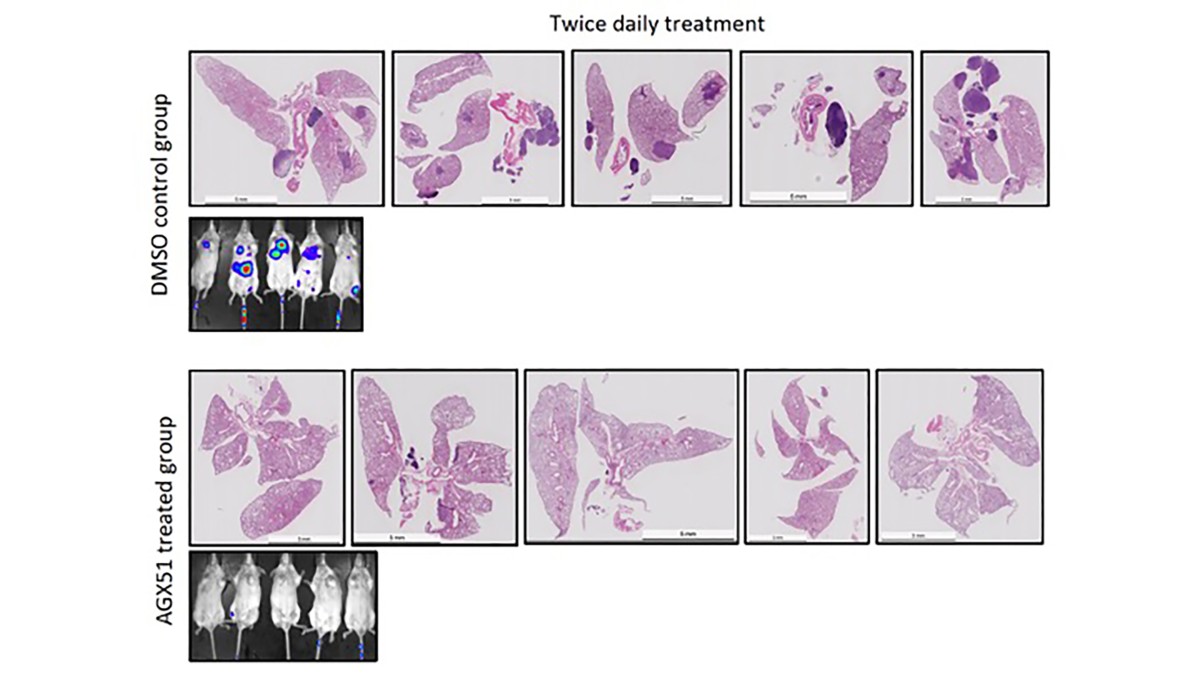
The overarching goal of the lab is to understand molecular mechanisms that contribute to cancer development and progression. My laboratory has had a longstanding interest in the role of the ID proteins (particularly ID1 and ID3) in normal development and cancer biology. ID proteins block tissue specific gene expression associated with changes in cell state and their expression is normally confined to early embryogenesis to block differentiation but are reactivated in a variety of cancer types. We have contributed to the development and distribution of reagents and animal models related to ID proteins that have proven to be valuable in establishing the role of these proteins in promoting cancer and other pathologic states as well as their role in normal stem cell biology. Genetic analyses of ID loss-of-function in cancer have proven their importance in disease initiation and progression which motivated us to develop a small molecule antagonist of the ID protein family that leads to ID degradation is being readied for clinical application. Both genetic analyses and drug treatment in animal models points to a requirement of ID proteins for mesenchymal-to-epithelial transition required for the formation of macro-metastases.
We have also found recently that ID proteins are essential for the development of non-alcoholic steatohepatitis (NASH) by controlling a gene regulatory pathway in a subpopulation of liver cells. NASH, highly prevalent in populations that consume high fat diets, is a significant risk factor for the development of liver cancer so the use of our ID antagonist may have important utility in cancer prevention. We also helped initiate the biochemical and cell biological characterization of the metazoan mitotic checkpoint pathway through the cloning and characterization of hsMad2, a key component of the pathway which blocks sister chromatid separation until all kinetochores are occupied by microtubules. In addition, we helped lead the efforts to understand the consequences of deregulated expression of Mad2 in the genomic instability commonly observed in cancer.
Featured News
Publications Highlights
Benezra, R., Davis, R.L., Lockshon, D., Turner, D.L. & Weintraub, H. (1990). The protein Id: a negative regulator of helix-loop-helix DNA binding proteins. Cell 61(1):49-59.
Jen, Y., Weintraub, H. & Benezra, R. (1992). Overexpression of Id protein inhibits the muscle differentiation program: in vivo association of Id with E2A proteins. Genes Dev 6(8):1466-79.
Pesce, S. & Benezra, R. (1993). The loop region of the helix-loop-helix protein Id1 is critical for its dominant negative activity. Mol Cell Biol 13(12):7874-80.
Tournay, O. & Benezra, R. (1996). Transcription of the dominant-negative helix-loop-helix protein Id1 is regulated by a protein complex containing the immediate-early response gene Egr-1. Mol Cell Biol 16(5):2418-30.
Li ,Y. & Benezra, R. (1996). Identification of a human mitotic checkpoint gene: hsMAD2. Science 274(5285):246-8.
People
Robert Benezra, PhD
Laura and Christopher Pucillo Chair in Metastasis Research
- Cancer biologist Robert Benezra studies the molecular mechanisms of tumor growth and metastatic progression using mouse models. In addition, he studies the spindle assembly checkpoint which ensures proper chromosome segregation and is often deregulated in cancer.
- PhD, Columbia University
- [email protected]
- Email Address
- 646-888-2812
- Office Phone
Members
- 646-888-2813/2814
- Lab Phone
Open Positions
To learn more about available postdoctoral opportunities, please visit our Career Center
To learn more about compensation and benefits for postdoctoral researchers at MSK, please visit Resources for Postdocs
Get in Touch
-
Lab Head Email
-
Office Phone
-
Lab Phone
-
Lab Fax
Disclosures
Members of the MSK Community often work with pharmaceutical, device, biotechnology, and life sciences companies, and other organizations outside of MSK, to find safe and effective cancer treatments, to improve patient care, and to educate the health care community. These activities outside of MSK further our mission, provide productive collaborations, and promote the practical application of scientific discoveries.

MSK requires doctors, faculty members, and leaders to report (“disclose”) the relationships and financial interests they have with external entities. As a commitment to transparency with our community, we make that information available to the public. Not all disclosed interests and relationships present conflicts of interest. MSK reviews all disclosed interests and relationships to assess whether a conflict of interest exists and whether formal COI management is needed.

Robert Benezra discloses the following relationships and financial interests:
-
AngioGenex
Equity; Intellectual Property Rights; Professional Services and Activities (Uncompensated)
-
Londonderry Cultural Center, Inc.
Fiduciary Role / Position; Professional Services and Activities (Uncompensated)
The information published here is a complement to other publicly reported data and is for a specific annual disclosure period. There may be differences between information on this and other public sites as a result of different reporting periods and/or the various ways relationships and financial interests are categorized by organizations that publish such data.
This page and data include information for a specific MSK annual disclosure period (January 1, 2024 through disclosure submission in spring 2025). This data reflects interests that may or may not still exist. This data is updated annually.
Learn more about MSK’s COI policies here. For questions regarding MSK’s COI-related policies and procedures, email MSK’s Compliance Office at [email protected].