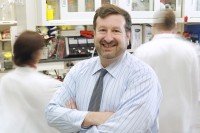
A second-generation physician-scientist, David Scheinberg specializes in caring for patients with leukemia — and developing new ways to treat it.
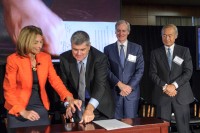
Announcement
Memorial Sloan Kettering is joining with two other academic institutions in a pioneering collaboration to speed early-stage drug discoveries into therapies for patients.
Physician-scientist David Scheinberg discussed his discovery of a unique monoclonal antibody, a molecule that can be engineered to target specific prot...
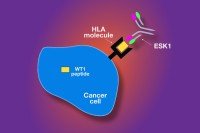
In the Lab
Scientists from Memorial Sloan Kettering have collaborated on the discovery of a unique monoclonal antibody, called ESK1, that appears to be effective at targeting and destroying several types of cancer cells.
David Scheinberg, Chair of the Molecular Pharmacology and Chemistry Program, discussed his research on actinium and its cancer-fighting abilities....
Feature
The MD Anderson Cancer Center presented its annual award to Dr. Scheinberg in recognition of his pioneering work in developing chemotherapeutic agents for leukemia and other cancers.
To take advantage of the growing field of nanotechnology, Memorial Sloan Kettering has established a Nanotechnology Center.
A multicenter study led by Memorial Sloan Kettering researchers has answered an important question about the safety of using carbon nanotubes in medicine.
David A. Scheinberg has been elected a member of the prestigious Association of American Physicians (AAP).
Four MSK researchers out of 15 winners nationwide were named recipients of the prestigious award. They will each receive a grant of up to $600,000 per year for seven years to support their research in cancer.