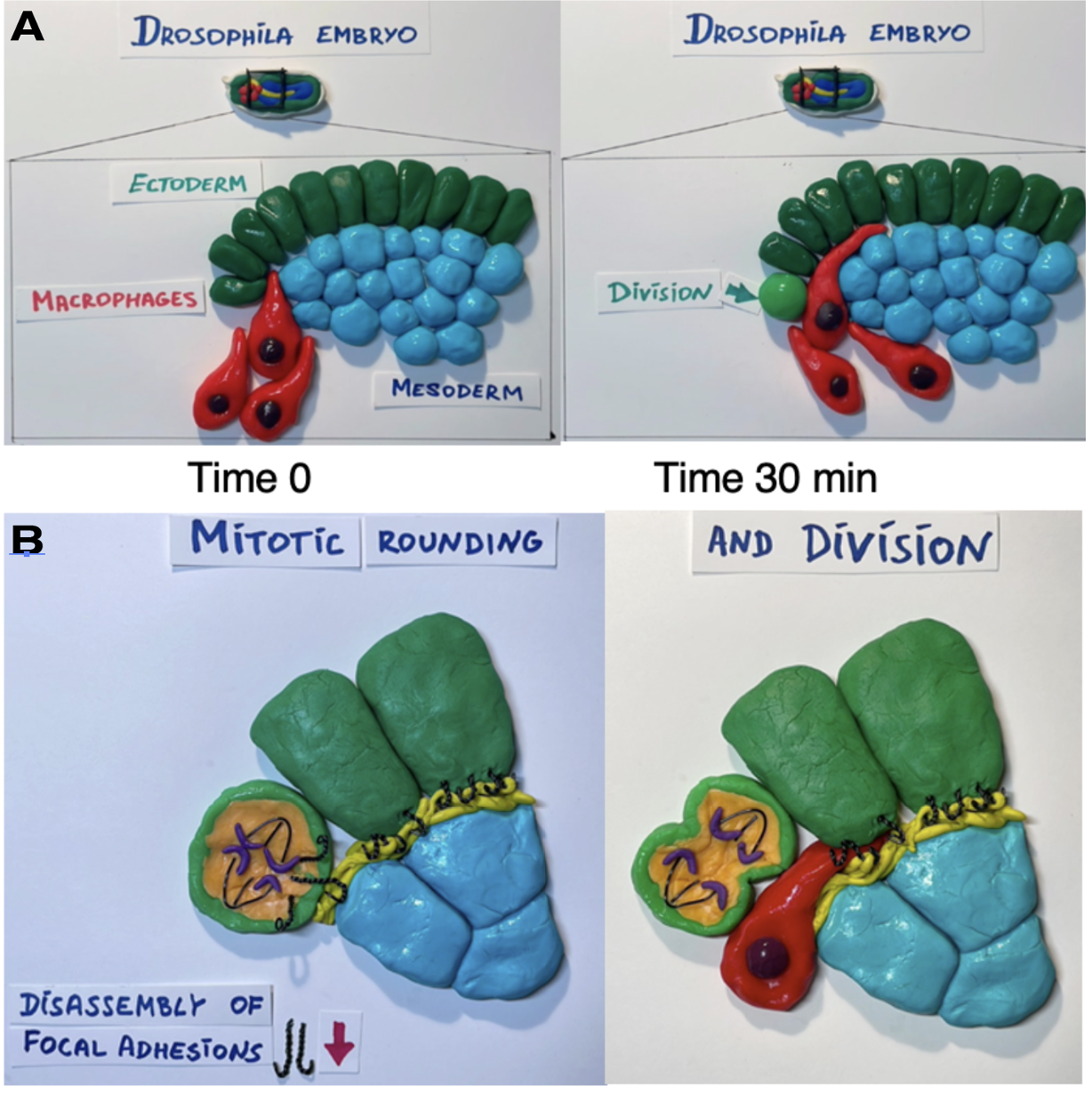
Using a powerful in vivo invasion model of macrophages in the Drosophila embryo, I have discovered that epithelial cell divisions act as “hotspots” exploited by macrophages as sites of infiltration (Akhmanova M. et al., Science 2022). Macrophages could invade between tightly adherent epithelial tissues only when at least one adjacent tissue cell undergoes mitosis (Fig.A). During mitosis focal-adhesions on the basal side of the ectodermal cell disassemble, creating a permissive entry site (Fig.B). Based these findings we hypothesize that divisions in tissues serve as a broadly utilized mechanism that induces local perturbations, which can facilitate invasion in many tissues. To test this hypothesis, we are looking for other systems where divisions play crucial role in invasion, while utilizing Drosophila embryo and organoid models to further explore interaction mechanisms between macrophages and tissue division. We focus on answering the following questions:
- In which tissues, organisms and systems do divisions enable or enhance infiltration? Is immune infiltration into tumors facilitated by divisions?
- Are migrating cells attracted to dividing tissue cells and from how far? Which signals attract migratory cells to a dividing cell?
- Can migratory cells induce tissue divisions to facilitate their own migration?