
MSK research is revealing how cancer cells are active architects of their environment — remaking their cellular neighborhood in their own image — and these insights are helping to develop new ways to fight back.
Laboratory research led by MSK and Cold Spring Harbor Laboratory demonstrates the potential for CAR T cells to improve “healthspan” by eliminating senescent cells associated with aging-related diseases.
New MSK research combined sophisticated genetically engineered mouse models and advanced computational methods to map the earliest cell states leading to pancreatic ductal adenocarcinoma (PDAC), the most common type of pancreatic cancer.
Learn why MSK researchers developed MACHETE, a new CRISPR-based technique to study large-scale genetic deletions efficiently in laboratory models.
In the Lab
Rather than promoting genetic chaos, loss of p53 leads to an orderly progression of genetic changes that no one saw coming.
At MSK, our goal is not just to train the scientists of tomorrow, but the scientific leaders.
The insights lay the groundwork for earlier diagnosis and better treatment of the disease.
During World War II, US factories famously converted their operations to support the war effort. COVID-19 instigated something similar among cancer scientists.
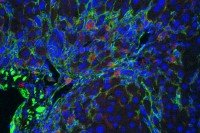
In the Lab
From atherosclerosis and diabetes to liver fibrosis and osteoarthritis, senescent cells are at the root of many debilitating diseases. Scientists increasingly have them in the crosshairs.
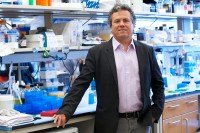
Biologist Scott W. Lowe is an expert on the processes that naturally inhibit cancer development.
In the Lab
Studies conducted in mice reveal a potential way to breach the defenses of pancreatic cancer tumors.
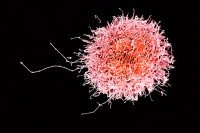
In the Lab
A drug combination that halts tumor cell division can stir the immune system into taking action.

In Brief
Synovial sarcoma is an aggressive cancer primarily affecting children and young adults. A new study gets to the bottom of it.
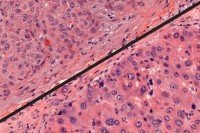
In the Lab
A team led by MSK molecular biologist Scott Lowe is making progress against fibrolamellar hepatocellular carcinoma.
Feature
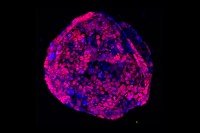
MSK researchers moved cancer science ahead in 2015 with landmark discoveries that suggest new treatment strategies and shed light on how the disease progresses.
In the Lab
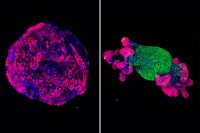
For the first time, scientists have shown that the gene APC, which is mutated in the vast majority of colorectal cancers, might be a promising target for future therapies.
Finding
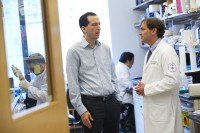
A study of one patient’s disease has clarified why tumors stop responding to a class of experimental drugs called PI3K inhibitors.
In the Lab
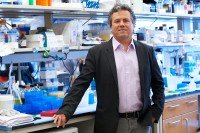
In taking a new approach to finding treatments for hepatocellular carcinoma, MSK scientists have uncovered a potential drug target for this highly aggressive cancer.

Decoder
Understanding tumor heterogeneity may be the next big quest in cancer science, as differences between cells within a tumor can have important consequences for how cancers are diagnosed and treated.
Announcement
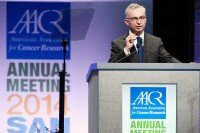
Discoveries made at Memorial Sloan Kettering receive recognition at the 2014 Annual Meeting of the American Association for Cancer Research.
Biologist Scott Lowe commented on new research that found senescent cells – cells that stop dividing over time – in embryos....

In the Lab
Researchers have found the first evidence that susceptibility to developing acute lymphoblastic leukemia during childhood may be heritable.
Video
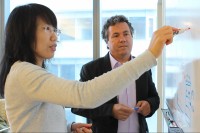
Watch our scientists discuss how the Geoffrey Beene Center helped Memorial Sloan Kettering establish a progressive approach to modern cancer research.

Announcement
The initiative, focused on investigators from Memorial Sloan Kettering’s Geoffrey Beene Cancer Research Center, highlights the critical need for funding scientific research.
Q&A
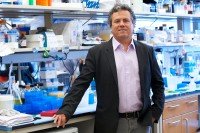
In the lab of cancer biologist Scott Lowe, researchers are investigating the processes that naturally inhibit cancer development.

Scott W. Lowe has joined Memorial Sloan Kettering Cancer Center as a member of the Cancer Biology and Genetics Program in the Sloan Kettering Institute and Chair of the Geoffrey Beene Cancer Research Center.