Common Names
- Tulasi
- Tulsi
For Patients & Caregivers
Tell your healthcare providers about any dietary supplements you’re taking, such as herbs, vitamins, minerals, and natural or home remedies. This will help them manage your care and keep you safe.
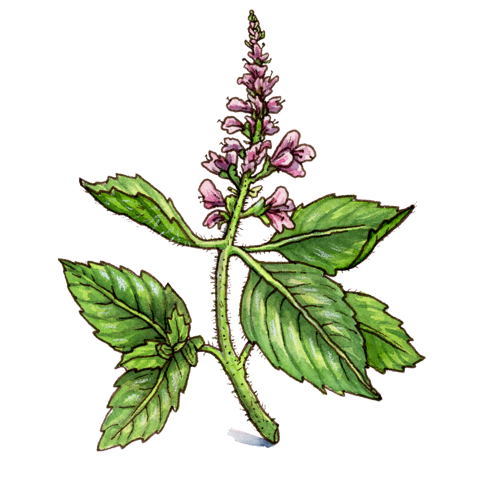
Holy basil is an aromatic herb used in traditional Indian medicine (Ayurveda).
It comes in supplements as tablets, capsules, eye drops, and liquid extracts.
Holy basil is used to:
- Lower stress
- Reduce anxiety (strong feelings of worry or fear)
- Treat insomnia (trouble falling asleep, staying asleep, or waking up too early)
- Manage diabetes
Side effects from using holy basil may include:
- Nausea
- Headache
- Feeling agitated
For Healthcare Professionals
An aromatic plant native to southeast Asia, holy basil is commonly used in Ayurveda for a variety of conditions including anxiety, cough, asthma, diarrhea, fever, dysentery, arthritis, eye diseases, otalgia and indigestion.
Preclinical findings indicate anti-stress, adaptogenic, antioxidant, analgesic, anti-asthmatic, anti-inflammatory, and anticancer properties (1) (2) (3) (4) (5).
Small clinical studies suggest holy basil may help lower stress and improve sleep quality (6) (7), reduce anxiety (8), enhance cognition (9), and improve oral (10) (11) and eye (12) health.
Topical use of a formulation containing holy basil reduced oral mucositis in cancer patients undergoing chemo-radiation therapy (13).
Further research is needed to substantiate these findings.
Holy basil should not be confused with basil, which is widely used in south Asian cuisine.
- Stress
- Anxiety
- Insomnia
- Diabetes
The physiological effects of holy basil are attributed to its bioactive constituents that include eugenol, carvacrol, ursolic acid, β-caryophyllene, orientin, vicenin and rosmarinic acid.
The anti-stress property is thought to be via inhibition of cortisol release, blocking the corticotropin-releasing hormone receptor (CRHR 1), and inhibiting 11β-hydroxysteroid dehydrogenase type (11β-HSD1) and catechol-O-methyltransferase (COMT) activities (14). The anti-diabetic effects are likely via stimulatory effects on physiological pathways of insulin secretion (15).
Holy basil extracts also prevented chemical-induced cancers by modulating gene expression, inducing apoptosis, as well as by inhibiting angiogenesis and metastasis (16); and protected against radiation-induced lipid peroxidation likely via free radical scavenging (17).