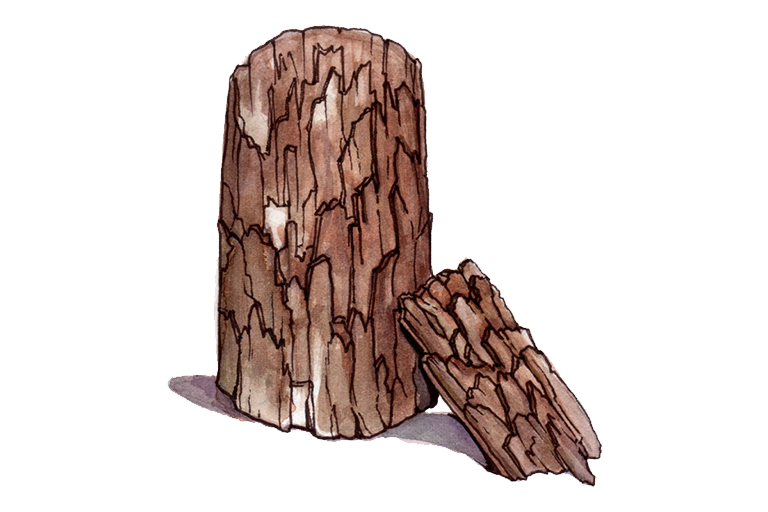
Pygeum
Purported Benefits, Side Effects, and More
Common Names
- African plum tree
For Patients & Caregivers
Tell your healthcare providers about any dietary supplements you’re taking, such as herbs, vitamins, minerals, and natural or home remedies. This will help them manage your care and keep you safe.
What is it?
Pygeum may relieve symptoms of benign prostatic hypertrophy (BPH), but its effects following long-term use are not known.
Pygeum extracts have been used in traditional medicines for prostate gland inflammation, urinary problems, and other conditions. Several compounds in pygeum may reduce inflammation by stopping the production of prostaglandins, which are indicators of inflammation in the body. These compounds may also work together to reduce testosterone levels in the prostate. Although several small clinical trials suggest benefit, larger trials are needed to confirm safety and effectiveness.
What are the potential uses and benefits?
- To treat benign prostatic hypertrophy (BPH)
Several clinical trials show that pygeum is effective for urinary symptoms in patients with BPH, but long-term effectiveness and safety are not known. - To reduce inflammation
Laboratory studies show that chemicals in pygeum have anti-inflammatory effects, but human data are lacking. - To improve sexual performance
No scientific evidence supports this use.
What are the side effects?
- Nausea
- Stomach upset
What else do I need to know?
Special Point:
- When used for benign prostatic hypertrophy (BPH), it may take several weeks to see any beneficial effects.
For Healthcare Professionals
Brand Name
Scientific Name
Clinical Summary
Derived from the tree bark, pygeum extracts are traditionally used to manage lower urinary tract symptoms associated with benign prostatic hypertrophy (BPH) (1). In vitro and in vivo studies indicate that pygeum extracts have bactericidal and fungicidal activity (2), antagonize the androgen receptor (3), and have antiproliferative and apoptotic effects against prostate cancer cells (4) (5) (6) (7).
Clinical studies suggest effectiveness of pygeum (8) (9) (10) (11) and formulations containing pygeum and other herbs (12) to improve urinary symptoms associated with BPH. However, additional larger studies are needed to demonstrate usefulness of pygeum compared with standard treatments in current use for BPH.
Purported Uses and Benefits
- Benign prostatic hypertrophy (BPH)
- Inflammation
- Sexual performance
Mechanism of Action
Pygeum antagonizes 5-lipoxygenase metabolite production, and this action may contribute to its anti-inflammatory effects (15). Antimicrobial effects have been linked to inhibition of IL-7 mRNA expression (2).
The isolated compounds atraric acid and N-butylbenzene-sulfonamide were identified as androgen receptor antagonists, which play an important role in the development of prostate diseases (16).
Antiproliferative and apoptotic effects of pygeum on prostate fibroblasts and myofibroblasts are due to downregulation of transforming growth factor B1 and inhibition of fibroblast growth factor 2-specific signaling (6).
Adverse Reactions
Nausea and gastrointestinal upset (8) (9) (10)
References
- Abera B. Medicinal plants used in traditional medicine by Oromo people, Ghimbi District, Southwest Ethiopia. J Ethnobiol Ethnomed. 2014;10:40.
- Mwitari PG, Ayeka PA, Ondicho J, et al. Antimicrobial activity and probable mechanisms of action of medicinal plants of Kenya: Withania somnifera, Warbugia ugandensis, Prunus africana and Plectrunthus barbatus. PLoS One. 2013;8(6):e65619.
- Papaioannou M, Schleich S, Prade I, et al. The natural compound atraric acid is an antagonist of the human androgen receptor inhibiting cellular invasiveness and prostate cancer cell growth. J Cell Mol Med. Aug 2009;13(8B):2210-2223.
- Boulbes D, Soustelle L, Costa P, et al. Pygeum africanum extract inhibits proliferation of human cultured prostatic fibroblasts and myofibroblasts. BJU Int. Nov 2006;98(5):1106-1113.
- Shenouda NS, Sakla MS, Newton LG, et al. Phytosterol Pygeum africanum regulates prostate cancer in vitro and in vivo. Endocrine. Feb 2007;31(1):72-81.
- Quiles MT, Arbos MA, Fraga A, et al. Antiproliferative and apoptotic effects of the herbal agent Pygeum africanum on cultured prostate stromal cells from patients with benign prostatic hyperplasia (BPH). Prostate. Jul 1 2010;70(10):1044-1053.
- Larre S, Camparo P, Comperat E, et al. Biological effect of human serum collected before and after oral intake of Pygeum africanum on various benign prostate cell cultures. Asian J Androl. May 2012;14(3):499-504.
- Ishani A, MacDonald R, Nelson D, et al. Pygeum africanum for the treatment of patients with benign prostatic hyperplasia: a systematic review and quantitative meta-analysis. Am J Med. Dec 1 2000;109(8):654-664.
- Chatelain C, Autet W, Brackman F. Comparison of once and twice daily dosage forms of Pygeum africanum extract in patients with benign prostatic hyperplasia: a randomized, double-blind study, with long-term open label extension. Urology. Sep 1999;54(3):473-478.
- Barlet A, Albrecht J, Aubert A, et al. [Efficacy of Pygeum africanum extract in the medical therapy of urination disorders due to benign prostatic hyperplasia: evaluation of objective and subjective parameters. A placebo-controlled double-blind multicenter study]. Wien Klin Wochenschr. Nov 23 1990;102(22):667-673.
- Wilt T, Ishani A, Mac Donald R, et al. Pygeum africanum for benign prostatic hyperplasia. Cochrane Database Syst Rev. 2002(1):CD001044.
- Coulson S, Rao A, Beck SL, et al. A phase II randomised double-blind placebo-controlled clinical trial investigating the efficacy and safety of ProstateEZE Max: a herbal medicine preparation for the management of symptoms of benign prostatic hypertrophy. Complement Ther Med. Jun 2013;21(3):172-179.
- Papaioannou M, Schleich S, Roell D, et al. NBBS isolated from Pygeum africanum bark exhibits androgen antagonistic activity, inhibits AR nuclear translocation and prostate cancer cell growth. Invest New Drugs. Dec 2010;28(6):729-743.
- Kadu CA, Parich A, Schueler S, et al. Bioactive constituents in Prunus africana: geographical variation throughout Africa and associations with environmental and genetic parameters. Phytochemistry. Nov 2012;83:70-78.
- Paubert-Braquet M, Cave A, Hocquemiller R, et al. Effect of Pygeum africanum extract on A23187-stimulated production of lipoxygenase metabolites from human polymorphonuclear cells. J Lipid Mediat Cell Signal. May 1994;9(3):285-290.
- Roell D, Baniahmad A. The natural compounds atraric acid and N-butylbenzene-sulfonamide as antagonists of the human androgen receptor and inhibitors of prostate cancer cell growth. Mol Cell Endocrinol. Jan 30 2011;332(1-2):1-8.