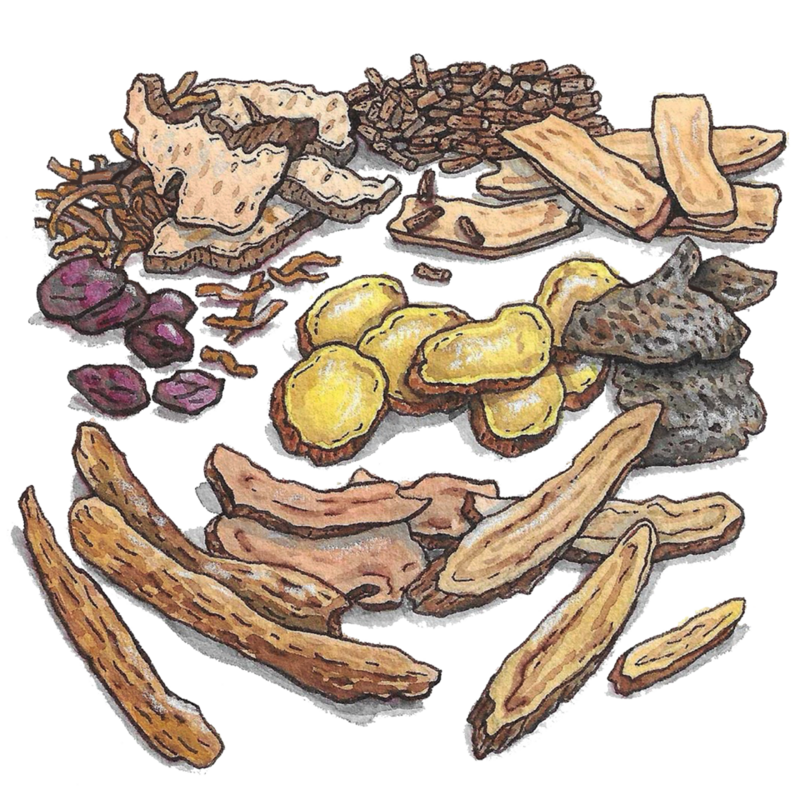
Bu Zhong Yi Qi Tang
Purported Benefits, Side Effects, and More
Common Names
- Hochuekkito
- Bojungikki-tang
- Ginseng and Astragalus Combination
- Bu Zhong Yi Qi Pian
- Bu Zhong Yi Qi Wan
- Bu-Zhong-Yi-Qi decoction
- TJ-41
For Patients & Caregivers
Tell your healthcare providers about any dietary supplements you’re taking, such as herbs, vitamins, minerals, and natural or home remedies. This will help them manage your care and keep you safe.
What is it?
Bu Zhong Yi Qi Tang (BZYQT) is a traditional Chinese medicine (TCM) formula. It consists of eight different herbs.
What are the potential uses and benefits?
Bu Zhong Yi Qi Tang is used to:
- Treat cancer-related fatigue
- Boost the immune system
- Heal wounds
Talk with your healthcare providers before taking herbal formulas. They can interact with some medications and affect how they work. For more information, read the “What else do I need to know?” section below.
What are the side effects?
Side effects of BZQYT may include:
- Nausea (feeling like you’re going to throw up)
- Bloating
For Healthcare Professionals
Clinical Summary
Bu Zhong Yi Qi Tang (BZYQT) is a traditional Chinese medicine (TCM) formula first documented in Pi Wei Lun, a 13th century Treatise on the Spleen and Stomach. Historically used to treat fatigue (1) and weakness, BZYQT consists of eight herbs: Chen Pi (Citrus reticulata), Dang Gui (Angelica sinensis), Gan Cao (Glycyrrhiza uralensis), Huang Qi (Astragalus membranaceus), Sheng Ma (Cimicifuga foetida), Bai Zhu (Atractylodes macrocephala), Chai Hu(Bupleurum chinense) and Ren Shen (Panax ginseng).
In cancer settings, small studies suggest benefits of BZQYT in reducing fatigue, improving immune function, and quality of life (6) (10) (16), reducing cachexia (4), and increasing muscle mass (11). BZQYT is also among the commonly prescribed formulas for lung cancer patients in Taiwan (17).
In other studies, it improved lung function in patients with chronic obstructive pulmonary disease (COPD) (15), and promoted wound healing in those with diabetic or pressure ulcers (5) and chronic wounds (18).
Large, well-designed trials are needed to expand the evidence base.
Purported Uses and Benefits
- Cancer-related Fatigue
- Immunomodulation
- Wound Healing
Mechanism of Action
BZYQT was shown to restore immunity in mice bearing B16 melanoma by normalizing hypothalamic-pituitary-adrenal axis function, reducing corticosterone levels, and reversing stress-induced suppression of IL-12 production (19). In gastric cancer models, BZYQT had a synergistic effect with 5-fluorouracil (5-FU) to suppress PD-L1 expression via PI3K/AKT pathway inhibition while elevating CD4+/CD8+ T-cell ratios (2). The formula also enhanced cisplatin-induced apoptosis in HeLa cells through p53 activation and Bcl-2/Bax ratio reduction (2).
In addition, BZYQT reduced polyinosinic:polycytidylic acid-induced pulmonary inflammation in a murine model by lowering neutrophil infiltration and suppressing pro-inflammatory mediators, including CXCL10, TNF-alpha, and IL-6 (3).
Adverse Reactions
Nausea and bloating were reported in clinical studies (4) (6).
Herb-Drug Interactions
None known.
References
- Chen R Moriya J, Yamakawa J, Takahashi T, Kanda T. Traditional chinese medicine for chronic fatigue syndrome. Evid Based Complement Alternat Med. 2010 Mar;7(1):3-10. doi: 10.1093/ecam/nen017.
- Sato T, Kita K, Sato C, Kaneda A. Hochu‑ekki‑to (Bu‑zhong‑yi‑qi‑tang), a herbal medicine, enhances cisplatin‑induced apoptosis in HeLa cells. Mol Med Rep. 2015;12(4):6215-6220.
- Hu L, Yamamoto M, Chen J, et al. Integrating network pharmacology and experimental verification to decipher the immunomodulatory effect of Bu-Zhong-Yi-Qi-Tang against poly (I:C)-induced pulmonary inflammation. Front Pharmacol. 2022;13:1015486. Published 2022 Oct 11.
- Zhang X, Qiu H, Li C, Cai P, Qi F. The positive role of traditional Chinese medicine as an adjunctive therapy for cancer. Biosci Trends. 2021;15(5):283-298.
- Akita S, Namiki T, Kawasaki Y, et al. The beneficial effect of traditional Japanese herbal (Kampo) medicine, Hochu-ekki-to (Bu-Zhong-Yi-Qi-Tang), for patients with chronic wounds refractory to conventional therapies: A prospective, randomized trial. Wound Repair Regen. 2019;27(6):672-679.
- Cho E, Na SW, Jeong MK. Therapeutic and immunomodulatory effects of Bojungikki-tang on cancer: a scoping review. BMC Cancer. 2024;24(1):1169. Published 2024 Sep 20.
- Edahiro Y, Koike M, Nojiri S, et al. A pilot study examining the efficacy of hochuekkito for improving quality of life in patients with myeloproliferative neoplasms. Jpn J Clin Oncol. 2022 Aug 5;52(8):880-886.
- Hamada H, Sekikawa K, Murakami I, et al. Effects of Hochuekkito combined with pulmonary rehabilitation in patients with chronic obstructive pulmonary disease. Exp Ther Med. 2018;16(6):5236-5242.
- Hamazaki K, Sawazaki S, Itomura M, et al. No effect of a traditional Chinese medicine, Hochu-ekki-to, on antibody titer after influenza vaccination in man: a randomized, placebo-controlled, double-blind trial. Phytomedicine. 2007;14(1):11-14.
- Jeong JS, Ryu BH, Kim JS, Park JW, Choi WC, Yoon SW. Bojungikki-tang for cancer-related fatigue: a pilot randomized clinical trial. Integr Cancer Ther. 2010;9(4):331-338.
- Okugawa Y, Shirai Y, Fukumori K, et al. Effect of the Japanese herbal medicine Hochuekkito for systemic inflammation, prognostic nutrition index, and body composition status in patients with gastrointestinal cancer. Clin Nutr ESPEN. 2024;63:757-767.
- Shinozuka N, Tatsumi K, Nakamura A, Terada J, Kuriyama T. The traditional herbal medicine Hochuekkito improves systemic inflammation in patients with chronic obstructive pulmonary disease. J Am Geriatr Soc. 2007;55(2):313-314.
- Xu R, Wu J, Zhang X, et al. Modified Bu-zhong-yi-qi decoction synergies with 5 fluorouracile to inhibits gastric cancer progress via PD-1/PD- L1-dependent T cell immunization. Pharmacol Res. 2020;152:104623.
- Yang SH, Yu CL. Antiinflammatory effects of Bu-zhong-yi-qi-tang in patients with perennial allergic rhinitis. J Ethnopharmacol. 2008;115(1):104-109.
- Chen Y, Shergis JL, Wu L, et al. A systematic review and meta-analysis of the herbal formula Buzhong Yiqi Tang for stable chronic obstructive pulmonary disease. Complement Ther Med. 2016;29:94-108. doi:10.1016/j.ctim.2016.09.01
- Minagawa T, Domen T, Suzuki T, et al. [EFFECTIVENESS OF HOCHUEKKITO (JAPANESE HERBAL MEDICINE) FOR GENERAL FATIGUE AFTER INTRODUCTION OF ENZALUTAMIDE IN THREE CASES OF CASTRATION-RESISTANT PROSTATE CANCER]. Nihon Hinyokika Gakkai Zasshi. 2019;110(2):86-91.
- Li TM, Yu YH, Tsai FJ, et al. Characteristics of Chinese herbal medicine usage and its effect on survival of lung cancer patients in Taiwan. J Ethnopharmacol. 2018 Mar 1;213:92-100.
- Akita S, Namiki T, Kawasaki Y, et al. The beneficial effect of traditional Japanese herbal (Kampo) medicine, Hochu-ekki-to (Bu-Zhong-Yi-Qi-Tang), for patients with chronic wounds refractory to conventional therapies: A prospective, randomized trial. Wound Repair Regen. 2019 Nov;27(6):672-679.
- Li T, Tamada K, Abe K, et al. The restoration of the antitumor T cell response from stress-induced suppression using a traditional Chinese herbal medicine Hochu-ekki-to (TJ-41:Bu-Zhong-Yi-Qi-Tang). Immunopharmacology. 1999;43(1):11-21.