Search
-
Patient & Caregiver Education
本信息介绍了当您回家使用辅助(额外)供氧时需要了解的事项。
… 本信息介绍了当您回家使用辅助(额外)供氧时需要了解的事项。 医生建议您使用辅助供氧,以便让呼吸更加容易。 外部公司将为您提供家庭供氧设备。 MSK 不提供氧气罐,也不在您家中设置供氧设备。 如何提供氧气? 您的医疗团队将与氧气供应公司联系,安排交付时间。 他们会确保您的医疗保险涵盖家庭供氧设备。 出院离开之前,您的医疗团队会帮助安排家庭家用供氧设备的交付。 交付工作可能需要 24 小时(1 天)时间。 如果供氧设备尚未交付,请致电医疗团队。 家用供氧设备包括: 氧气浓缩器。 这是一种插入墙体的设备。 便携式氧气罐 。 这种氧气罐可供您在出门时随身携带。 请确保家中有足够的空间来存放这类氧气罐。氧气罐必须保持直立
-
MSK uses the latest technology to give you the most accurate prostate cancer diagnosis. Learn more.
… We understand that a diagnosis of prostate cancer can cause a lot of anxiety and uncertainty. Our experts will use the latest technology to give you the most accurate diagnosis possible. We want you to feel confident about your next step, whether it’s active surveillance for your disease or starting
-
MSK utiliza la última tecnología para brindarle el diagnóstico de cáncer de próstata más preciso. Averigüe más.
… Entendemos que un diagnóstico de cáncer de próstata puede provocar mucha ansiedad e incertidumbre. Nuestros expertos utilizarán la última tecnología para brindarle el diagnóstico más preciso posible. Queremos que se sienta seguro con respecto a cuál será su próximo paso, ya sea la observación activa
-
-
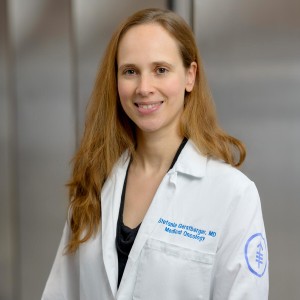 Gastrointestinal Medical Oncologist
I am a gastrointestinal medical oncologist with special training in treating gastrointestinal cancers. This includes colon cancer, rectal cancer, liver cancer, bile duct cancer (cholangiocarcinoma), and pancreatic cancer. I see patients at Memorial Hospital.
… Gastrointestinal Medical Oncologist Job Title Instructor I am a gastrointestinal medical oncologist with special training in treating gastrointestinal cancers. This includes colon cancer, rectal cancer, liver cancer, bile duct cancer (cholangiocarcinoma), and pancreatic cancer. I see patients at Memorial
-
Gastrointestinal Medical Oncologist
Soy oncóloga médica gastrointestinal y me especializo en el tratamiento de diferentes tipos de cáncer gastrointestinal. Esto incluye el cáncer de colon, el cáncer de recto, el cáncer de hígado, el cáncer de las vías biliares (colangiocarcinoma) y el cáncer de páncreas. Atiendo pacientes en el Memorial Hospital.
… Gastrointestinal Medical Oncologist Job Title Instructora Soy oncóloga médica gastrointestinal y me especializo en el tratamiento de diferentes tipos de cáncer gastrointestinal. Esto incluye el cáncer de colon, el cáncer de recto, el cáncer de hígado, el cáncer de las vías biliares (colangiocarcinoma
-
The Vinod Balachandran Lab
… Job Title Research Technician Start Year 2023 End Year 2024 Office Phone 646-888-3792
-
News
VEXAS syndrome is a confounding adult-onset inflammatory disease first described in 2020, which affects 1 in 4,000 men over 50. Now, MSK researchers are shedding new light on its mechanisms and laying the groundwork for potential targeted treatments.
… Monday, November 3, 2025 Researchers at Memorial Sloan Kettering Cancer Center (MSK) have developed some of the first robust laboratory models of a confounding adult-onset inflammatory disease called VEXAS syndrome — shedding new light on its mechanisms and laying the groundwork for potential targeted
-
The Kenneth Marians Lab
Accurate transmission of the genetic information requires complete duplication of the chromosomal DNA each cell division cycle. However, the idea that replication forks would form at origins of DNA replication and proceed without impairment to copy the chromosomes has proven naive. It is now clear that replication forks stall frequently as a result of encounters between the replication machinery and template damage, slow-moving or paused transcription complexes, unrelieved positive superhelical tension, covalent protein-DNA complexes, and as a result of cellular stress responses. These stalled forks are a major source of genome instability.
… Accurate transmission of the genetic information requires complete duplication of the chromosomal DNA each cell division cycle. However, the idea that replication forks would form at origins of DNA replication and proceed without impairment to copy the chromosomes has proven naive. It is now clear that
-
The Daniel Heller Lab
We are developing nanoscale sensors to detect cancer at its earliest stages. Using novel nanomaterials with unique optical properties, we are making it easier to identify disease biomarkers within the body, permitting detection before symptoms arise.
… We develop nanosensor technologies to accurately identify cancer at the earliest stages. Early detection improves the chances that cancer treatments will be effective. We are building implantable sensor technologies to facilitate the real-time monitoring, to enable the detection of cancer biomarkers