
Memorial Sloan Kettering Cancer Center’s (MSK) graduate medical education programs train the next generation of physician leaders in oncology - fostering innovation that drives meaningful clinical and scientific advances.
In this Q&A series, we speak with former MSK trainees as they reflect on their career paths, share insights from their current work, and discuss how their experiences at MSK continue to inform the way they practice, lead and innovate. These conversations bring to life the lasting impact of training at MSK, and the evolving ways our alumni shape clinical practice, and advance care for patients, both within the United States and around the world.
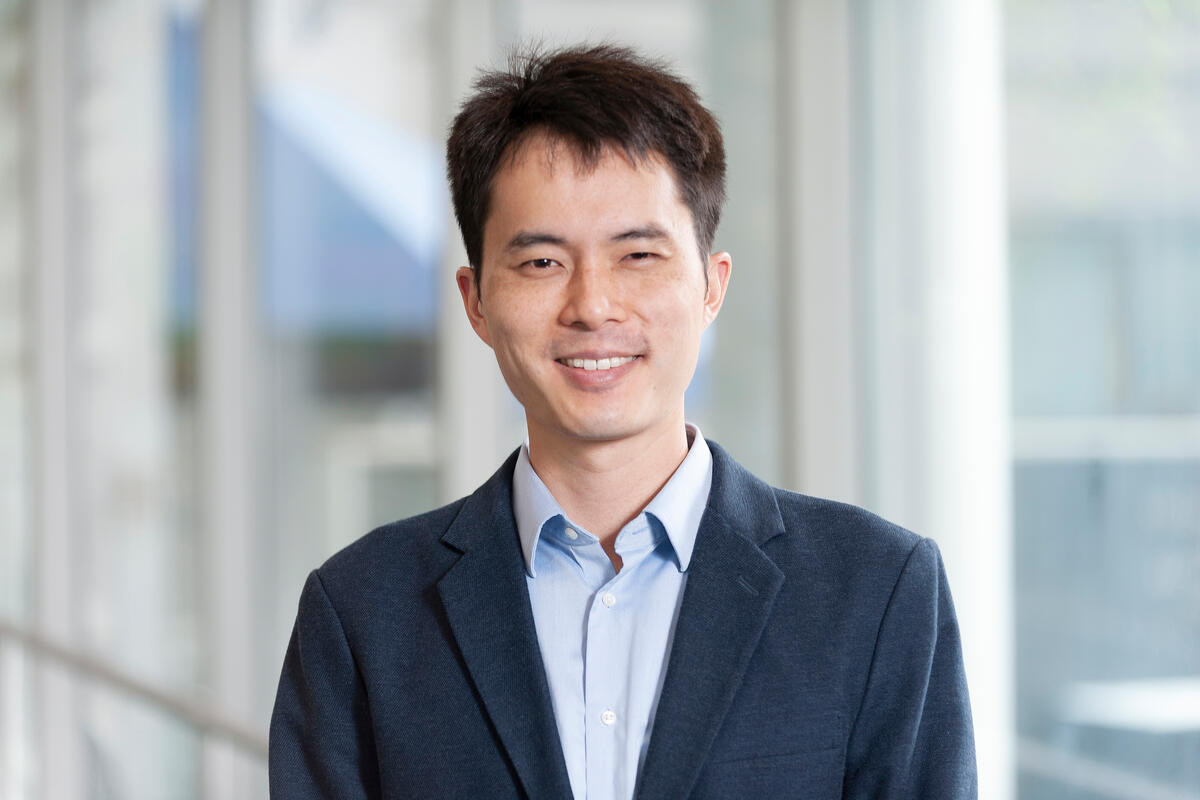
For this edition, we spoke with Justin Jee, MD, PhD, a graduate of MSK’s Medical Oncology Fellowship. Dr. Jee is a thoracic medical oncologist and physician-scientist at MSK, where he cares for patients with lung cancer. He also leads MSK’s Clinical Data Mining Team, where the team works to harness artificial intelligence to predict how patients will respond to cancer treatments and use that information to help improve their quality of life.
MSK: What drew you to train at Memorial Sloan Kettering Cancer Center, and what aspects of your training program had the greatest impact on your development as a physician/researcher?
Dr. Jee: My first experience interviewing at MSK was for the combined Internal Medicine residency and Oncology fellowship program with Cornell in early 2017. At the time, I wasn’t even sure I wanted to do a residency and was seriously considering an offer to run an independent research lab right after finishing my MD/PhD.
However, I interviewed with MSK’s then-Chair of Medicine, who told me about the MSK-IMPACT sequencing platform, the first FDA-authorized sequencing platform of its kind. This was just a few months before the now-classic paper on the first 10,000 patients sequenced with MSK-IMPACT was published in Nature Medicine. As someone who had spent years in a PhD in Computational Biology program sequencing a handful of samples of bacteria, I thought this was incredibly exciting—DNA sequencing happening at such a scale, in people, to help them better treat and understand their cancer.
Hearing about this work not only sold me on MSK as an institution; it sold me on medical training in general. It reminded me why I wanted to be a physician-scientist rather than a pure researcher: to directly use science to improve the way the world worked. I ranked Cornell-MSK as my first choice. Unfortunately, I did not get in.
Two years later, after finishing an Internal Medicine residency at NYP-Columbia, I applied to MSK again, this time for a fellowship. I interviewed again with the same Chair of Medicine. He asked what MSK could do to recruit me, and I told him to rank me higher this time. I told him no matter how many times MSK rejected me, I would keep coming back.
Luckily my overenthusiasm did not stop me from matching at MSK for fellowship.
MSK: Can you tell us a bit about your current role and any novel research or initiatives you are currently involved in?
Dr. Jee: I see patients within the Thoracic Oncology Service and run a research lab in the newly formed Digital Oncology Program.
My lab uses AI to improve patient care in several ways. One example is using large language models (LLMs) to read electronic health records and extract key information from free-text notes. Traditionally, this work is done by medical students, residents, and fellows, and as someone who has done chart review, I can say it is very time consuming.
It turns out that LLMs can do these tasks quite well, often better than humans, which can allow us to extract data from hundreds of thousands of patients. We’ve done this for all patients at MSK who have undergone tumor genomic profiling, in what we call the Clinicogenomic Harmonized, Oncologic Real-world Dataset or MSK-CHORD. The scale of MSK-CHORD would be impossible with human curators alone. We can now improve treatment by matching patients to clinical trials and by discovering clinically significant relationships, such as how certain genomic subtypes of cancer respond to immunotherapy.
I also develop AI models that can directly improve patient care and deploy these in clinic. One example is a machine learning algorithm that predicts which patients will develop blood clots, an unfortunately common cause of morbidity for patients with cancer. After obtaining an investigational device exemption from the FDA under the Software as a Medical Device pathway — a first for MSK — I am now the principal investigator of a clinical trial testing whether this AI algorithm can help determine how long a patient should be on a blood thinner after a cancer-associated blood clot.
I am also the Co-Director of the Thoracic Liquid Biopsy program, a position I inherited from my former mentor, Bob Li. He and thoracic surgeon James Isbell helped build a bank of thousands of blood samples from patients with lung cancer and established collaborations with several companies to test new liquid biopsy technologies. It’s a privilege to build on that work and explore how these samples can be used to improve patient care.
MSK: What lessons or practices from your training at MSK do you still rely on in your current role?
Dr. Jee: Even though I went to medical school and residency before coming here, I believe I learned how to be a doctor at MSK. Not just an oncologist, a doctor. Let me explain.
I was never one of the premedical students who shadowed an attending early on and found a mentor who then served as a north star for the rest of their training. During medical school and Internal Medicine residency, for better or worse, I had a huge amount of autonomy with my patients. I had to present my findings and treatment plan to attendings, but they often spent a few minutes seeing my patients on inpatient rotations. At the same time, I was sleep deprived, rarely had time to eat lunch, and the hospitals that I worked in were not very well resourced. As a result, I learned to prioritize efficiency above all else when talking with patients.
When I came to MSK for the Oncology fellowship, the paradigm was very different. MSK is a relatively well-resourced hospital with exceptional nursing and support staff. But beyond that, many attendings spend a lot of time with patients and their families, answering all their questions, providing reassurance, explaining why we might want to do something differently, and enrolling people in clinical trials. I spent much of my fellowship sitting in a clinic room, not saying anything, just listening to attendings talk to patients. I was, for the first time, shadowing more than practicing medicine.
By shadowing some very good clinicians, including Bob Li, Susan Slovin, Jamie Chaft, Greg Riely, and many others, I learned a lot about being a doctor that I couldn’t have figured out on my own. I learned that sometimes spending more time with people actually saves time in the long run. I learned that all the knowledge and efficiency in the world is useless if you can’t communicate why you’re doing what you’re doing. I learned to treat patients less like work and more like people. In short, I learned to be a real doctor.
MSK: What emerging advances or shifts in your field are you most excited about right now?
Dr. Jee: It feels like a very special time to be a lung cancer doctor. I really do think that decades from now, the history books on oncology will look back on this part of history as a very special time, when KRAS inhibitors were first showing activity, when TP53-restoring agents were first showing promise and CAR-T cells and mRNA vaccines were just entering the solid tumor space. Immunotherapy, antibody drug conjugates, and multimodal therapy with radiation and surgery are allowing people, even with stage IV lung cancer, to live for many years.
Since joining MSK as a fellow in 2019, there have been multiple new FDA approved treatments for lung cancer, and we are seeing these treatments impact mortality in a way that is measurable in the overall population. Many of these scientific and clinical advances are being led at MSK.
You’ll notice I didn’t mention AI among the advances in lung cancer that excites me the most. To be honest, I think what’s happening in the drug development space is even more exciting than what’s happening in AI right now.
MSK: For physicians considering advanced training in oncology, what makes the experience at MSK distinctive?
Dr. Jee: MSK’s data assets are one-of-a-kind. To date, over 100,000 patients have had tumors sequenced with MSK technology, either DNA sequencing with MSK-IMPACT, liquid biopsy profiling with MSK-ACCESS, or more recently, RNA sequencing with MSK-TARGET. With work from my team and many others, clinical data annotations for these patients are now available. These annotations, extracted from electronic health records with AI and other methods, make it easier than ever to discover new relationships between tumor biology and clinical phenotypes.
All of this data is available on cBioPortal, a popular interface developed at MSK with worldwide adoption, to anyone with an MSK email address. Biobanking across tumor types is done on a scale that is very challenging to achieve, but because of our clinical volume, investigator-initiated trials that would normally take several institutions working together to accrue patients can be performed and completed entirely in-house.
This is in addition to the exceptional faculty whose work spans basic science to registrational phase III clinical trials, most of whom are eager to mentor trainees. What this means for fellows is that if you are looking to do research that might lead to a better understanding of cancer, there is no better starting place than MSK.