
For people living with advanced triple-negative breast cancer (TNBC), a newly approved treatment may offer more time and a better quality of life.
TNBC makes up about 10% to 20% of all breast cancers, and for a long time, people living with this disease after it had spread had very few effective treatment options available to them.

But now there is new hope from a targeted drug called datopotamab deruxtecan. Tumors shrunk in twice as many people taking this drug versus those on standard chemotherapy. It also controlled the cancer for twice as long and improved overall survival by about six months, according to clinical studies that led to approval in May by the U.S. Food and Drug Administration (FDA). The drug, also known as Datroway® or Dato-DXd, was approved for people with TNBC that has spread or metastasized.
“Dato-DXd helps patients with this incredibly challenging type of breast cancer live significantly longer than they would on other treatments,” says breast medical oncologist Tiffany A. Traina, MD, FASCO, Section Head for the Triple Negative Breast Cancer Clinical Research Program at Memorial Sloan Kettering Cancer Center (MSK).
Dr. Traina led the U.S. arm of the international clinical trial, called the Tropion-Breast02 trial. She was also senior author of the paper that described its results, published in Annals of Oncology in April 2026.
Triple-negative breast cancer is defined by the characteristics it doesn’t have. Unlike many other breast cancers, the tumor cells in TNBC lack three key markers that can often be successfully targeted with drugs: two hormone receptors — estrogen and progesterone — and the protein HER2.
When breast cancer cells are missing all three of these markers, there are far fewer treatment options available to patients. Chemotherapy can help some people with TNBC, but it usually doesn’t work for long. And most TNBC tumors do not respond well to immunotherapy.
The good news is that in recent years, a few targeted therapies have been approved specifically for TNBC, giving patients more reason to be optimistic than before. Now Dato-DXd has emerged as another treatment option, expanding the choices available to people living with this difficult diagnosis.
What is datopotamab deruxtecan and how does it work?
Dato-DXd is a type of drug called an antibody-drug conjugate. It is essentially a “smart bomb” that seeks out cancer cells and delivers a strong dose of chemotherapy directly to them.
It was first approved by the FDA in January 2025 for a different group of breast cancer patients — those whose tumors are hormone receptor-positive and HER2-negative, but whose cancer had stopped responding to hormone-blocking therapies. With this new approval for triple-negative breast cancer, more people with breast cancer will be eligible to receive Dato-DXd.
How Dato-DXd made a meaningful difference for one patient
Christina, now 33, was first treated for breast cancer six years ago. A trainer for computer software programs, she hasn’t been able to work since her cancer metastasized last summer, spreading to her bones.
She started taking Dato-DXd in April 2026 and says she already feels much better.
“A few months ago, I was in a lot of pain — I could barely walk,” Christina says. “But thanks to this drug, I was recently able to walk down the aisle as a bridesmaid in my sister-in-law’s wedding.”
Dato-DXd leads to significant improvements in TNBC
The results that Christina experienced were similar to those of many patients who participated in the Tropion-Breast02 trial. She was not a part of the trial, but because she was treated at MSK, she was able to start taking Dato-DXd before the drug received FDA approval for TNBC.
The study found that, compared with patients who received standard chemotherapy, those who got Dato-DXd did significantly better.
- Tumor shrinkage: About 63% of patients saw their tumors measurably shrink, compared with 29% who got chemotherapy.
- Time before the cancer worsened: On average, the cancer stayed under control for nearly 11 months with Dato-DXd, compared with less than six months with chemotherapy.
- Overall survival: Patients lived nearly two years on average, compared with just over 18 months for those receiving chemotherapy.
- Manageable side effects: The most common side effects were mouth sores, gastrointestinal problems, and fatigue (feeling tired). Fewer patients who received Dato-DXd had to stop treatment due to side effects than those getting chemotherapy.
- Better quality of life: Patients reported less pain and a better ability to do everyday activities.
Why Christina came to MSK
Christina was first treated for early-stage breast cancer in 2020 at another hospital. The treatment appeared to be successful until last July, when severe back pain sent her to the emergency room near her home in New Jersey. Tests revealed bad news: The cancer had come back and spread to her bones. That’s when she decided she had to get to MSK. “My father-in-law had been treated there, and everyone in the family thought MSK was the best,” she says.
Christina says she immediately felt confident in the skills of her MSK care providers, whom she sees at MSK-Monmouth as well as at MSK’s main campus in Manhattan.
“From the first time we met with Dr. Traina, she was so positive about everything,” she says. “I’m so glad I found her as my oncologist.”
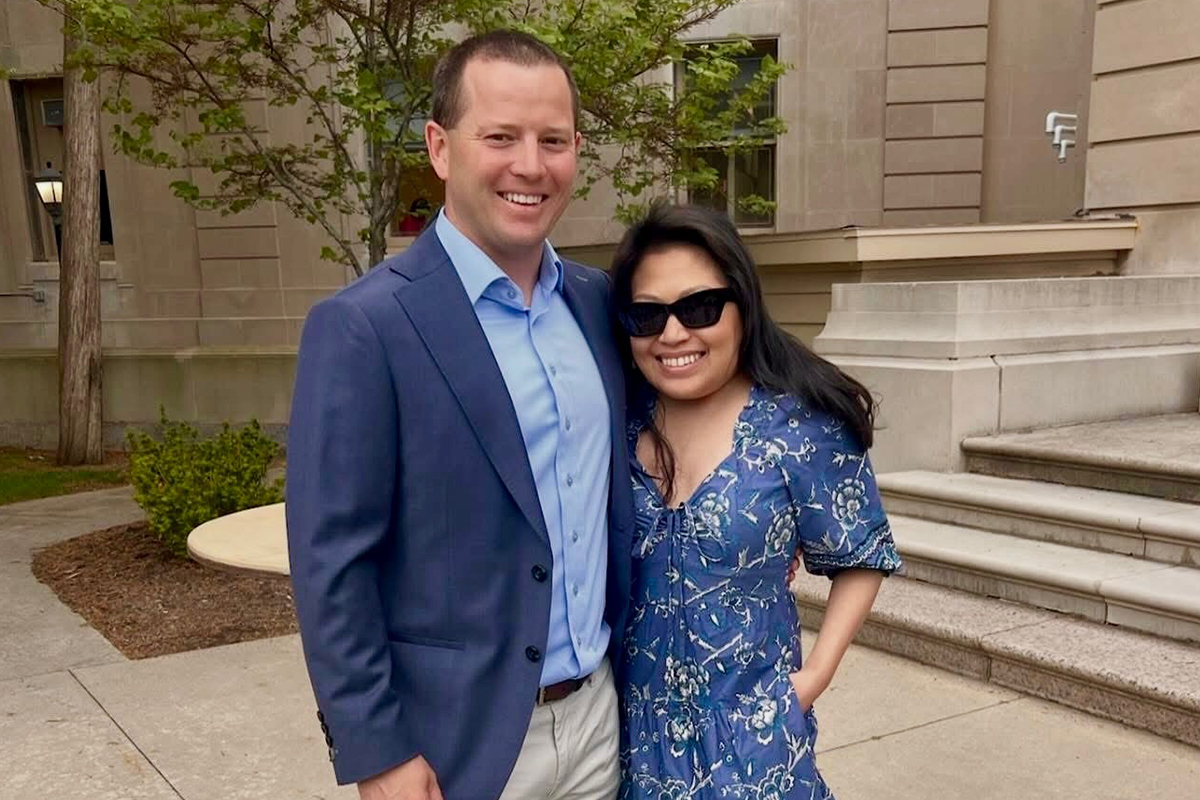
Christina first enrolled in a clinical trial for a different therapy, but when it didn’t work, Dr. Traina told her about Dato-DXd. She says she has not had any side effects from the treatment and that she has much more energy overall.
Dato-DXd can make a difference for many patients like Christina, Dr. Traina says. It was approved by the FDA a month after the clinical trial results were published.
“Having another targeted drug that is specifically approved for triple-negative disease is a major advance for patients whose only option until recently has been chemotherapy,” she says. “The speed with which this drug was developed underscores how quickly we are now able to move promising treatments from research studies into everyday patient care.”
Key Takeaways
- The FDA approved datopotamab deruxtecan (Dato-DXd) in May for metastatic triple-negative breast cancer, a disease that has historically had very few effective treatment options.
- In clinical trials, Dato-DXd outperformed standard chemotherapy by shrinking tumors in twice as many patients, controlling cancer for nearly twice as long, and extending overall survival by approximately six months.
- Dato-DXd is an antibody-drug conjugate, meaning it works like a “smart bomb” by targeting cancer cells directly and delivering chemotherapy precisely to them, resulting in manageable side effects and a better quality of life for patients.
- Patients like Christina, a 33-year-old with metastatic TNBC, have already experienced meaningful improvements in pain, mobility, and daily functioning after starting treatment with Dato-DXd.
Disclosures and funding
Dr. Traina’s disclosures are available on her webpage.
The Tropion-Breast02 trial was funded by AstraZeneca and Daiichi Sankyo.