When the immune system is weakened by cancer treatment — especially by a stem cell or bone marrow transplant (BMT) for blood cancer — common viruses like herpes simplex virus (HSV) can become a serious problem.
For someone who is immunocompromised, an HSV infection can mean dealing with large, painful sores that resist the usual therapies and ultimately lead to more critical medical conditions.
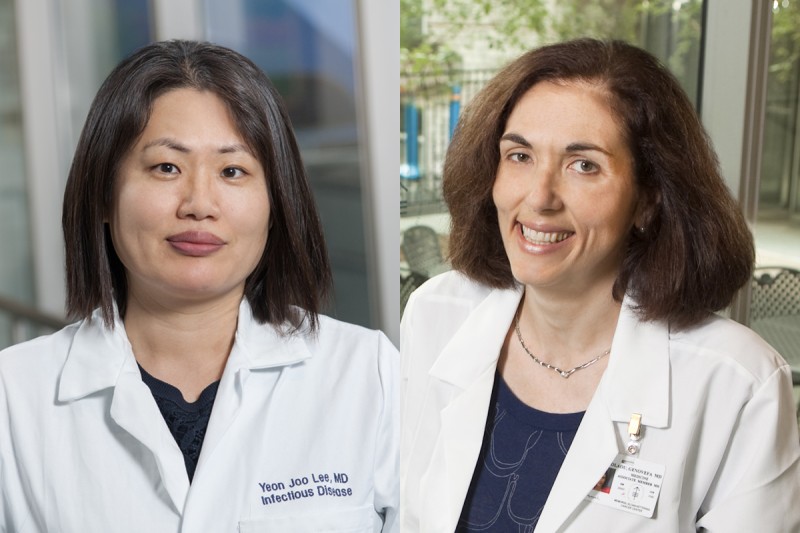
But now there is a new treatment for HSV infection: pritelivir (Hovilpri®), which was approved by the U.S. Food and Drug Administration (FDA) on October 9, 2026, for immunocompromised patients who don’t respond to other drugs for HSV. The study that resulted in the drug’s approval was co-led by Genovefa Papanicolaou, MD, Clinical Director for Infectious Diseases at Memorial Sloan Kettering Cancer Center (MSK), and MSK infectious diseases specialist Yeon Joo “June” Lee, MD, MPH, among others.
“For patients who are recovering from a BMT and develop a stubborn HSV infection, this drug can make a major difference,” Dr. Papanicolaou says. “Not only is it very effective for many people, but it can be taken at home as a pill rather than requiring a daily IV infusion in the clinic. That makes it a much easier treatment for patients who are already very sick and coping with a lot of medical appointments.”
Hovilpri was approved for treating both HSV-1 (which mainly causes sores on the mouth) and HSV-2 (which mainly causes sores on the genitals).
What were the phase 3 pritelivir trial results?
Earlier this year, Dr. Papanicolaou presented results from the phase 3 study (PRIOH-1) at the Tandem Meeting — the largest annual gathering of experts who specialize in BMTs and cellular therapies.
For patients who were immunocompromised because of a BMT or another health condition, the trial found:
- For 63% of patients who got pritelivir, sores were completely healed after 28 days, compared with 34% of patients who received older drugs.
- After 42 days, 82% of those who got pritelivir were completely healed, compared with 42% of those who got other medications.
- Only 2% of patients who got pritelivir had to stop taking the drug due to side effects, compared with 20% of those who received one of the standard treatments.
- The most common side effects were headache, diarrhea, nausea, decreased appetite, vomiting, and dizziness. (A complete list of side effects is available here.)
MSK expertise in treating cancer patients with infectious diseases
Because cancer treatments often weaken the immune system, patients can be vulnerable to a variety of infections:
- Viral — including respiratory infections, herpes, and hepatitis.
- Bacterial — including pneumonia, sepsis, and urinary tract infections.
- Fungal — including thrush, pneumonia, and invasive mold infections.
“For many patients, our ability to address these complications determines whether they will be able to continue with their cancer treatments,” Dr. Lee says. “The expertise of MSK’s Infectious Diseases and Allergy Service is vital for keeping patients safe and ensuring that their therapy is uninterrupted and on track.”
Funding and disclosures
This trial was funded by AiCuris (Wuppertial, Germany).
Dr. Papanicolaou’s disclosures are available on her webpage. Dr. Lee’s disclosures are available on her webpage.
Key Takeaways
- The FDA recently approved pritelivir as a new treatment option for immunocompromised patients with herpes simplex virus (HSV) infections that don’t respond to existing drugs.
- In a phase 3 trial, pritelivir nearly doubled complete healing rates compared with older drugs, with 82% of patients fully healed after 42 days, compared with 42% on standard treatments.
- Unlike standard treatments that may require daily IV infusions, pritelivir can be taken as a pill at home.
- Managing infections like HSV is critical for immunocompromised cancer patients, because untreated or resistant infections can disrupt lifesaving cancer treatments and lead to more serious medical complications.