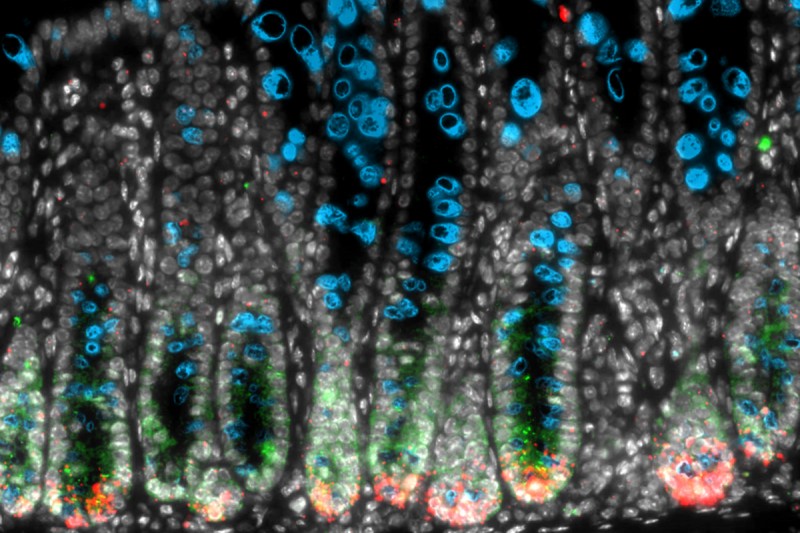
Digestion is hard on the cells that line the human gut, and they are constantly being shed and replaced. This renewal is driven by a population of tireless stem cells. These stem cells can both replace the various types of intestinal cells that have been lost as well as renew themselves.
In fact, these stem cell populations are so critical that the body has a built-in mechanism to replenish them when too many are lost, whether to inflammation, infection, or another cause. The mechanism allows cells that have already specialized and locked in specific identities — such intestinal epithelial cells — to give up those identities and revert back to being a stem cell.
Colorectal cancer cells, however, can hijack this same biological program to support their spread to new organs through a process called metastasis.
Now, a research team from Memorial Sloan Kettering Cancer Center (MSK) has identified a single protein — called ZFP36L2, or ZFP for short — that serves as a “molecular switch” that directly links the gut’s damage-sensing system to the ability of cells to shift identities to repair an injury.
The findings shed new light on colorectal cancer’s ability to spread and evolve to resist treatment. And this same family of proteins appears to play a similar role in other types of cancer as well.
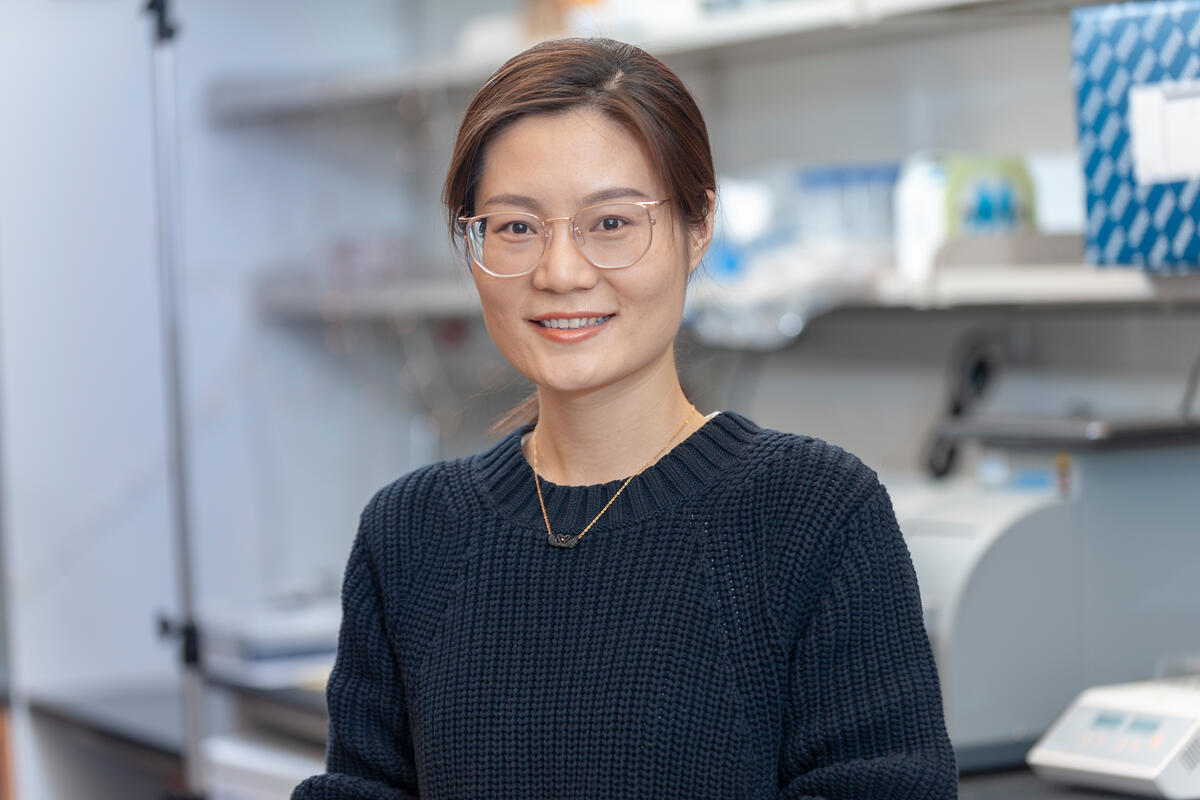
“This is really a critical process that works the same way across many different tissues — allowing cells to detect damage and turn on stem cell renewal programs,” says physician-scientist Karuna Ganesh, MD, PhD, the senior author of the study, which was published August 5 in Nature.
This new understanding of ZFP’s central role in this process could lead to new treatments, adds study lead author Quingwen “Karen” Jiang, PhD, a postdoctoral researcher in the Ganesh Lab at MSK’s Sloan Kettering Institute.
“Our findings suggest that if ZFP can be disrupted in metastatic cancer cells, it could compromise their ability to start new tumors in other parts of the body,” Dr. Jiang says.
How healthy cells know when to change
Under normal conditions, intestinal stem cells produce a steady stream of specialized daughter cells — the various cell types that line the gut wall, absorb nutrients, and perform other functions. As these cells mature, ZFP36L2 activity gradually decreases, acting as a molecular dimmer switch that helps lock cells into their mature identities.
When injury strikes and too many stem cells are lost, a remarkable backup program kicks in. Mature, specialized cells receive an emergency signal to rewind into a stem cell state so they can make new cells. But the transition isn’t immediate. The cells must first pass through a temporary stressed state — essentially a state that indicates that damage has occurred and repair is needed. Only after that emergency signal is resolved and shut down can the cells complete their journey back to a stem cell state and begin rebuilding.
How ZFP helps cells replenish
ZFP’s job is to turn that alarm off. It grabs onto messenger RNAs that carry the alarm signal and moves them into areas of the cell where they can be broken down. This clears the way for cells to complete their transition back into stem cells.
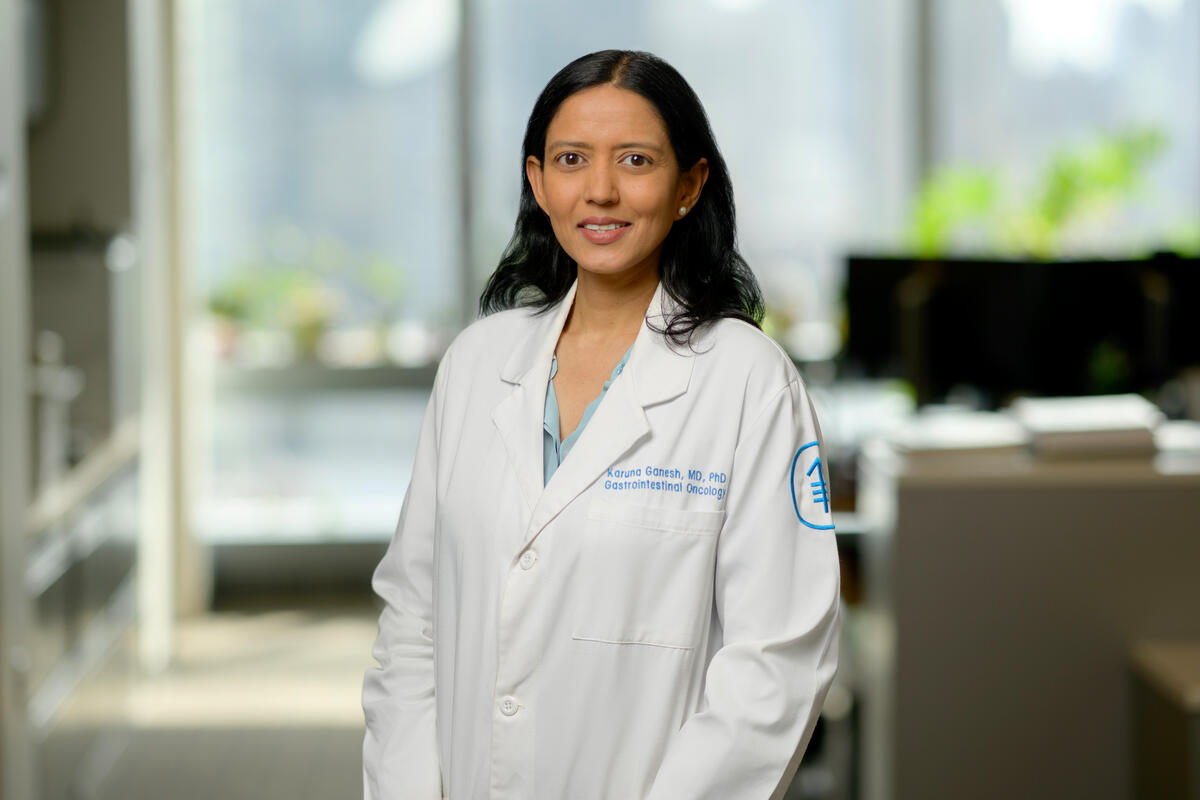
“When a cell is stressed, there’s no way it can reinvent itself or go back to its normal state,” Dr. Ganesh explains. “ZFP’s function is to ensure balance in the system — it’s important for the alarm to be sounded, but if it goes on too long, the system will be overwhelmed. And if you can’t turn it off, you can’t make the cells that are needed to repair and sustain the tissue.”
The team was able to demonstrate this directly in the lab. Mice engineered to lack ZFP36L2 struggled to recover after induced gut injury — without the ability to turn off the stress response, their cells simply could not complete the journey back to a stem cell state.
How cancer exploits injury-repair programs
Colorectal cancer cells exploit this same wound-healing machinery to spread. When tumor cells break away from a primary tumor and travel through the bloodstream to seed new tumors, they enter a stressed, injury-like state — much like a gut cell after damage. To successfully establish a new tumor in the liver or lungs, they need to do exactly what the gut does during repair: turn off this stress response state and rewind back into a stem cell–like state so that they can start making a bunch of new cancer cells.
ZFP36L2, the researchers found, is just as essential for this process in cancer as it is in normal tissue repair.
To test this, the team used organoids derived from patient colorectal cancer liver metastases — miniature tumors grown in the laboratory that retain key characteristics of metastatic cells. They depleted ZFP in the organoids and tracked the cancer’s ability to spread when placed into mice.
Tumors lacking ZFP largely failed to seed metastases in distant organs, even when the primary tumors were the same size or larger than in control mice, they observed.
“Cancer cells have to rewind back into a stem cell state in order to spread,” Dr. Jiang says. “When ZFP is missing, that process breaks down — and the cancer cells simply can’t establish a foothold in a new organ.”
Why ZFP is a double-edged sword
While getting rid of ZFP36L2 disrupts metastasis, when it’s lost in a primary tumor, it can help the cancer resist treatment.
When the researchers depleted ZFP in primary tumor models, the tumors grew more slowly, suggesting that cancer cells depend on ZFP to maintain their stem cell identity, just as healthy gut cells do.
But in roughly 5% to 10% of colorectal cancer patients, ZFP is mutated or deleted entirely. And rather than simply stalling, these tumors tend to make more aggressive adaptations.
Tumor cells grow more slowly but shift into more aggressive types
Cancer cells that can’t rewind into a normal stem cell state don’t just get stuck — they tend to shift into abnormal identities that are not usually seen in the intestine at all. They take on the characteristics of neuroendocrine cells or skin (squamous) cells, both of which are associated with treatment resistance and worse outcomes for patients.
“The cancer cells can’t enter the stem cell state to make new colon cancer cells,” Dr. Ganesh explains. “So they get stuck in this stress-response state — which pushes the cancer cells to rapidly adapt. Under this pressure, cells that can switch identities and survive get selected for, making these cancers much harder to treat.”
The researchers confirmed this in patient tumor samples: Tumors carrying ZFP mutations effectively switched off their normal stem cell identity and switched on these abnormal neuroendocrine and squamous characteristics.
What this means for new treatments
Understanding ZFP36L2’s central role in this stress-sensing machinery opens up several potential avenues for new treatments — though the researchers are quick to note that the work of translating these findings into therapies is just beginning.
Using ZFP to make tumors self-destruct
The most direct opportunity involves turning cancer’s dependence on ZFP against it. Because tumors rely on ZFP to manage the stress of spreading, rapidly disrupting ZFP could overwhelm cancer cells before they have a chance to adapt.
“Tumors are using the stress response to survive,” Dr. Ganesh explains. “If you very quickly disrupt ZFP — instead of allowing the tumor to slowly adapt over time — the cancer cell loses its ability to manage that stress. It basically self-destructs.”
It’s a direction the team is now actively pursuing.
Identifying high-risk patients
The findings may also point toward new ways of identifying which patients’ tumors are at highest risk of developing treatment resistance. Because ZFP mutations are already detectable through standard tumor sequencing, patients whose cancers carry these mutations could potentially be flagged earlier for closer monitoring — given the link to harder-to-treat neuroendocrine- and squamous-like cancers.
Meanwhile, the findings may also have implications beyond the gut, the researchers note. ZFP belongs to a broader family of proteins that appear to play similar roles in other cancers — related proteins are mutated in roughly 10% of all solid tumors.
“For a long time, we studied the ways in which cells were changing identities — but this is the first time we’ve been able to explain the mechanism behind how it happens,” Dr. Ganesh says. “And once you understand the mechanism, you finally have something concrete to aim at.”
Additional authors, funding, and disclosures
Additional authors on the paper include Manisha S. Raghavan, Aileen M. Rodriguez, Morgan Lallo, Cyrus L. Tam, Saskia Hartner, Britney Forsyth, Ahmed Mahmoud, Fabian Zincke, Huiyong Zhao, Andrew Moorman, Sasha Balkaran, Kathleen Luckett, Jura Pintar, Yevgeniy Romin, Eric Chan, Anthony Santella, Bernadette Mödl, Farheen Shah, Ilyes Baali, Michael G. Kharas, Elisa de Stanchina, Nil Urganci, Jinru Shia, Dana Pe’er, Francisco Sanchez-Vega, Richard Koche, Quaid Morris, and Joseph M. Chan.
This work was supported by grants from the National Institutes of Health (R37CA266185, K08CA230213, K08CA259161, U54CA27449, U2CCA233284, F30CA288018, R01DK101989, R01CA193842, R01HL135564, R01CA274249, R01CA186702, R01CA283578, R01CA225231, P30CA008748); the National Institute of General Medical Sciences (T32GM152349); a Medical Scientist Training Program grant to the Tri-Institutional MD-PhD Program; the National Science Foundation Graduate Research Fellowship Program; the Howard Hughes Medical Institute; a Burroughs Wellcome Career Award for Medical Scientists; a Damon Runyon Clinical Investigator Award; an American Association for Cancer Research NextGen Grant for Transformative Cancer Research; a Stand Up To Cancer Convergence 3.1416 Grant; a Pershing Square Sohn Prize for Cancer Research; the Starr Cancer Consortium; the Anna Fuller Foundation; a Josie Robertson Foundation Investigator Award; the Alan and Sandra Gerry Metastasis and Tumor Ecosystems Center at MSK; a Shulamit Katzman Endowed Postdoctoral Fellowship; a Geoffrey Beene Graduate Fellowship; a Bruce Charles Forbes Predoctoral Fellowship; MSK’s Maximizing Excellence in Research Innovation and Technology (MERIT) initiative; the Center for Experimental Immuno-Oncology Scholars Program; and a Leukemia and Lymphoma Society Scholar and Basic Science Discovery Grant.
Dr. Ganesh is an inventor on U.S. Patent 11,464,874, and U.S. Provisional Patent Applications 63/478,809, 63/478,829 and 63/748,114, submitted by MSK. Dr. Pe’er is on the scientific advisory board of Insitro. Dr. Shia is a consultant for Paige AI. Dr. Kharas is a member of the scientific advisory board of 858 Therapeutics and receives research support from AstraZeneca and Transition Bio.
Read the study: “ZFP36L2 orchestrates stress-adaptive plasticity in regeneration and cancer,” Nature. DOI: 10.1038/s41586-026-10890-0