Proteins are how cells get work done. They carry out nearly every important cellular task, from ferrying messages to controlling which genes are turned on or off. And in order for proteins to perform their various roles, the strings of amino acids that make them up need to be folded into the correct shape.
For the most part, the specific sequence of these amino acids determines what a protein’s shape will be, that is, how it will fold.
But now scientists at Memorial Sloan Kettering Cancer Center (MSK) have made a fundamental discovery that challenges this principle for thousands of critical regulatory proteins — proteins that orchestrate which genes are active and which are silent, ultimately controlling a cell’s behavior.
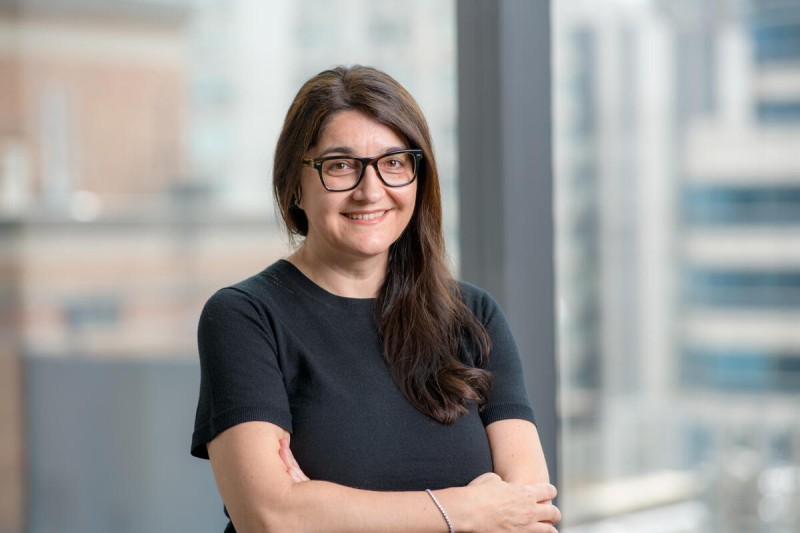
The lab of molecular and cell biologist Christine Mayr, MD, PhD, studies messenger RNAs (mRNAs) — these molecules carry the protein-building instructions encoded in our DNA, to ribosomes, which use the instructions to build a protein. The lab’s latest study, published June 8 in Cell, shows that the largely overlooked “tail” region of mRNAs helps ensure these key regulatory proteins get folded correctly — a fundamentally new understanding of their role.
“The traditional view is that only specialized proteins act as ’chaperones’ to help other proteins fold correctly,” says Dr. Mayr, a member of the Sloan Kettering Institute, a hub for discovery science within MSK. “Our research shows that RNA can do this, too — and that mRNAs act as their own chaperones for a group of important, hard-to-fold proteins.”
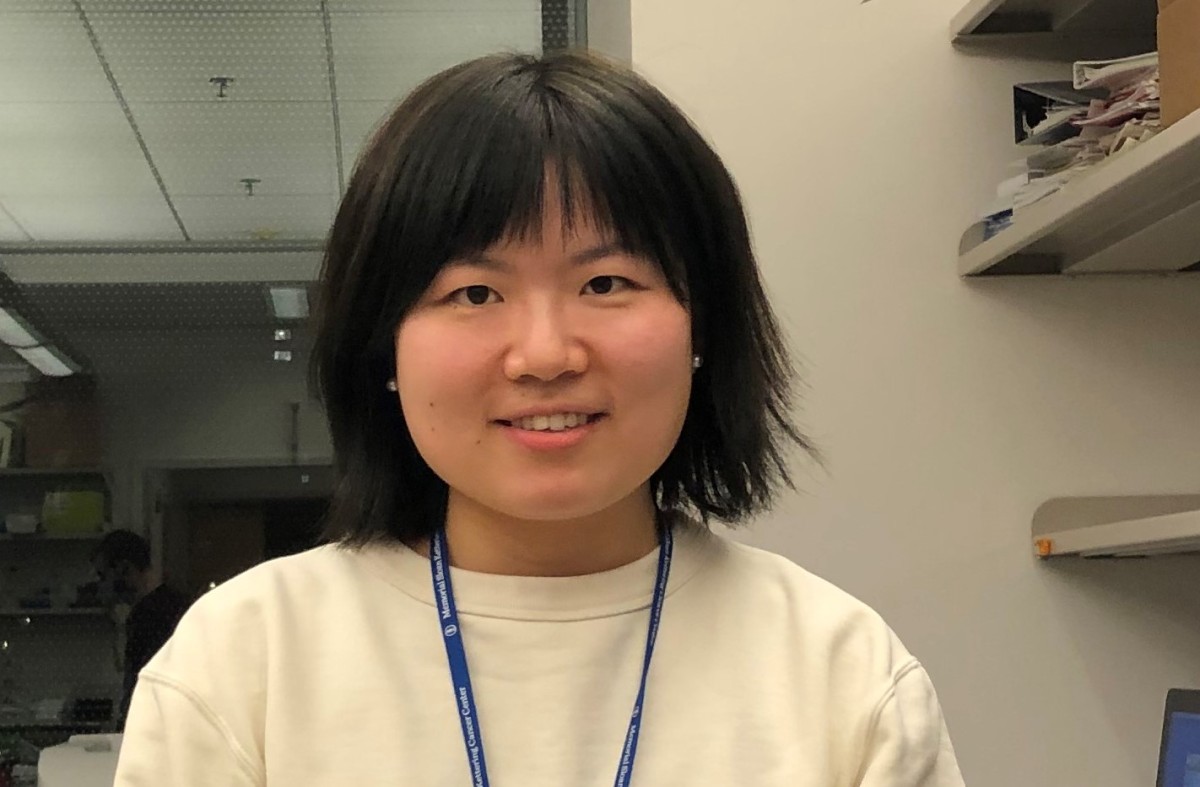
The study was led by first author Yang “Vicky” Luo, PhD, a postdoctoral researcher in the Mayr Lab.
Uncovering hidden functions of RNA
This isn’t the first time Dr. Mayr and her team have uncovered important new cellular biology hiding in plain sight. In 2018, they discovered a new organelle. And more recently they found that the watery part of a cell, the cytoplasm, is divided into distinct regions, each responsible for translating different types of mRNA.
To understand their latest discovery, it’s important to know that mRNAs have three main components: a “coding sequence,” where the information about the protein sequence lives, and head and tail regions, which serve other functions.
“The head region is usually very small, so the coding sequence and the tail make up most of the RNA’s total length,” Dr. Luo says.
The tail is officially called a 3’UTR — “three prime” denotes its location at the end of an RNA molecule, and UTR stands for “untranslated region,” meaning it doesn’t encode information for making the protein sequence.
“For many years, scientists mostly ignored the 3’UTR as unimportant,” Dr. Mayr says. “But we saw that thousands of human 3’UTRs had highly conserved sequences. And these patterns are the same across vertebrates, from fish to birds to mammals. For us, this was a clue that they might actually be doing something important. Biology doesn’t usually preserve things that aren’t needed.”
Not all proteins fold easily
The new research revealed that the mRNA’s tail — the 3′UTR — is important for helping to fold some types of proteins correctly.
Small, compact proteins typically fold just fine on their own, Dr. Luo notes. But many larger, more complex regulatory proteins — like the transcription factors MYC, UTX, and JMJD3 — contain what scientists call “intrinsically disordered regions,” or IDRs. These are long, flexible stretches that don’t fold into stable structures on their own.
“Left to their own devices, there are clusters of sticky amino acids on these long, complex proteins that can grab onto other parts of the protein during assembly and keep it from folding correctly,” she says.
The team discovered that cells solve this folding problem by producing these more complicated proteins in specialized compartments called “meshlike condensates.” The compartments act like maternity wards for proteins that need extra help. There, as the protein gets built, the 3′UTR physically holds onto the sticky patches, preventing them from interfering with proper folding.
Thousands of proteins need extra help
The scale of this phenomenon is remarkable: The team identified more than 2,700 genes with highly conserved 3′UTRs — or about 1 in every 8 protein-coding genes in the human genome. The proteins these genes make contain intrinsically disordered regions with sticky patches, meaning they likely can’t fold correctly without help from RNA chaperones.
“What we show is that for thousands of regulatory proteins in human cells, the genetic code alone isn’t enough to make a functional protein — you need the RNA chaperone too,” Dr. Mayr says.
Along with shedding new light on fundamental biology, the findings also have practical implications for laboratory research: Scientists routinely conduct experiments using only a protein’s coding sequence, cutting off the 3′UTR to make experiments simpler.
“For thousands of regulatory proteins, removing the 3′UTR means you’re studying a misfolded, less active version of the protein,” Dr. Mayr says.
Ultimately, the work shows that RNA isn’t just a passive messenger carrying genetic instructions, Dr. Luo adds. “RNA is an active participant in building proteins — providing guidance to ensure they fold correctly and can do their jobs properly,” she says.
Additional authors, funding, and disclosures
Additional authors of the study include Yaofeng Zhong, Sudipto Basu, and Ming-Chung Wu, all of MSK.
This work was supported by grants from the Pershing Square Foundation, William Ackman, Neri Oxman, the Mathers Foundation, a National Institutes of Health Director’s Pioneer Award (DP1GM123454), the National Institute of General Medical Sciences (R35GM144046), and MSK’s Core Grant from the National Cancer Institute (P30CA008748).
Dr. Mayr is a member of the Cell advisory board.
Read the study: “mRNA 3′ UTRs chaperone intrinsically disordered regions to control protein activity,” Cell. DOI: 10.1016/j.cell.2026.05.017