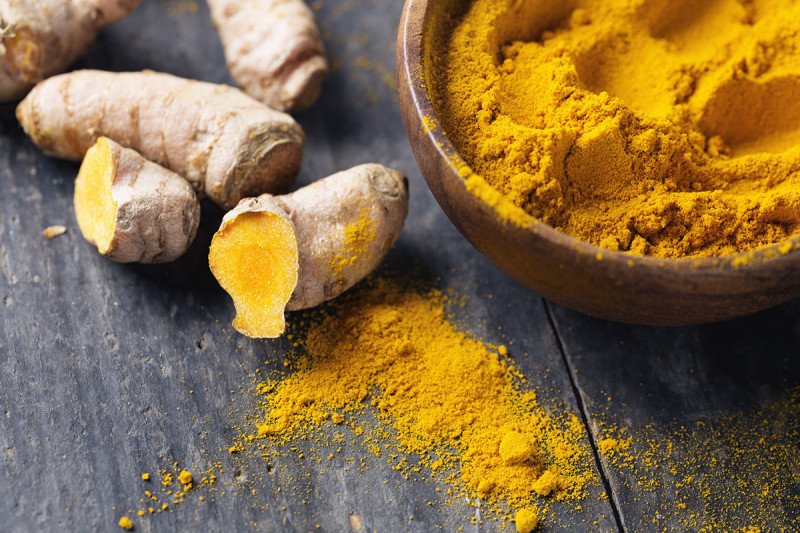
Turmeric, the brilliant yellow spice native to southeast Asia, has long been prized in India and elsewhere for its apparent healing powers. For more than 5,000 years, people have used it to treat a variety of ailments, including skin disorders and digestive issues. Contemporary studies have shown that turmeric is a powerful antioxidant that can help reduce inflammation, which is at the root of many diseases, including cancer.

You can go ahead and add turmeric to your favorite foods, says Memorial Sloan Kettering Cancer Center Integrative Medicine pharmacist Jason Hou. Dr. Hou manages MSK’s About Herbs database, a hub of information on herbs and supplements as they relate to cancer care.
He emphasizes that while turmeric is generally considered safe at culinary doses, you should talk to your MSK healthcare provider, especially if you’re in active treatment, before taking turmeric capsules or supplements. The active ingredient in turmeric — curcumin — may interfere with certain chemotherapies. In large amounts, it can also be toxic and do damage to the liver.
“Just because a product is labeled as ‘natural’ does not always mean it’s safe — especially for people with cancer,” Dr. Hou says.
Here’s what else Dr. Hou wants you to know about turmeric.
Turmeric has the potential to prevent and treat cancer.
Animal and lab studies show that turmeric can help prevent cancer growth and kill certain cancer cells, but we don’t know if it has the same effect in humans. We need large clinical trials to figure that out, says Dr. Hou. The research community is on it. Dr. Hou cites a phase 2 study that combined turmeric’s active ingredient, curcumin, and conventional chemotherapy to treat people with advanced colorectal cancer. The researchers found that curcumin is safe and tolerable in these patients, and when combined with conventional chemotherapy, has the potential to improve overall survival (how long someone lives after starting treatment) and progression-free survival — how long someone is on treatment before cancer progresses. Other studies are ongoing.
Turmeric can help with side effects from cancer treatment.
Small studies among people with cancer show that turmeric can help improve quality of life. In one study, people who used a turmeric-based topical cream had reduced skin irritation caused by chemotherapy. In another, a mouthwash containing curcumin reduced mouth swelling. Turmeric has also been shown to help lower pain in some breast cancer patients with joint problems. “This is encouraging,” Dr. Hou says, adding that similar trials are underway in people with prostate, colorectal, and pancreatic cancer.
More turmeric isn’t always better. Turmeric has side effects that you should know about.
“There’s no evidence turmeric as a spice is harmful,” Dr. Hou says. “But for anything more than that, you should consult your healthcare provider or an Integrative Medicine specialist at MSK.” That’s because consuming higher amounts of curcumin — found in turmeric capsules, for example — may interfere with certain chemotherapies, making them less effective. Turmeric can also increase the risks of bleeding and kidney stones, and too much can cause nausea.
If you’d like to learn more about how turmeric may fit into your cancer care plan, you can book a consultation with a member of MSK’s Integrative Medicine Service. Call 646-608-8550 for more information.

- Turmeric is a spice that may have cancer-fighting properties.
- Turmeric has been shown to help with side effects of cancer treatment.
- Because turmeric can interfere with some kinds of chemotherapy, you should check with your doctor before consuming.


