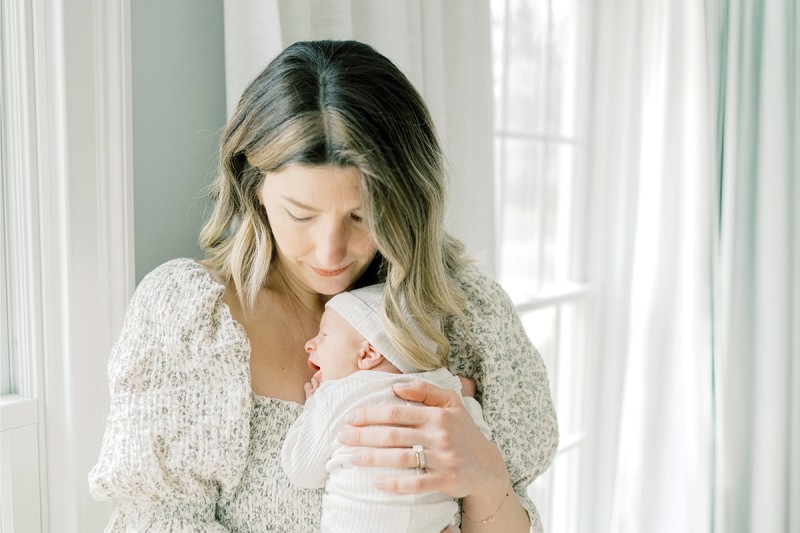
It’s the cruelest irony, nurturing a new life only to learn your own is at risk. When expectant mothers are diagnosed with cancer during their pregnancy, they face a harrowing question: How do I save my baby and myself?
That’s the dilemma Kassandra DeMaio confronted when she was pregnant with her second child. In August 2024, an ambiguous result from a prenatal blood screening test led to a full-body MRI, which turned up suspicious lymph nodes and bone lesions in her spine, ribs, and pelvis. This was a red flag for cancer.
Doctors at her local Connecticut hospital said the only way to confirm the diagnosis was a highly invasive, painful bone biopsy under general anesthesia guided by fluoroscopy — an imaging technique that could expose the fetus to radiation.
“I was so worried about the baby’s safety and was terrified of general anesthesia, especially while pregnant,” Kassandra says. “At the time, you feel like everything is out of your control. It’s incredibly scary to have cancer, and that fear is heightened even further when you’re pregnant.”
She made the pivotal decision to get a second opinion at Memorial Sloan Kettering Cancer Center (MSK). Specialists at MSK know how to modify tests and treatment protocols to navigate the special needs of people who have cancer during pregnancy. Beyond the medical expertise, MSK offers emotional support for expectant mothers facing a heartbreaking circumstance. “We are seeing this situation more often because of the rise in certain cancers among younger people,” says MSK psychologist Amanda Balakirsky, PsyD, who counseled Kassandra during her treatment. “Being pregnant with cancer can cause a lot of grief and feelings of isolation. We try to normalize the experience as best we can, to help them adjust from what they were expecting in their pregnancy and feeling different from their peers.”
Reassurance from the start
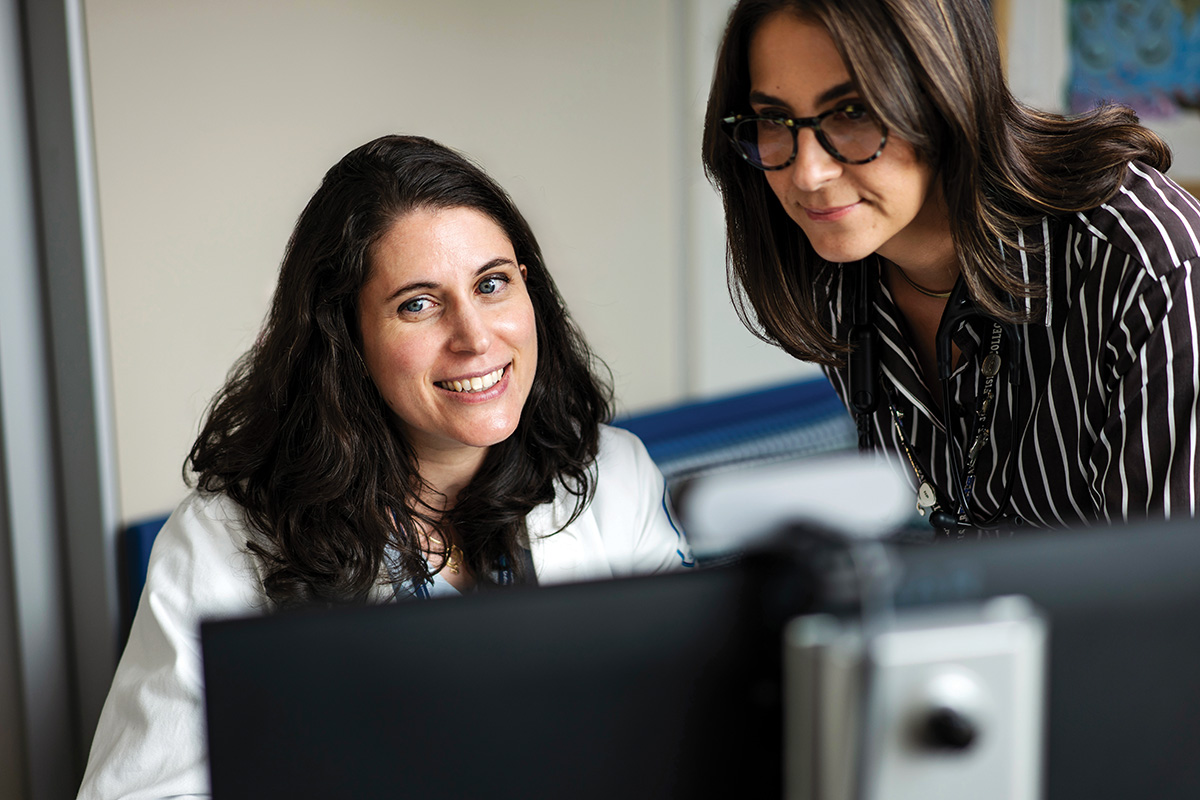
When Kassandra met with lymphoma oncologist Paola Ghione, MD, she was relieved to learn that MSK could make a diagnosis with a much less invasive procedure — taking a biopsy from a lymph node under local anesthesia. It would not put her child at risk.
When the results came, the diagnosis was dire: stage 4 Hodgkin lymphoma. Kassandra, by then 17 weeks pregnant, suddenly faced treatment decisions that affected two lives.
But Kassandra believed she was in the right place. “Dr. Ghione was confident, well-informed, and very direct, which I appreciated,”
Kassandra says. “She also was a mom herself, so I felt I could trust her to understand how I was feeling.”
“I absolutely love taking care of pregnant patients,” Dr. Ghione says. “Although it’s such a difficult time for them, I feel close to what they are going through. I had my last baby a few years ago, and being a toddler’s mom helps me understand the challenges they face at the moment and in the future.”
Finding safe treatment options
Because the cancer was advanced, Kassandra had to start treatment right away. Dr. Ghione and other MSK specialists agreed on a chemotherapy regimen that had been proven safe for pregnant patients.
“Thanks to research published on lymphomas treated successfully during pregnancy, we knew some of the older chemotherapies could be given safely during the second and third trimesters,”
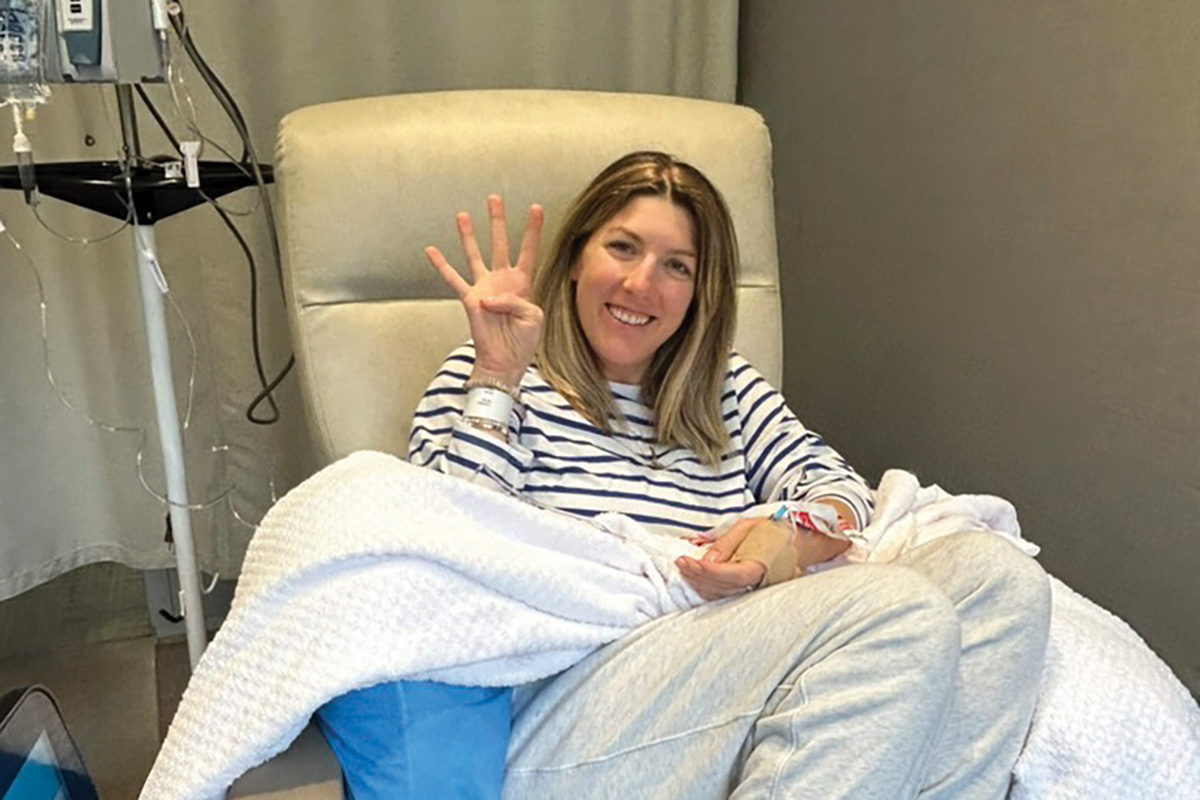
Dr. Ghione says. “In most cases they work well until we deliver the baby, and after birth we may choose to modify the treatment and add newer drugs.” Dr. Ghione and MSK medical staff — including nurses, office coordinators, and a pharmacy team — tailored the treatment and schedule to what was best for Kassandra. They worked with Kassandra’s personal obstetrics doctor to coordinate care.
Normally, people with her diagnosis receive six total cycles of chemotherapy (given in 12 infusions). Kassandra would instead receive eight infusions (four cycles) and then pause treatment. After a few weeks, when the chemotherapy was cleared from the body, Kassandra would be induced to have the baby slightly early at 37 weeks. She would resume the final four chemotherapy infusions (two cycles) soon after.
Worried about delivery
When Kassandra was nearing the day of delivery, doctors at her local hospital advised against giving her an epidural for pain because the needle might bump into one of her bone lesions and cause a possibly fatal spinal bleed. Kassandra was fearing a potentially long, painful induced labor.
“I called Dr. Ghione crying and panicking about this,” Kassandra says. “She reviewed my scans and sought the approval of MSK interventional radiologists. They agreed the bone lesions should not be an obstacle for an epidural. I was relieved to have Dr. Ghione’s guidance.” In February 2025, she gave birth to a healthy boy, Theo.
Resuming cancer treatment
A week and a half after giving birth, Kassandra returned to MSK for a PET scan. Because it involves using a small amount of radiation, Kassandra could not touch Theo for 24 hours after the scan. “It was very emotional for me, not being able to touch the baby and also being anxious waiting for the results,” she says.
Although the scan showed the cancer was already going into remission, Dr. Ghione recommended that she finish the chemotherapy to wipe it out completely. A few days later, Kassandra resumed the final two cycles of chemotherapy, which was especially grueling.
“The treatment after pregnancy was the hardest part, which surprised me a bit,” Kassandra says. “I was just depleted from everything and felt sick, all while trying to care for the baby and my other son, who was only 2 years old.
My husband, Nick, was truly my rock during this time — supporting me mentally, emotionally, and physically.”
She completed treatment in April 2025. A PET scan in May showed no evidence of disease. Kassandra was in full remission and has stayed that way for more than a year.
A growing trend
Experts predict that a cancer diagnosis during pregnancy is likely to become even more common. In addition to the increased cancer incidence in young people, more pregnant women — such as Kassandra — are receiving noninvasive prenatal tests (NIPTs) that screen for genetic abnormalities in the fetus. In some cases, NIPT results are normal for the baby but detect cancer in the mother.
MSK is leading the way to meet the needs of this growing patient population. In recent years, MSK has established the Lisa and Scott Stuart Center for Adolescent and Young Adult (AYA) Cancers, the Center for Young Onset Colorectal and Gastrointestinal Cancer, and the Young Women with Breast Cancer Program. All of these unite experts across many specialties to address the challenges of younger patients, including treatment during pregnancy.
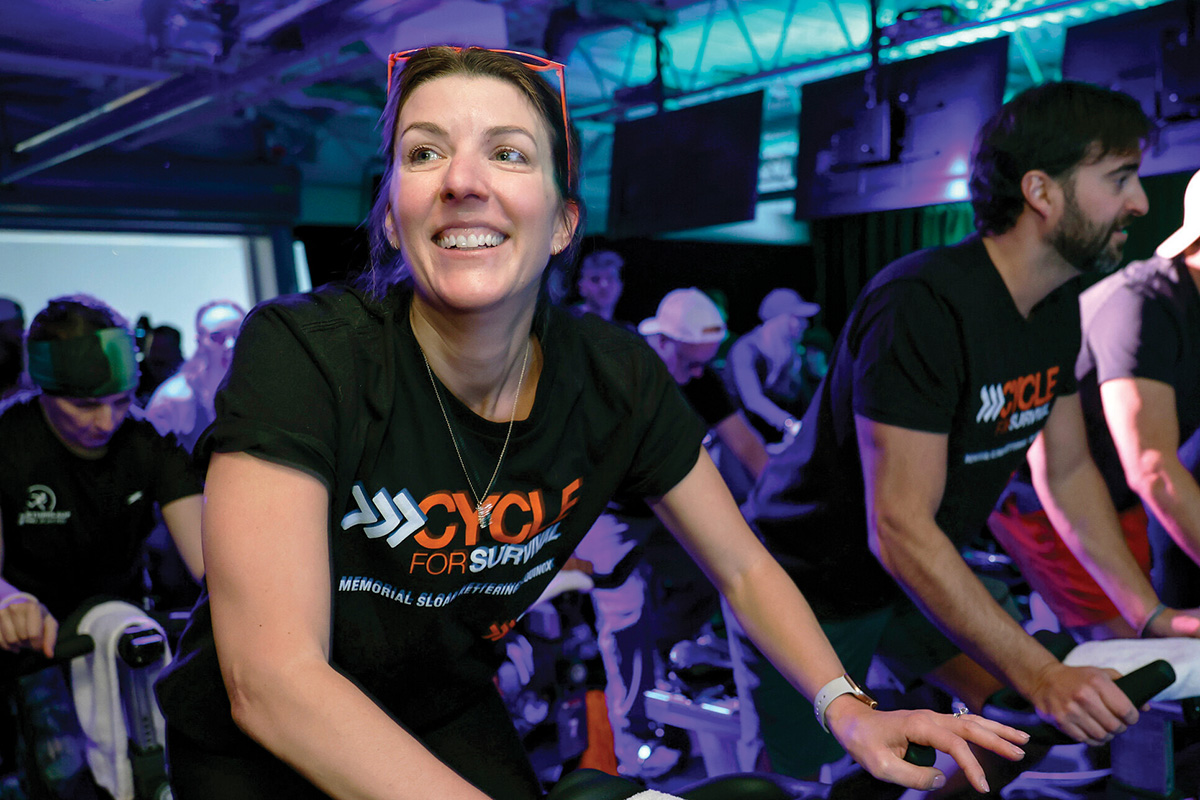
Grateful and giving back
Now 36, Kassandra enjoys going on family walks in her neighborhood and at a nature preserve, as well as visiting the beach nearby. She does interior design for Nick’s architecture firm and helps him run the business.
She is especially grateful to MSK not only for diagnosing and treating the cancer but also being a partner during her pregnancy.
“MSK was the only place that gave me a clear and confident path to a diagnosis, which was needed in order to begin treatment,” she says. “If you’re lucky enough to live in the vicinity of a place like MSK, the extra time it might take is well worth ensuring that you are getting the best care. I’m proud that I trusted my instincts to advocate for both my health and my baby’s safety.”
Dr. Ghione’s research is supported by the MSK donor community, including the Lymphoma Research Foundation.