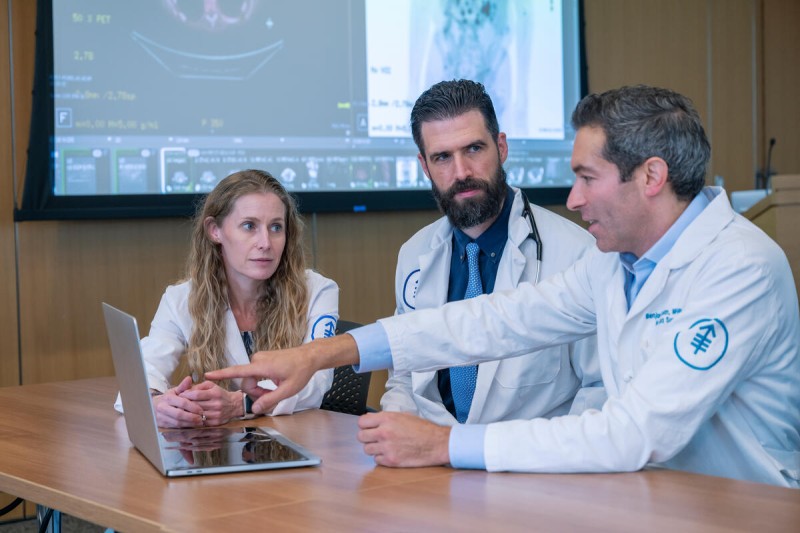
Many people who get a second opinion from highly specialized cancer experts may benefit from treatment that costs less, is less invasive, and improves quality of life and survival, according to new research conducted at Memorial Sloan Kettering Cancer Center (MSK).
The study, published in JCO Oncology Practice, is a comprehensive analysis of potential cost savings from getting second opinions for cancer that included four different types: lung, colorectal, head and neck cancers, and myeloma (a form of blood cancer).
Researchers found being diagnosed by cancer “subspecialists” like those at MSK makes a difference because these experts focus intensely on specific cancers rather than treating many different types of cancer.
“That specialization allows them to be up to date on the latest research and innovative treatments,” says head and neck surgeon Dr. Benjamin Roman, MD, MSHP, who led the study.
“These subspecialists can better personalize treatment for each patient by figuring out who has more aggressive disease and who has less aggressive disease,” Dr. Roman says, a capability known as “risk-stratification,” which the analysis found can save tens of thousands of dollars.
For many people in the study, the treatment plan recommended by MSK experts meant the patient could skip expensive surgery or opt for types of chemo or radiation therapy that cost less and had fewer side effects.
“Our research found that subspecialists like those at MSK can figure out who needs aggressive treatment, where we throw everything we’ve got at it,” Dr. Roman explains, “and who could achieve the same outcomes, including survival from cancer, with less invasive care.”
Less Invasive Treatment, Lower Costs
One of the main goals of the research was to see how second opinions from subspecialized cancer experts may affect the cost of treatment — a serious concern for many patients and their families, and for employers, insurers, and policymakers.
“We hypothesized that there would be a cost impact,” Dr. Roman recalls. “But I was surprised at how big the cost savings are because of the less aggressive treatment recommended by the MSK second opinion.”
Researchers reviewed the medical records of 120 patients who came to MSK for a second opinion. Of the 43 patients whose treatment plan changed between the first and second opinion, nearly 75% had a lower projected cost for their care:
- 31 patients had a LOWER cost from the MSK second opinion.
- 7 patients had a HIGHER cost from the MSK second opinion.
- 5 patients had the SAME cost.
Across all 120 patients — including both those who had changes in treatment and those who did not — the average cost savings after getting a second opinion was $15,000 per patient.
The specific savings varied by cancer type from about:
- $2,500 for colorectal and lung cancer
- $11,000 for head and neck cancer
- $43,000 for myeloma
The majority of colorectal, head and neck, lung, and myeloma cancer patients received recommendations to “de-escalate” treatment — including omitting unnecessary surgery or changing drug therapies to less expensive regimens.
“Our conclusion is that it’s possible the rate of savings from MSK de-escalations could be even larger,” says Dr. Roman, “because getting the diagnosis and treatment plan right the first time reduces costly problems further along in treatment. But this research didn’t consider those future cost savings — just the savings associated with the initial course of treatment.”
Second Opinions at MSK Often Differ From the Original Opinion
In the analysis of patients who came to MSK for a second opinion, 4 out of 5 were newly diagnosed with cancer. The remaining patients had abnormal results suggesting they may have cancer — such as nodules in their lung or thyroid. Others had conditions, such as MGUS and smoldering multiple myeloma, that can evolve into active multiple myeloma.
Dr. Roman and his team looked to see how often these 120 patients received a second opinion from MSK that would significantly change the proposed treatment of the patient’s cancer.
“We found that about 1 in 3 received a second opinion at MSK that meaningfully changed the way we thought the disease should be treated,” says Dr. Roman. “Sometimes, but not always, that change in treatment was caused by a change in diagnosis.”
The likelihood that the MSK second opinion differed from the first opinion varied depending on the type of cancer:
- The two more common cancer types — lung and colorectal — were changed by the MSK second opinion around 23% of the time.
- The less common cancers — head and neck and myeloma — were changed up to 57% of the time.
In most cases when the second opinion differed from the first, the MSK opinion “de-escalated” the proposed treatment, meaning that MSK subspecialists thought the patient’s cancer could be just as successfully managed using less intense interventions than originally proposed.
Cancer Second Opinions Can Improve Quality of Life and Survival
The research also found that second opinions by subspecialists were likely to mean better quality of life for everyone with a changed treatment plan (about 1 in 3 patients), because they called for less invasive treatment with fewer side effects. Some patients (about 1 in 10) also had improved survival.
“The changes in treatment and the de-escalations that we found, and the expected improvement in quality of life in so many second opinions at MSK, are incredibly meaningful to patients,” Dr. Roman says. “When treatment is done, they can return to what they enjoy with better functioning. They can work, eat, drink, swallow, use the bathroom normally, travel — it makes such a huge difference.”
The team’s research found that the impact of getting a second opinion on quality of life and survival also varied by the type of cancer.
“We found that generally, hospitals that do not have subspecialized cancer experts do quite a good job in diagnosing and creating treatment plans that help people survive common cancers,” Dr. Roman says. “They are most often doing the right thing.” However, rare cancers can present more challenges.
The takeaway for patients, Dr. Roman says, is that where they are treated first matters — a lot.
“Some people think of MSK as a place they’ll go only if they have a bad cancer. But our research found that people with lower-risk, earlier stage, or more common cancers should also consider MSK, because our ability to de-escalate treatment intensity can mean better quality of life, better survival, and lower costs.”
How the Research Was Done
The current study builds on data that Dr. Roman and his team have been analyzing since 2021. They gathered the records of people seeking second opinions at MSK starting in 2018 — the costs of treatment were updated to 2024 prices. And because many of the people who received second opinions at MSK ended up being treated elsewhere, the research team came up with an elegant solution to compare their costs and outcomes.
“Some people get a second opinion just for peace of mind and end up choosing a place that is closer to their home than MSK,” Dr. Roman says. “Or they choose to stay with their doctor because they have a good relationship, which makes sense.”
The team gave the records of each patient in the study to MSK experts in each cancer type. The doctors were asked to review the first and second opinions and determine whether the second opinion differed from the first in terms of expected quality of life and survival.
Similarly, the costs were assessed using the most common payment rates for surgery, chemotherapy, and radiation therapy.
Ultimately, Dr. Roman hopes the findings will help people who’ve just been diagnosed with cancer — or who’ve gotten an abnormal result that could be cancer — as they decide where to go for care.
“What we believe our research shows,” he says, “is there is immense value to having subspecialized expertise weigh in on medical decisions.”
Key Takeaways
- Research from Memorial Sloan Kettering Cancer Center (MSK) found that getting a second opinion from cancer subspecialists can lead to less invasive treatment, saving money and resulting in better quality of life, as well as improving survival.
- Researchers examined second opinions in lung, colorectal, head and neck cancers, and myeloma.
- About one-third of patients in the study had their treatment plan meaningfully changed after a second opinion at MSK — these changes were more common in rare cancers and usually involved recommending less aggressive care.
- Second opinions at MSK often reduced treatment costs by avoiding surgery or switching to less expensive therapies, while achieving the same survival and better quality of life.
- The average savings for all patients was about $15,000 each, with the biggest savings seen in myeloma and head and neck cancers.