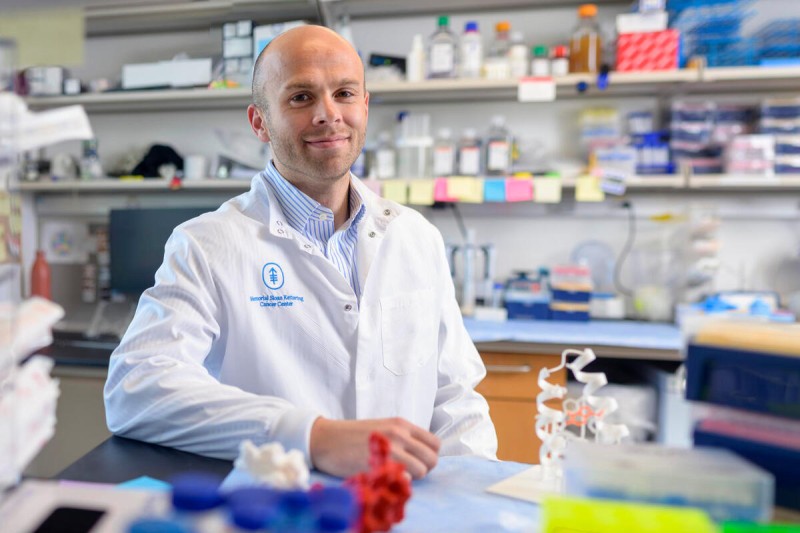
Memorial Sloan Kettering Cancer Center (MSK) computational biologist Caleb Lareau, PhD, has been awarded a 2026 Pershing Square Sohn Cancer Prize.
Dr. Lareau, whose lab at the Sloan Kettering Institute studies how cells in our bodies adapt, expand, and evolve during the course of our lives, was one of 13 winners of the prestigious award this year.
The prize, which is awarded by the Pershing Square Sohn Cancer Research Alliance, provides $750,000 to each recipient and is designed to empower early-career investigators to pursue bold, high-impact projects — bridging gaps where traditional funding is often lacking.
The award will aid Dr. Lareau in developing engineered protein “sponges” that may absorb and neutralize chemotherapy drugs outside of tumors to reduce harmful side effects. Using generative artificial intelligence (AI) to design these proteins, he and his team aim to enable higher and more effective dosing of chemotherapy while minimizing toxicity for patients.
Making Chemotherapy Less Toxic
While chemotherapies are very potent at killing cancer, they don’t target only cancer cells and can kill healthy cells in the body, resulting in a variety of side effects. This inherent toxicity means that chemotherapies may not be given at high enough doses, which allows tumor to resist treatment.
“Specifically, the goal of this project is to develop a sort of sponge that will absorb and neutralize chemotherapies, but only when the drug is far from the tumor,” Dr. Lareau says. “We will use generative artificial intelligence to create these neutralizing agents. Much like ChatGPT generates text or DALL-E generates images, we will use advanced diffusion models to design new proteins that bind to chemotherapy and focus the drugs to kill cells in tumors. If successful, this project will yield new combinations of treatments that would increase cancer killing while minimizing the side effects for patients. We will integrate advanced protein design with high-throughput screening and animal work with the eventual goal of making chemotherapies safer and more effective for patients.”
This year, the Pershing Square Sohn Cancer Research Alliance doubled the number of recipients and broadened eligibility beyond the New York metropolitan area to institutions across the United States. In addition to financial support, winners also have the opportunity to present their work to scientific and business audiences, encouraging collaboration and helping to bridge the gap between academia and industry.
Dr. Lareau’s Research Program
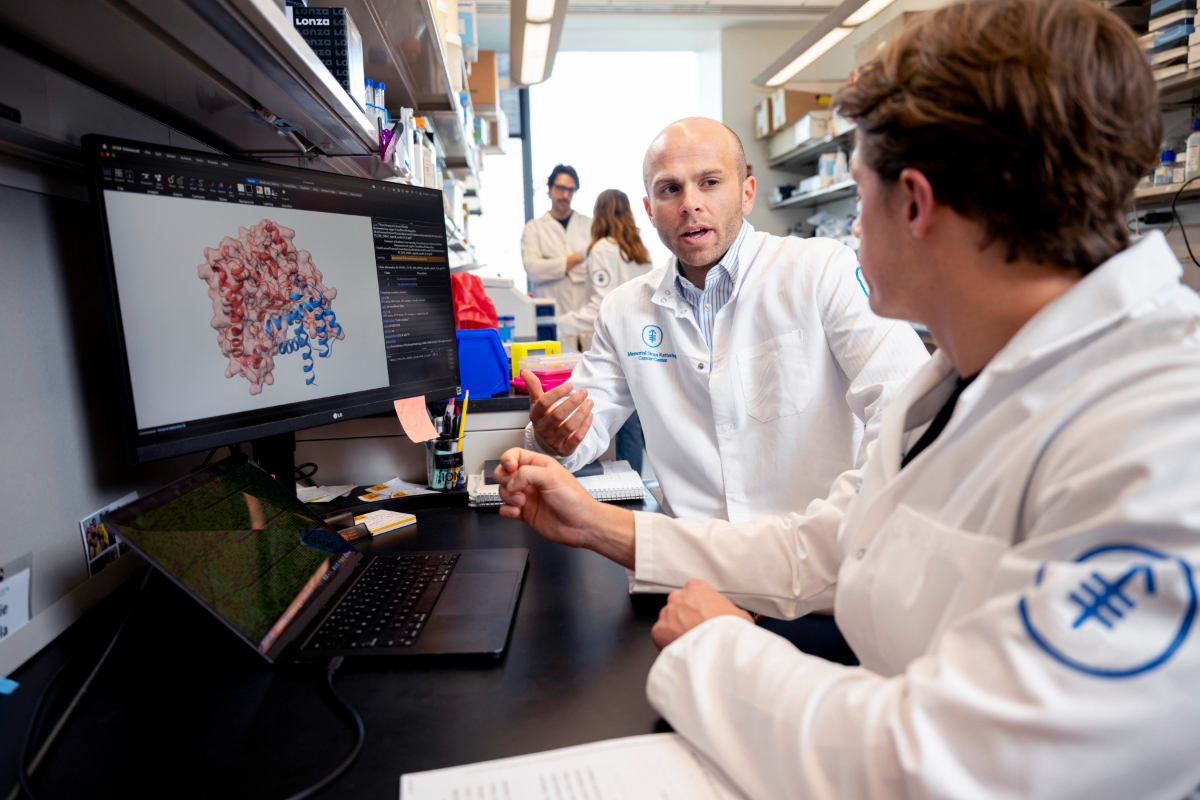
Dr. Lareau, an assistant member in the Computational and Systems Biology Program at MSK, earned his PhD from Harvard Medical School and then completed his postdoctoral studies at Stanford University School of Medicine, where he focused on the application of genomics technologies to improve the safety and efficacy of emerging immunotherapies. Now at MSK, his group focuses on technology development, particularly emerging AI tools, to study cancer and chronic infections.
Recently, Dr. Lareau and a multi-institution team made national and international news for a Nature study that identified genetic variants that are linked to both higher active levels of Epstein-Barr virus (EBV) and chronic disease risk. The team discovered that the genetic differences — many in immune-system genes — could make it harder for the body to keep EBV under control. People with these genetic variants might be more likely to develop chronic EBV-related ailments.
The Lareau Lab is also part of the National Institutes of Health’s Human Virome Program, which aims to map the multitude of viruses that reside in the human body — and their role in shaping human health.