This article was first published on August 6, 2024. It was updated on June 29, 2026.
The U.S. Food and Drug Administration (FDA) has granted full approval for the immunotherapy afamitresgene autoleucel (Tecelra®, also known as afami-cel) for the treatment of patients with a rare soft tissue cancer called synovial sarcoma. It also expanded approval to include patients as young as 12 years old.
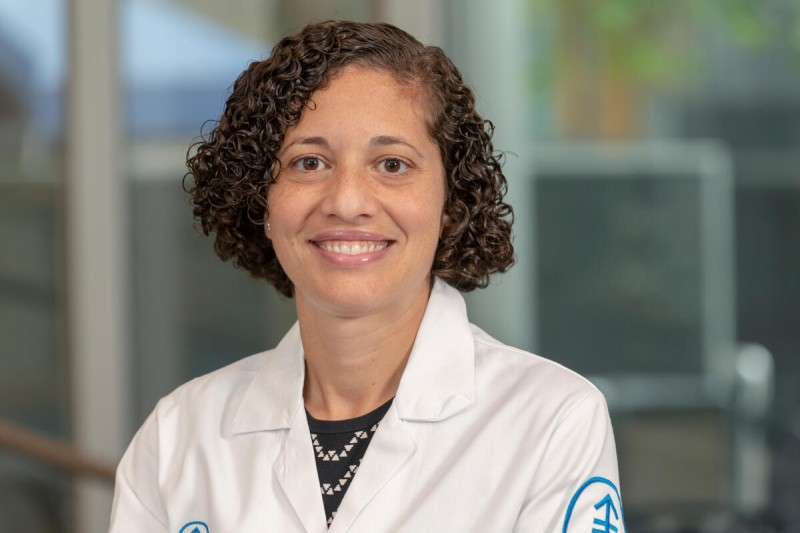
Afami-cel dramatically shrank sarcoma tumors in almost half of patients participating in a clinical trial, led by Memorial Sloan Kettering Cancer Center (MSK) sarcoma specialist and immunotherapy expert Sandra D’Angelo, MD.
“This treatment offers a meaningful new option for people with this rare cancer,” Dr. D’Angelo says. “It is also an important step forward in the development of T cell therapies for solid tumors, which has been a major challenge.”
Afami-cel was the first engineered T cell therapy to receive FDA approval for a solid tumor cancer when it received accelerated approval in August 2024. At that time, it was approved only for adults.
What is synovial sarcoma?
Synovial sarcoma is diagnosed in fewer than 1,000 people in the United States every year. A cancer that can develop in the extremities or in the soft tissue in the abdomen or lung, it most often occurs in young adults. It is slightly more common in men than in women.
“Sarcoma in general, and synovial sarcoma in particular, is a type of cancer where more treatments are desperately needed,” Dr. D’Angelo explains. “Once the disease spreads to other parts of the body, it is very difficult to control with the therapies we have now.”
Using engineered cell therapies to treat solid tumors
Afami-cel is an engineered cell therapy, similar to the chimeric antigen receptor (CAR) T cell treatments that have been approved for treating certain blood cancers since 2017. With cell therapies, a patient’s own T cells are collected from the blood and engineered in a lab to recognize cancer cells. They are then infused back into the bloodstream, allowing them to travel throughout the body to detect and destroy tumor cells.
Engineered cell therapies are often called “living drugs,” and for many people with blood cancer, they have offered the hope of a cure.
Types of cell therapies: TCR, CAR T, and TIL
Afami-cel is not a CAR T therapy but is in a related category called T cell receptor (TCR) therapy. With TCR therapy, the T cells are engineered to carry an extra tool that allows them to recognize proteins, or markers, hiding inside cancer cells. By contrast, CAR T therapies can only see cancer markers when they are on the outside of tumor cells.
“With both CAR T and TCR therapies, you are giving the immune cells the ability to fight the cancer,” Dr. D’Angelo explains. The cancer-causing protein that afami-cel targets is called MAGE-A4.
Another therapy that uses patients’ own immune cells, known as TIL therapy, also received FDA approval in 2024 for treating the solid tumor melanoma. TIL therapy requires that immune cells be extracted from tumors that are surgically removed. The cells are then expanded in the lab before being infused back into the patient.
Results of a trial for rare soft tissue sarcomas
At the 2026 American Society of Clinical Oncology (ASCO) meeting, Dr. D’Angelo presented updated results from the phase 2 clinical trial that resulted in the afami-cel’s approval. She reported that the drug significantly shrank sarcoma tumors in almost half of patients.
“Some patients in the trial had their tumors completely disappear and have not had the cancer come back for several years,” Dr. D’Angelo says.
Dr. D’Angelo reported outcomes for 153 patients treated with afami-cel through May 2025. Patients included in the study had been diagnosed with synovial sarcoma and myxoid/round cell liposarcoma, another type of soft tissue sarcoma. These patients had not responded to other therapies.
- Overall, 44% of patients saw their tumors shrink after receiving a single dose.
- Those who responded had an average survival of more than three years — a striking result for this aggressive cancer — and some patients were still alive five years later.
- Afami-cel persisted in the body long-term. Many patients still had evidence of the treatment detectable in the blood more than three years after receiving it.
“These findings are significant for a group of patients who have largely exhausted other treatment options,” says Dr. D’Angelo, who reported the trial’s preliminary results in The Lancet in April 2024.
Learn about one patient who benefited from the afami-cel trial.
Side effects of afami-cel for sarcoma
Before receiving the cell therapy afami-cel, patients were first treated with chemotherapy. The most frequent side effect of that treatment was low blood counts.
More than 73% of patients in the trial experienced cytokine release syndrome (CRS), a common reaction after cell therapies. This occurs when the immune system temporarily goes into overdrive to fight the cancer. For most patients in the afami-cel trial, this syndrome was not severe.
What’s next for afami-cel?
Dr. D’Angelo hopes that eventually afami-cel may work against any type of solid tumor that carries the mutated MAGE-A4 protein.
Afami-cel and other TCR therapies are also being studied in pediatric sarcomas.
Funding and disclosures
The afami-cel trials were funded by Adaptimmune and USWM CT, LLC.
Dr. D’Angelo’s disclosures are available on her webpage.
