This story was originally published on September 3, 2026, and was updated on September 15, 2026.
MSK Kids has been named named among the Top 10 Children’s Cancer Centers in the Nation and the best among those in New York and the Tri-State Area in U.S. News & World Report’s annual Best Children’s Hospitals listing.
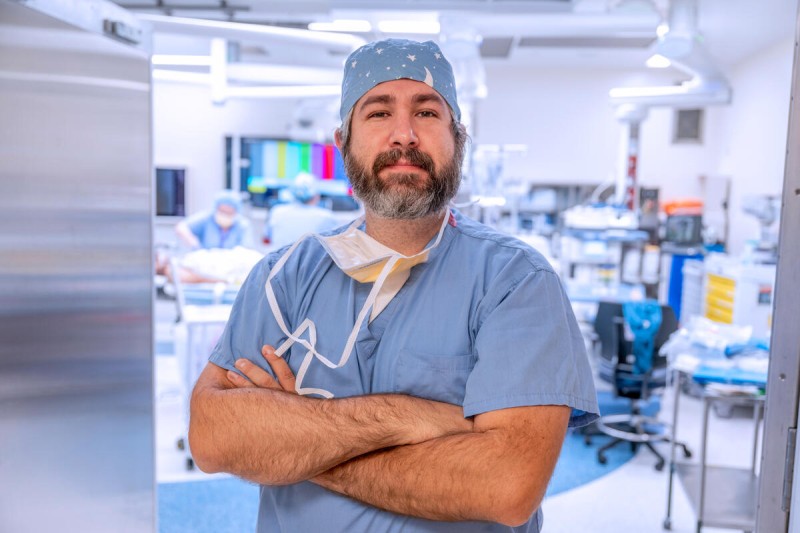
The MSK Kids team — the division of Memorial Sloan Kettering Cancer Center (MSK) dedicated to caring for children and adolescents — has welcomed a new member, pediatric neurosurgeon Andrew Kobets, MD, MHS. Dr. Kobets brings a warm bedside manner, years of expertise using the latest surgical techniques, and a genuine passion for helping children and families to navigate the most challenging time that most of them will ever face.
A specialist in pediatric brain and spine tumors, including medulloblastoma, astrocytoma, and ependymoma, Dr. Kobets sees patients at MSK’s main hospital and at MSK Westchester.
We asked him what gives him hope and drives him every day to be there for the kids and families in his care.
Why did you decide to join the neurosurgery team at MSK Kids?
What drew me here was not only MSK’s reputation for excellence, but also its culture. Every single person who interacts with patients and families, from surgeons to support staff, is deeply committed to ensuring the best experience possible. We know families are frightened and overwhelmed when they have a child facing cancer. Beyond providing the best medical treatments, everyone who works here goes the extra mile in every way to help families get through it.
I also know that MSK genuinely values everyone who works here. Our jobs are stressful and challenging, yet we are still happy to come to work every day. We support each other, and we all really work well together.
What’s unique about focusing on neurosurgery at a cancer hospital?
Before coming to MSK Kids, I worked in a hospital where I was doing a range of pediatric neurosurgeries — not only treating kids with cancer, but also those with congenital defects and epilepsy, as well as injuries affecting the brain and spine.
With cancer, it’s important to understand the underlying biology of the tumors we are operating on. This knowledge allows us to precisely remove as much tumor as possible while protecting the healthy parts of the brain responsible for speech, thinking, and movement.
In addition, when we are dealing with cancer, collaboration is especially important. I work closely with colleagues in radiation oncology, medical oncology, neuroradiology, and other specialties. Everything we do, we do as a team. For each patient, we all get together to discuss the risks and benefits for every type of treatment.
Because we collaborate with many other experts, we’re able to consider all available approaches, including clinical trials, so that we can provide the absolute best and safest option for every patient. While surgery is the standard treatment for many tumors, sometimes it’s not the best choice. By having a full team behind me every step of the way, it helps me decide when to operate and when another treatment is likely to lead to a better outcome for patients and their families.
How does this team-oriented approach impact patient care?
Generally, all the specialists try to meet with the families as a group. This allows us to explain everything and answer questions — to make sure they understand the various treatments and know what to expect from each one.
Patients’ families are of course actively involved in making decisions, so it’s really important that they understand what the options are.
What kind of relationships do you form with patients and their families?
When families come to see me, they are scared and searching for hope. From our very first meeting, I want them to feel confident they have come to the right place for their child. I begin by explaining the diagnosis and the possibilities for treatment. I think one of my strengths is being able to break down complex neurosurgical concepts into very clear language that someone without a medical background can understand.
In pediatric neurosurgery, especially in oncology, there are often situations where there is no obvious “right” treatment. This is why it’s so important for families to understand every option before we make any decisions. I spend a lot of time getting to know families and understanding what is most important to them, so we can take these things into account as we navigate our choices.
I give patients and families my cellphone number, so they can reach me directly at any time for those questions that come up when they’re at home. I want them to know that I’m always there for them — through treatment, recovery, and beyond. I go to a lot of birthday parties and celebrations to mark the end of treatment. My office is full of cards and drawings made by my patients. I see children grow up. They start school, play sports, graduate, and build lives of their own. I never stop caring about them.
It’s incredibly rewarding when patients experience the best possible outcome. When they do not, I’m still there for the families who trusted me with their child’s care.
How has technology improved pediatric brain tumor surgery?
These are difficult diagnoses, but new technology and surgical advances give us so much reason for hope. The imaging tools we have available today have transformed what’s possible in the operating room. Before surgery, we can do scans like functional MRIs, which help us map out the parts of the brain that are important for language and other critical functions, so we can avoid them during procedures.
At MSK we also have an intraoperative MRI machine, which allows us to keep taking scans while patients are still in the operating room. This greatly reduces the chance that some of the tumor is left behind.
I’m also very interested in a field called volumetrics, which combines imaging data and artificial intelligence to more accurately measure the size of a tumor. This has implications for surgical decision-making and for tracking how well treatments are working.
What other emerging technologies are you excited about?
Liquid biopsies allow us to collect DNA samples from tumors without having to do an invasive tissue biopsy. Usually, liquid biopsy samples are collected from the blood, but in neurosurgery we can study tumor DNA in spinal fluid. This can help with diagnosis and also enables us to monitor a tumor’s response to treatment over time.
I’m very interested in endoscopic or minimally invasive surgery, which allows us to reach even very deep places in the brain through a small opening — as small as a quarter or even a dime. This minimizes the risks of damaging healthy parts of the brain. We can use these techniques for biopsies, removing whole tumors, or performing other procedures.
I’m also working with a company to develop fluorescent markers for labeling low-grade brain tumors in children — they tag the tumor cells, which allows us to maximize the removal of these tumors. Similar markers are already used in adults, for high-grade tumors, but pediatric tumors are different on the molecular level. We are hoping to develop new markers that would work with brain tumors in children.
How did you decide to become a pediatric neurosurgeon?
When you’re in medical school, one of the first decisions you need to make is whether you’re more interested in medicine or surgery. For me, I liked the immediacy of surgery. You go in and take care of the problem, and when you’re successful there’s that instant sense of accomplishment.
As for focusing on the brain, it’s something I was always interested in — the anatomy and structures of the brain, the chemistry, and the electrical aspects of it. The brain is what creates a person, with all of their interests and personality traits and interpretations of the world around them.
My decision to work with children rather than adults was a no-brainer, pun intended! I’ve always loved working with children, going all the way back to my days as a teenage camp counselor. Seeing all these cute kids and getting them happy and healthy again — there’s no better reward than that.
Is there anything noteworthy about your neurosurgery training?
My mentor was James Goodrich, who was one of the early fathers of pediatric neurosurgery. He was the first surgeon to separate twins who were conjoined at the cranium. I worked under him for several years and had the privilege of assisting him with one of these surgeries during my training. Sadly, he died from COVID-19 early in the pandemic.
Part of your job is training the next generation of pediatric neurosurgeons. What advice do you give them?
I always remind them that no matter how stressed out they are and how many urgent issues they’re juggling, their worst day on call is still better than a family’s best day when their child is in the hospital with a brain tumor.
That perspective keeps us focused on the role we’re playing in this family’s life.