“It’s cancer.”
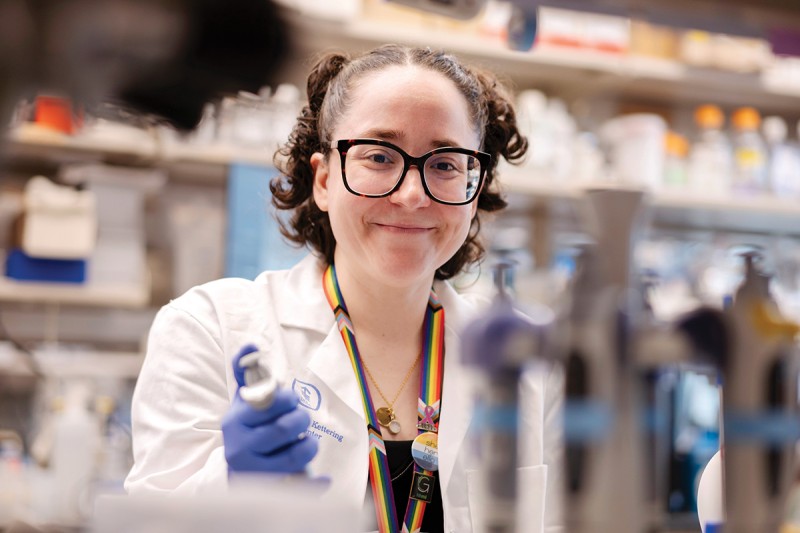
The text from her sister came when Ana Codo was presenting in journal club. A student training in the lab of Sloan Kettering Institute immunologist Justin Perry, PhD, Ana was in the midst of discussing new research in her field with fellow students while trying to ignore a nagging worry in the back of her mind.
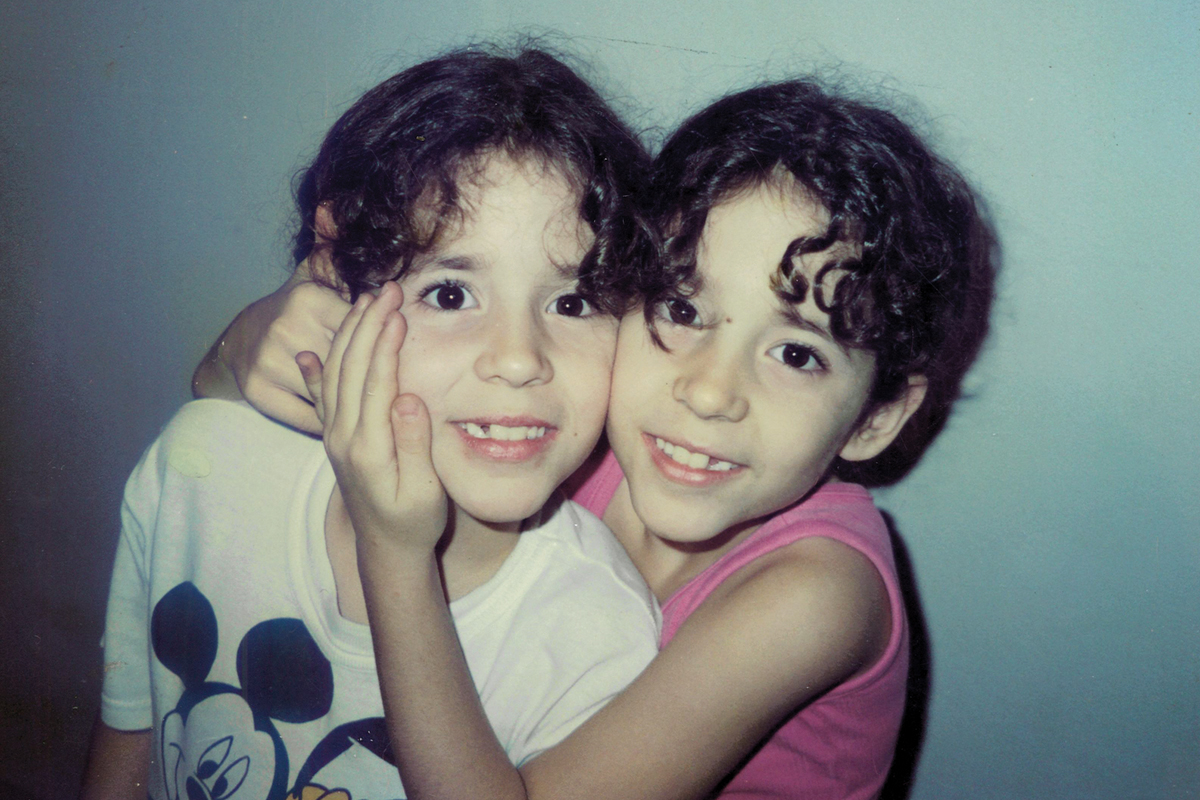
Beatriz, her identical twin sister, was studying at Oxford University and had found a lump in her left breast. Ana had been awaiting the test results from Beatriz with a mixture of optimism and dread: The sisters were only 31, but their family in Brazil had a strong history of cancer.
When Ana looked at her phone, the message threw everything into turmoil.
All at once, academic matters gave way to urgent, troubling questions: “What does this diagnosis mean for Beatriz — and for me?”
“Even though I knew I shouldn’t Google medical questions,” Ana says, “I searched What are the odds of twin sisters having the same cancer at the same time?”
By chance, Ana had a doctor’s appointment scheduled that very day. When Ana mentioned Beatriz’s news, he suggested she get screened. The mammogram showed she had a suspicious lesion in her left breast. Pathology results soon confirmed that Ana also had cancer.
“It was shocking at our age to have cancer in the same breast at the same time,” Ana says. “The only difference was hers was stage 2, while mine was stage 1.” Suddenly, nothing seemed certain.
Ana was in the third year of her six-year PhD program. Just three months earlier, she had been selected as a prestigious 2025 Gilliam Fellow by the Howard Hughes Medical Institute for her research in immunology and microbial pathogenesis (the process by which microbes cause disease).
But just as the weight of her diagnosis threatened to derail both her health and her promising scientific career, Ana discovered she was not alone.
A community that showed up
Although far from her native Brazil, Ana was buoyed up by the MSK scientific community surrounding her. Mentors, fellow students, doctors, and the dean of the Gerstner Sloan Kettering Graduate School of Biomedical Sciences (GSK) came together to support Ana and shepherd her through a difficult time.
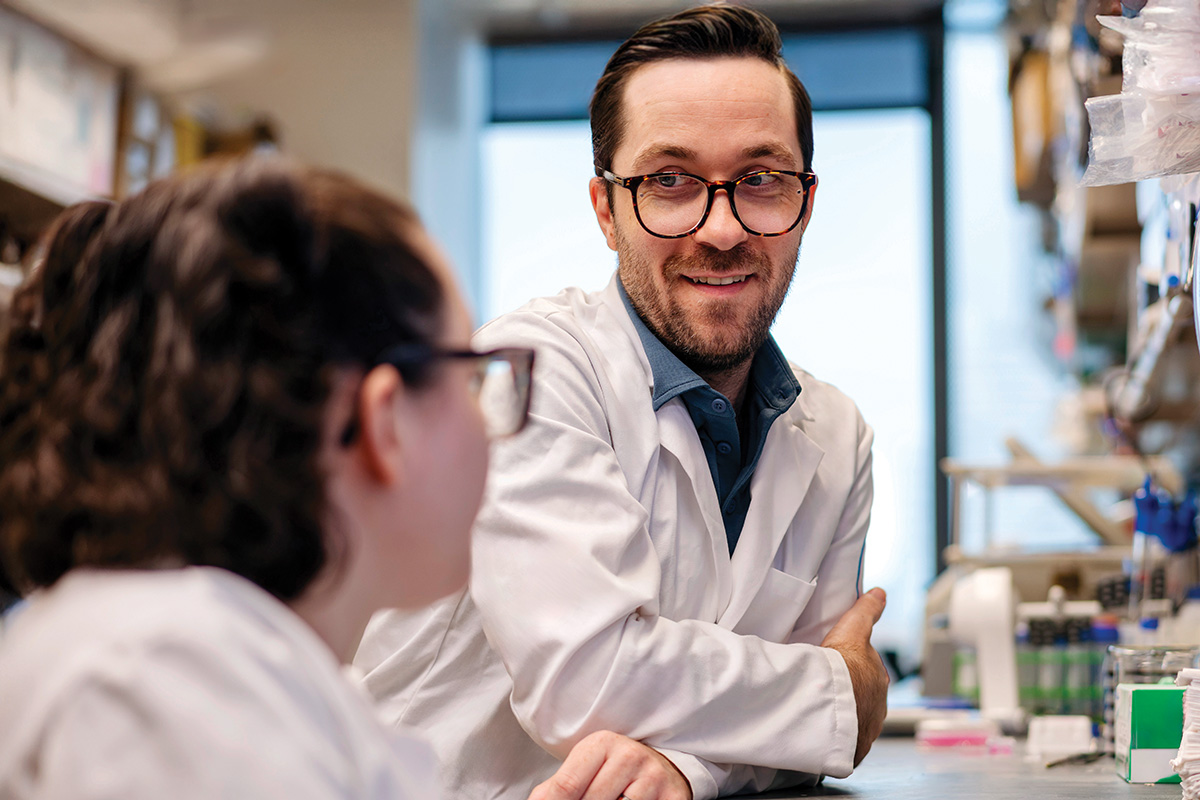
It started with Dr. Perry, her lab head and mentor. “Our top priority was ‘What can we do to help you take care of yourself?’ ” he says. “Sure, the science is important but nowhere near as important as our health.”
He sprang into action, contacting Michael Overholtzer, PhD, the Dean of GSK, to make sure Ana could receive care at MSK. He also arranged for Ana to be seen by breast cancer surgeon George Plitas, MD. “This is the true MSK community — we take care of our people,” Dr. Perry says.
Surgery and support
After conferring with Dr. Plitas, Ana was relieved to learn that she could have surgery with no additional treatments. Due to her family history, she opted for a double mastectomy to lower her risk. This would require repeated procedures — surgery to remove the cancer and insert tissue expanders, multiple office visits to expand the tissue to create space for implants, and a final surgery to insert the implants. Ana had the first surgery on February 10.
“All the doctors and nurses I talked to were very kind,” Ana says. “Being a scientist, I probably made things harder for them because I would ask questions they’re not used to. But they would get super excited when they found out I was doing research at MSK. It made me think about how our research has an impact on their work.”
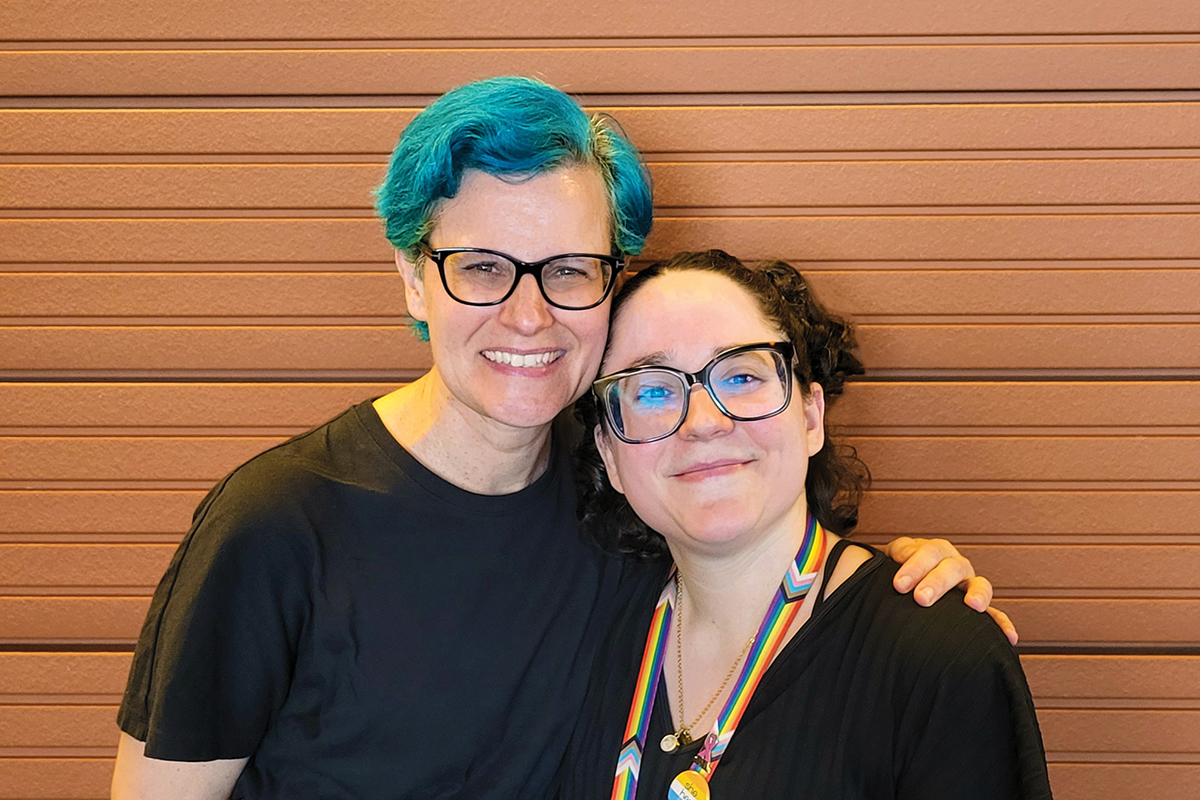
As Ana recovered over the next few months, people across the GSK program rallied to support her. Her fellow-student friends, especially Jesús E. Romero-Pichardo, Achuth Nair, and Nicole Walker, helped by organizing meals and cooking her homemade dishes. Gretchen Diehl, PhD, head of a lab in SKI’s Immunology Program, cooked and froze meals for Ana to eat later or invited her to have dinner with her family.
Given the intensive treatment, Dr. Perry and other GSK faculty and administrators told Ana she could take all the time she needed to recover and that it was OK to push back her research and the timetable for completing her program.
But Ana wouldn’t hear of it. She was deep into an exciting project that she did not want to abandon, even temporarily. She and fellow researchers were investigating the effect of microplastics on the human immune system and were close to publishing provocative findings.
“This speaks volumes about Ana’s character — she was almost offended by the idea that she would need extra time,” Dr. Perry says. “Her drive and motivation make her a great scientist.”
Studying the impact of microplastics
Even as she prepared for her surgery, Ana kept her focus on the research that had driven her to MSK in the first place. The Perry Lab studies large, specialized immune cells called macrophages (the name means “big eaters”), which engulf and destroy everything that looks like it doesn’t belong — mostly dying cells. This enables organs to function normally.
Ana’s research focused on how microplastics affect macrophages. As evidence emerges that microplastics are piling up in human tissue, understanding exactly how they affect immune function has major implications. By late 2025, Ana and her SKI collaborators had made intriguing insights into the interaction between microplastics and macrophages.
“The macrophages eat microplastics, but they don’t have the machinery to break them down,” Ana says. “We found that after engulfing microplastics, macrophages are made dysfunctional as they try to digest them rather than moving on to eat more dead cells. It’s like after a big meal you don’t want to eat more because you’re full.”
The failure to remove dead cells throws everything out of balance. There are already suggestions that the accumulation of dead cells can cause fertility issues and liver damage.
“Ana was able to prove a direct mechanism that had never been shown in this early-stage world of microplastics research,” Dr. Perry says. “From the perspective of cancer, we want to understand how this relates to chronic inflammatory diseases or diseases of aging, which give rise to cancer.”
The Perry Lab published the research in the prestigious journal Immunity in February 2026 with Ana as the first author — unusual for someone only in their third year of PhD training. In a moment of perfect symmetry, the paper was published on the same day her surgical drains were removed. “That was a very nice day all around,” she says. “I’m thinking, ‘I’m free! I can finally shower normally!’ ”
Ongoing support
“Everyone has been very accommodating to help lighten the load,” Ana says. “Dr. Perry said I don’t have to present in our lab meetings this semester. Dr. Diehl told me not to worry about missing classes or seminars.”
“It goes to show that MSK might be 20,000 people, but it’s still small in a way that we take care of each other,” Dr. Perry says. Ana says the biggest lesson from her experience was learning to ask for help.
“It’s OK not to have everything figured out, to be a mess every once in a while,” she says. “Everyone here stepped up and made it possible for me to get through this. I realized I’m not alone.”