Antibiotics are well known for causing stomach problems, especially diarrhea. That’s because in addition to attacking infections, these medications often wipe out healthy microorganisms in the gut, which allows harmful ones to take over.
Now a new study suggests a way to protect the gut microbiome: Avoid sugar when taking antibiotics. The findings raise new questions about what patients should be eating when they are sick.
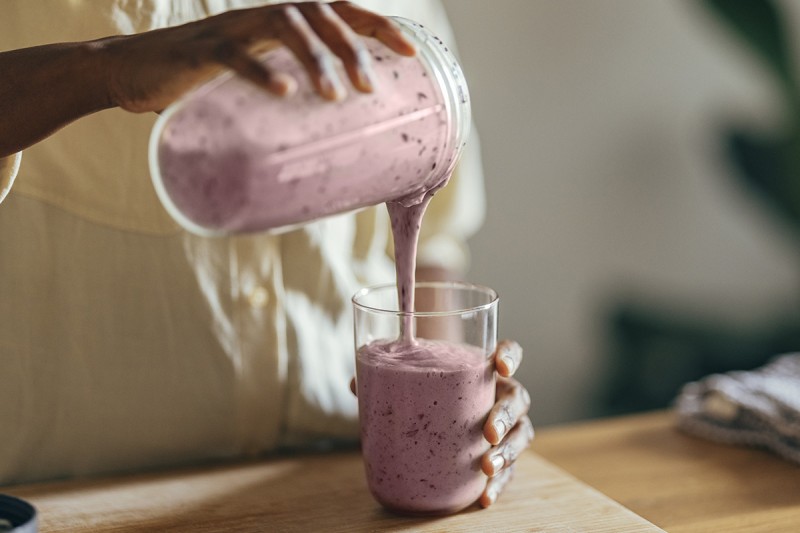
“When someone is going through cancer treatment and not feeling well or eating much, we often advise they drink smoothies, sports drinks, or nutrition shakes, thinking that at least this way they’ll get some fluids, protein, and electrolytes,” says bone marrow transplant specialist and cellular therapist Jonathan “Tsoni” Peled, MD, PhD, of Memorial Sloan Kettering Cancer Center (MSK). “But we have found that when these kinds of sugary foods and drinks are combined with antibiotics, the results can be toxic to the microbiome because they greatly lower the diversity of microorganisms.”
Dr. Peled is one of three senior authors of the study, which was published in Nature on September 30, 2026. Dr. Peled’s co-senior authors were Marcel R.M. van den Brink, MD, PhD, of City of Hope Los Angeles, and Jonas Schluter, PhD, of NYU Grossman School of Medicine. Dr. van den Brink and Dr. Schluter previously worked at MSK.
Why the gut microbiome is important for good health
Our guts are home to trillions of microorganisms that play a crucial role in digestion, immunity, and overall health. Collectively, these microorganisms are called the gut microbiome, and maintaining their diversity is important for staying healthy.
Learning from what happens to the microbiomes of people with cancer
The new discovery came about thanks to an ongoing effort at MSK to monitor the microbiomes of people with certain blood cancers who are hospitalized for stem cell or bone marrow transplants (BMTs). Because BMTs temporarily wipe out the immune system, patients often need to take antibiotics to prevent and treat dangerous infections.
While they are necessary, these antibiotics severely disrupt the gut microbiome.
“When these patients are admitted to the hospital, they usually have a reasonably healthy, normal, diverse microbiome,” Dr. Peled says. “Over the course of the transplant, the microbiome gets disrupted, at times to the point that the whole community of microbes gets taken over by just one organism — most commonly a type of bacteria called Enterococcus.”
That’s a serious problem. Previous research by the same group at MSK has shown that when Enterococcus crowds out other microbes in the gut, patients have a greater risk of bloodstream infections and other life-threatening complications. Understanding why this happens and how to prevent it drove this new research.
How researchers tracked the link between diet, antibiotics, and gut health
BMT patients offer a unique opportunity to study these connections: Because patients stay in the hospital for weeks, scientists can monitor every medication they take and every bit of food and drink they consume, all while dramatic changes are happening within the body as a result of the treatment.
For the new study, 173 patients were enrolled and tracked for the length of their hospital stay. Every meal ordered from MSK’s room service menu was accompanied by a printout on which patients were invited to mark what they actually consumed.
“It’s very hard to do this kind of research in the real world,” Dr. Peled says.
“When asked to report everything that we eat and drink, we usually don’t remember everything,” Dr. Schluter adds. “With this study, we not only knew exactly what and how much the patients ate — we also had the recipes and detailed nutritional information for all the food and drinks that were consumed. There were more than 40,000 meals recorded, giving us a dataset that’s unprecedented.”
The patients’ fecal samples were also regularly collected to check for harmful changes in the gut microbiome. More than 1,000 samples from 158 patients were collected and analyzed.
All the patients in the study received at least one antibiotic, with 80% of them eventually taking one or more broad-spectrum antibiotics. This group of drugs does the most damage to the microbiome because it targets a wide range of bacteria.
A surprising discovery: increased damage to the microbiome
Using sophisticated statistical models, the researchers sifted through the data, looking for factors that seemed to make the gut disruption worse.
One clear signal that emerged was a link between increased levels of Enterococcus and the consumption of sugar-enriched foods. This included sucrose, also known as table sugar, one of the most common sweeteners in the food supply, along with fructose, which is found naturally in many fruits.
The data showed that the combination of high-sugar foods and antibiotics seemed to compound damage to the microbiome. For each microbiome sample, the researchers analyzed the foods and medications that the patients took in during the prior two days. They found that while patients were on antibiotics, the diversity in the microbiome dropped by 24% for every 100-gram increase in sugar in the diet. This is roughly the amount of sugar in two cans of soda.
“This was not something we set out to find,” says senior computational biologist Anqi “Angel” Dai, MS, the paper’s first author. “My first thought was that it had to be something else, that patients who were sicker were simply eating more sugary foods. We went back and adjusted for the severity of both their disease and treatment, and the effect didn’t go away. Sugar-rich foods eaten while on antibiotics were linked to a less diverse microbiome, independent of how sick the patients were.”
“It’s especially provocative to discover that many of the foods and drinks that we usually encourage hospitalized patients to consume — things like nutritional shakes and smoothies — seemed to cause the most damage, perhaps because of their high sugar content,” Dr. Peled adds.
What the findings about sugar and antibiotics mean for healthy people
It’s important to consider that in addition to antibiotics, patients having bone marrow transplants are also given chemotherapy, radiation, and other treatments — all of which could affect their microbiomes.
So a big question remains: Will the findings from this study apply to people who are otherwise healthy and taking antibiotics for less serious conditions — like ear infections, urinary tract infections, or strep throat?
This is something the scientists will investigate in future studies. But already, their research in mice suggests this discovery could apply to individuals on antibiotics who don’t have cancer.
In the Nature paper, the team reports testing their hypothesis in healthy mice, who were given broad-spectrum antibiotics and then fed one of several different diets. Those fed a diet high in sucrose developed dangerously high levels of Enterococcus in their guts. Additionally, mice fed diets high in sucrose but not given antibiotics did not have increases in Enterococcus, which suggests that sugar somehow supercharges the damage to the microbiome from antibiotics.
“We don’t yet have evidence to say that everyone taking antibiotics should avoid sugar,” Dr. Peled says. “But there isn’t strong evidence that taking probiotics provides a benefit, either, and many people choose to take them anyway. Avoiding sugar while taking antibiotics ought to be feasible for any patient without introducing any risks to their health. This is also something that should be easy enough to study in a clinical trial.”
Funding and disclosures
Dr. Peled is grateful to philanthropy for funding much of this research, especially the Susan and Peter Solomon Microbiome, Nutrition, and Cancer Program at MSK. This research also relies on funding from the National Institutes of Health and its National Cancer Institute. A full list of funding sources is available in the paper.
Dr. Peled’s disclosures are available on his webpage.
Key Takeaways
- A new study published in Nature suggests that consuming sugar while taking antibiotics may significantly damage the gut microbiome by reducing its diversity and allowing harmful bacteria like Enterococcus to take over.
- Researchers at MSK tracked the diets and gut microbiomes of 173 hospitalized bone marrow transplant patients who were receiving antibiotics, creating an unprecedented dataset of more than 40,000 food items and 1,000 fecal samples that allowed them to identify the connection between sugar and antibiotics.
- It appears that the combination of sucrose and antibiotics compounds microbiome damage.
- The study suggests that foods commonly encouraged for sick patients — such as nutritional shakes and smoothies — may actually be harmful due to their high sugar content.
- While the findings have not yet been definitively proven in otherwise healthy people taking antibiotics, animal studies support the connection, leading the researchers to suggest that avoiding sugar during antibiotic use is a low-risk strategy worth considering.