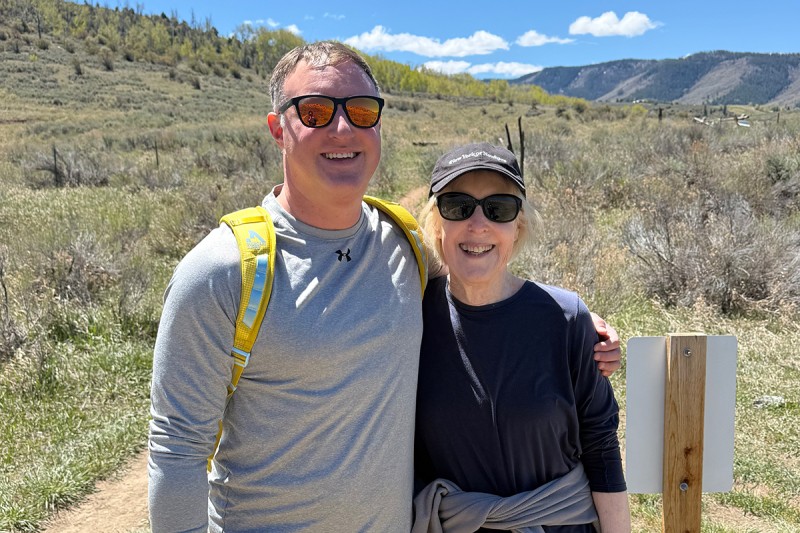
Dedifferentiated liposarcoma (DDLS) is a rare and aggressive soft tissue cancer with few effective treatment options. But now a clinical trial led by doctors from Memorial Sloan Kettering Cancer Center (MSK) has found that abemaciclib (Verzenio®) — a drug already approved for certain breast cancers — can significantly slow the growth of DDLS.
The trial’s key results:
- Abemaciclib kept the cancer from growing for six times longer than a placebo drug.
- Tumor growth stopped for an average of 10 months.
- Approximately one-third of patients responded for significantly longer than average.
- While the drug did not shrink tumors substantially, it successfully halted their growth in many patients.
These findings are being presented this weekend by MSK sarcoma medical oncologist Mark Dickson, MD, at the 2026 American Society of Clinical Oncology (ASCO) Annual Meeting. The study was featured in the meeting’s plenary program, a distinction reserved for particularly noteworthy research.
“These findings should shape how patients with this disease are treated going forward,” says William Tap, MD, Chief of MSK’s Sarcoma Medical Oncology Service and the senior author of the study. “Patients with DDLS currently have no good treatments after their cancer spreads, and this drug could really make a difference for many of them.”
“Our presentation is based on many years of work that started in MSK labs and clinics,” Dr. Dickson says. “This trial is especially important because it shows that the benefits we’ve seen for MSK patients can be shared with patients treated at other hospitals.”
About the abemaciclib trial
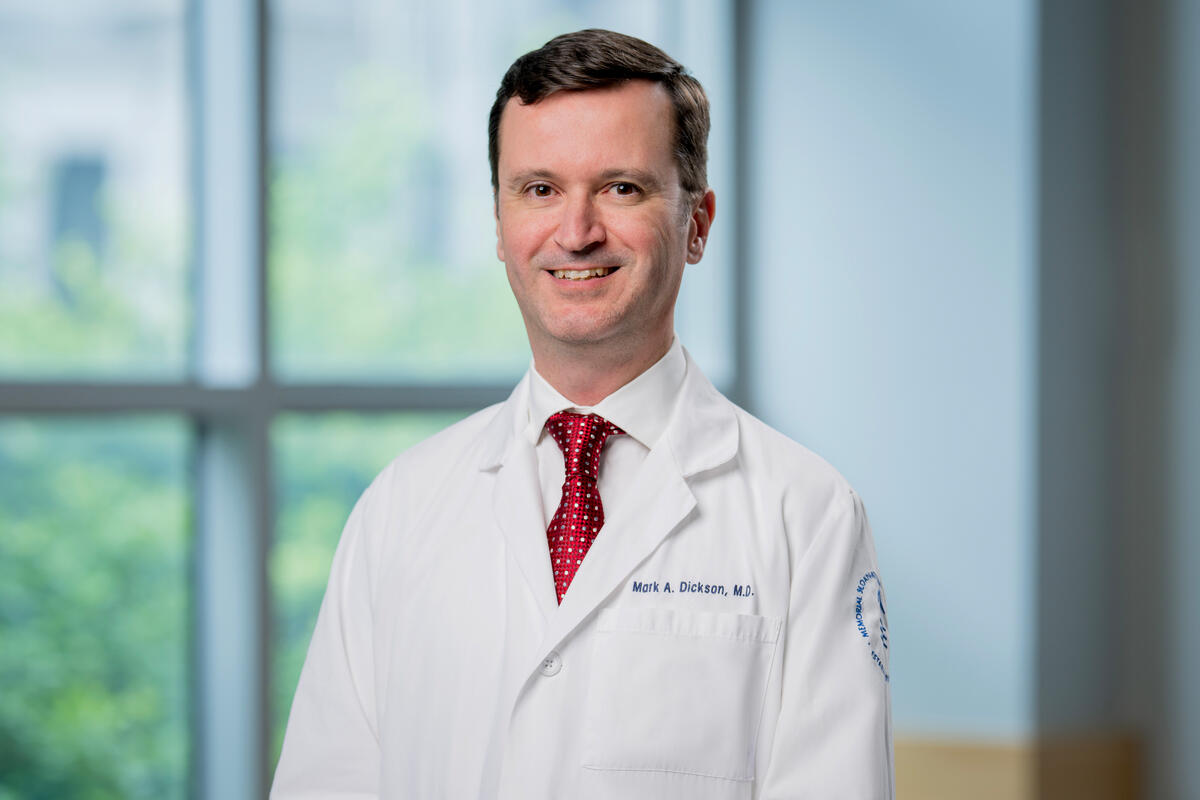
The phase 3 trial was randomized, placebo-controlled, and double-blinded, meaning neither doctors nor patients knew who was receiving the drug versus the placebo. Fifty-four patients received abemaciclib, and 54 received a placebo. Patients were enrolled from nine hospitals across the United States.
Abemaciclib is a targeted therapy that works by blocking proteins called cyclin-dependent kinases — specifically CDK4 and CDK6.
Blocking these proteins causes cancer cells to enter senescence, a permanent state in which they stop growing and dividing. The drug was first approved in 2017 to treat certain breast cancers.
This is the first trial of abemaciclib for DDLS to include patients treated at institutions other than MSK, and the first to include a control group. Dr. Dickson and Dr. Tap hope the results will lead to the treatment being offered more widely. They also believe that administering abemaciclib earlier in the course of treatment could benefit even more patients.
A patient’s story: from hospice planning to living life again
For Andi Straus, the trial results are not statistics — they “feel like a miracle.”
Four years ago, Andi was 71 and preparing for hospice care. The cancer she had been diagnosed with 16 months earlier had returned and was no longer operable. She was on oxygen around the clock and in constant pain.
Then Dr. Dickson told her about the clinical trial.
“Today I have a very high quality of life,” she says. “The only thing that holds me back is my age, not my cancer.”
What is dedifferentiated liposarcoma?
Liposarcoma is a cancer of the body’s soft tissues that develops from fat cells, affecting about 2,000 people in the U.S. each year. Dedifferentiated liposarcoma is the more aggressive subtype, making up about 15% to 20% of all liposarcomas. These tumors most often appear in the retroperitoneum — the space in the back of the abdomen that houses the kidneys, adrenal glands, pancreas, and aorta.
Unlike most sarcomas, which primarily affect children and younger adults, DDLS is usually diagnosed in people in their early 60s.
Current treatment challenges for dedifferentiated liposarcoma
Surgery is almost always the first treatment for DDLS. For patients whose cancer is inoperable, doctors typically offer chemotherapy — but its benefits, when they occur at all, are usually short-lived. There are currently no FDA-approved therapies that successfully treat DDLS after it has spread, making new options like abemaciclib especially critical.
Andi’s diagnosis and road to MSK
Andi’s journey began in early 2021, when abdominal pain prompted a CT scan that revealed a tumor near her pancreas. She had surgery to remove it at another New York City hospital, but when biopsy results confirmed it was a sarcoma, she transferred her care to MSK.
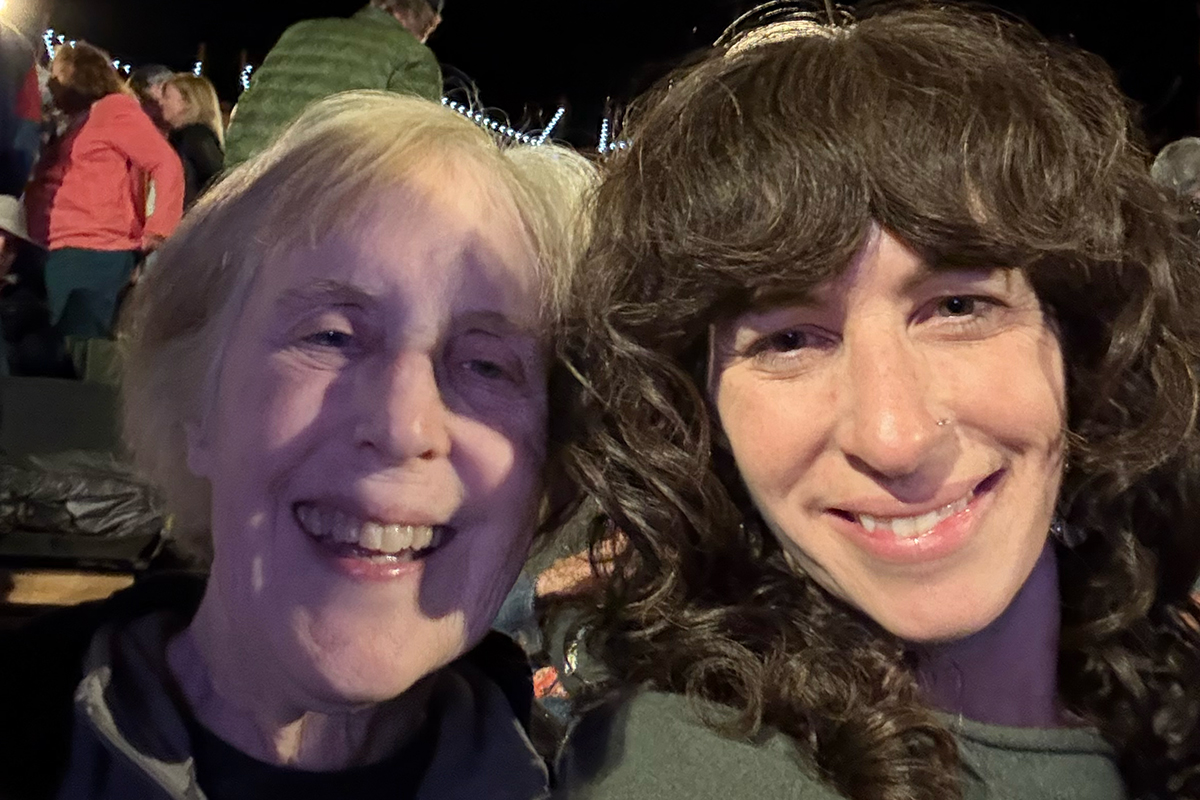
“I did a lot of research on the best place to go for sarcoma, and everything I found pointed to Sam Singer at MSK,” she says. Samuel Singer, MD, FACS, Chief of MSK’s Gastric and Mixed Tumor Service, told her she would be closely monitored and also referred her to Dr. Dickson, who recommended chemotherapy.
It shrunk her tumors enough that in November 2021, Dr. Singer was able to perform a second, more extensive operation that removed her spleen and portions of her colon, left kidney, and pancreas.
In May 2022, the cancer returned, which unfortunately happens in about 2 in 5 DDLS cases. At that time, Dr. Singer determined it was inoperable. That was when Dr. Dickson discussed the option of enrolling in the clinical trial.
Andi’s experience in the trial
When Andi first started the trial, she experienced significant side effects, including fluid in her lungs, which required hospitalization. After her dose was lowered, however, she began feeling better quickly — and her tumors started shrinking. Today, the only side effects she notices are ridges on her fingernails.
Because the trial has not yet been unblinded, Dr. Dickson cannot officially confirm that Andi received abemaciclib rather than the placebo. Based on her response, however, he has little doubt.
“She had a dramatic improvement in just a few weeks,” he says. “Although her tumors have not disappeared, she is doing extremely well.”
A big birthday milestone
Andi, who recently celebrated her 75th birthday, continues to take the treatment at home in pill form. “When I was diagnosed at age 70, the doctors told me I had a 50-50 chance of being alive in five years,” she says. “My birthday this year felt like a big milestone.”

Today, Andi, who retired when she was first diagnosed with cancer, lives a busy life in New York City, attending classical music concerts, theater, and the opera.
She also sings in an amateur chorus in Westchester County and travels to Colorado to spend time with her adult children and grandchildren.
She is grateful to her friends and family for their support, including her brother, who has accompanied her to nearly every appointment.
She’s also grateful to her care team, especially Dr. Dickson. “Everyone at MSK saved my life when it looked so hopeless and have given me a wonderful new one,” she says.
Decades of research behind the trial results
The trial’s findings built on decades of laboratory and clinical research. A comprehensive analysis of the sarcoma genome was initiated in 2009 as a collaboration between scientists at MSK and the Broad Institute of MIT and Harvard and published in Nature Genetics in 2010.
Additional research in the labs of Dr. Singer and Cristina Antonescu, MD, Director of Soft Tissue and Bone Pathology, revealed that CDK4/6 frequently drives the growth of DDLS — providing the scientific rationale for testing abemaciclib in this cancer.
Much of the foundational research on the mechanisms of CDK4/6 inhibitors was conducted in the lab of Andrew Koff, PhD, now an Emeritus Member of the Sloan Kettering Institute, whose lab studied cyclin-dependent kinases and their role in cancer for more than three decades.
Dr. Dickson and Dr. Tap have been treating MSK sarcoma patients with CDK4/6 inhibitors for nearly 20 years in smaller, single-institution clinical trials. They hope the findings from this phase 3 trial will result in the drug being more widely available to patients everywhere.
Funding for a rare disease
Because DDLS is rare, securing research funding is a persistent challenge. Much of the work on CDK4/6 inhibitors and DDLS has been supported by Cycle for Survival, the official rare cancer fundraising program of MSK.
Government funding — including a grant called a P01 and a Specialized Programs of Research Excellence (SPORE) grant from the National Cancer Institute — has also been critical.
“This is an amazing story of how early seed money can help to champion research on rare diseases,” Dr. Tap says. “At a place like MSK, we are then able to translate our findings and get them out to the greater population.”
Key takeaways
- Abemaciclib, a drug already approved for certain breast cancers, successfully halted the growth of dedifferentiated liposarcoma (DDLS) for an average of 10 months — six times longer than a placebo — offering new hope for a cancer that currently has no approved treatments after it spreads.
- A phase 3 clinical trial led by MSK was the first to test abemaciclib for DDLS across multiple institutions and with a control group, strengthening the case for its wider use.
- While abemaciclib did not significantly shrink tumors in most patients, its ability to stop tumor growth represents a meaningful advance.
- Decades of laboratory research, philanthropic funding through initiatives like Cycle for Survival, and government grants were all critical to developing the scientific foundation that made this breakthrough trial possible.
Dr. Singer is Director of the MSK Sarcoma Center and PI of the MSK SPORE in Soft Tissue Sarcoma. He holds the Vincent Astor Chair of Clinical Research.
Funding and disclosures
This research was funded by Eli Lilly and Company; Cycle for Survival, including the Lin Fund; the Mitchell Goodman Fund for Sarcoma Research; the Peter and Devon Briger Foundation; Heather and Jordan Turkewitz; and the National Cancer Institute (grant RO1CA296835-01).
Dr. Tap’s disclosures are available on his webpage.