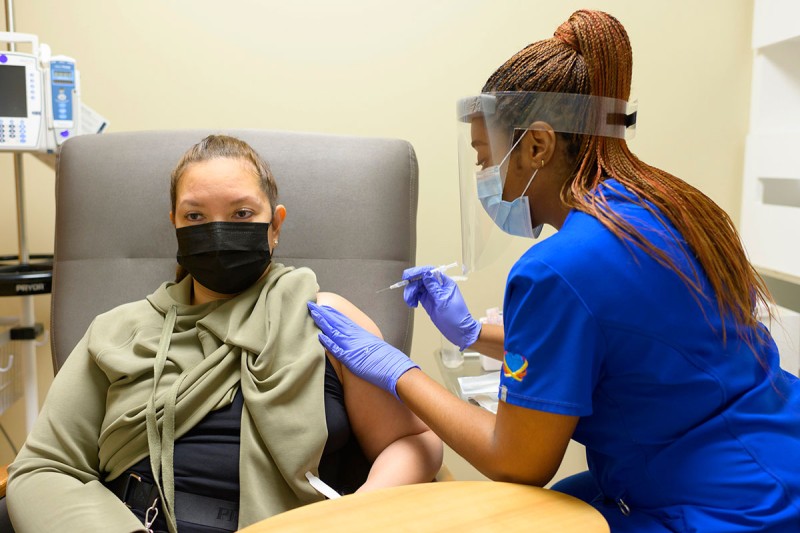
Memorial Sloan Kettering Cancer Center (MSK) recommends people with cancer stay up to date on their COVID-19 vaccinations.
If you have cancer, you may have a weakened immune system (called immunocompromised). This can put you at higher risk for severe COVID-19. Protecting yourself from COVID-19, including getting vaccinated, is very important.
Mini Kamboj, MSK’s Chief Medical Epidemiologist, explains what you need to know about COVID-19 vaccines if you’ve had cancer.
This information is for people with weakened immune systems (called immunocompromised).
If you are not immunocompromised, talk with your doctor or pharmacist about how many vaccine doses you should get and when.
What to know about the updated COVID-19 vaccine
The updated COVID-19 vaccine targets variants that are going around now and expected to spread in the fall and winter seasons.
If you have cancer or a weakened immune system, you can get the updated COVID-19 vaccine. This includes children 6 months and older. For people undergoing treatment for cancer, the COVID-19 vaccine is recommended every 6 months and can be taken as early as 2 months from your last shot.
MSK recommends that all our patients get vaccinated as soon as they are eligible.
Should I get the updated COVID-19 vaccine if I have cancer or have been treated for it?
Yes. The updated COVID-19 vaccine is safe and recommended for people who have cancer or have been treated for it. COVID-19 has become less of a threat for some people. But it can still cause severe illness in people with medical conditions, such as cancer.
CDC estimates show that about 1 in 6 people hospitalized with severe COVID-19 have weakened immune systems. This can happen if you are getting cancer treatment or have a history of cancer. The COVID-19 vaccine protects you from getting very sick if you get the infection.
How is the updated COVID-19 vaccine different from the shots I’ve already gotten?
The COVID-19 virus keeps changing. The vaccines are updated to match the latest versions of the virus. This season’s vaccine protects against newer strains that are now more common.
The updated vaccine replaces earlier COVID-19 vaccines. It’s designed to give you the best protection against getting very sick from the virus.
How effective is the COVID-19 vaccine for people with weakened immune systems?
The COVID-19 vaccine helps protect people with weakened immune systems from getting very sick or needing to go to the hospital. This includes people with cancer and weakened immune systems, and those ages 65 and older.
Protection from the vaccine fades over time. That’s why it’s important to stay up to date with the latest version of the vaccine. If you have a weakened immune system, you may need extra doses.
Can I get the COVID-19 vaccine at the same time as my flu shot or my RSV shot?
You can get the flu, RSV, and COVID-19 vaccines at the same time.
I got COVID-19 recently. Do I still need to get the updated COVID-19 vaccine? If so, when?
Yes. Even if you’ve had COVID-19, your immunity after infection fades over time. Getting vaccinated is a safer and more reliable way to stay protected. You should wait 3 months after your symptoms started, or after a positive result if you had no symptoms, before getting the updated COVID-19 vaccine.
Is the COVID-19 vaccine safe?
Yes, the updated COVID-19 vaccine is safe. It works in the same way as the original COVID-19 vaccines and all booster shots. They are made using the same process.
For all versions of COVID-19 vaccines, serious side effects have been very rare, and they are treatable.
What are the possible side effects of the COVID-19 vaccine?
You could have soreness at the injection site, fatigue, headache, body aches, and fever. These symptoms don’t last long — about 1 to 3 days.
If you do have side effects, you can take an over-the-counter drug such as Advil® or Tylenol® to lower a fever, reduce chills, or relieve a headache or body aches.
Can the COVID-19 mRNA vaccines cause cancer?
No. COVID-19 mRNA vaccines do not cause cancer or make cancer come back. There is no scientific evidence to suggest that any vaccine, including mRNA vaccines, causes cancer or makes it come back.
It is also worth knowing that the same mRNA technology used in COVID-19 vaccines is now being studied as a way to stop cancer from coming back.
Should my caregivers get the COVID-19 vaccine?
Yes. When everyone in your household and close circle is vaccinated, it helps protect you and them. Vaccinated people are nearly half as likely to spread infections to others in their home compared with people who are not vaccinated.
Who is at risk for severe COVID-19?
The CDC says that people who are “moderately to severely immunocompromised” are at increased risk of severe COVID-19 illness.
This includes:
- People with blood cancer.
- People who are actively being treated for solid tumors with chemotherapy — and some people being treated with immunotherapy.
- People without a functioning spleen (called asplenia).
- People who have had a stem cell transplant or received CAR T therapy within the past 2 years.
- People who are actively being treated for graft-versus-host disease (GVHD) with immunosuppressive drugs (for example, sirolimus or Rapamune®).
- People with primary immunodeficiency disorders (for example, DiGeorge syndrome, Wiskott-Aldrich syndrome).
- People with active or untreated HIV infection.
- People actively using high-dose steroids (for example, 20 mg of prednisone or more per day for at least 2 weeks).
- People actively being treated for an immune-related disease (for example, rheumatoid arthritis, Crohn’s disease, or psoriasis) with a tumor necrosis factor (TNF) inhibitor (for example, adalimumab or Humira®).
These eligibility criteria cover the most common situations. If you are receiving another treatment that has weakened your immune system, your doctor will be able to advise you about getting the COVID-19 vaccine.
Revaccination after certain treatments
Certain cancer treatments can completely or partially wipe out your immune system. Because of this, anything that your immune system learned before cancer treatment may now be completely gone. Your immune system needs to relearn how to fight COVID-19.
If you received any COVID-19 shots before, during, or shortly after cancer treatment, you may need to be revaccinated if your doctor thinks your immune system has recovered enough to respond to the vaccines.
Everyone who is currently eligible to be vaccinated is also eligible to be revaccinated if they received any of these treatments:
- Hematopoietic cell transplant (also called a bone marrow transplant or stem cell transplant)
- CAR T therapy
- Treatment with B-cell-depleting drugs such as rituximab (Rituxan®)
Your care team will determine whether you should be revaccinated and the best time to get the shots. Only care providers can order revaccination for their patients after careful evaluation of eligibility. If you think you meet any of the criteria for revaccination, you should talk to your care team.
How else to protect yourself from COVID-19
Even when you are completely up to date on your COVID-19 shots, you can take extra steps to protect yourself and your loved ones, especially when COVID-19 is spreading in your area. You can:
- Wear a mask in crowded indoor spaces.
- Wash your hands frequently for at least 20 seconds.
- Avoid crowds and indoor spaces that are poorly ventilated.
- Encourage your close friends, family members, neighbors, and co-workers to be vaccinated.
- If you have been exposed to someone with COVID-19, there is a treatment that can prevent you from getting sick. Ask your MSK care team to learn more.
- If you develop symptoms of COVID-19, contact your MSK care team and get tested. There are treatments that can help.
How to get a COVID-19 vaccine
We have the updated COVID-19 vaccine for our patients. Ask a member of your care team for more information.
You don’t have to get vaccinated at MSK. Many pharmacies offer the COVID-19 vaccine. Most health insurance plans cover the COVID-19 vaccine, so you won’t have any out-of-pocket costs.
Last Updated October 1, 2026